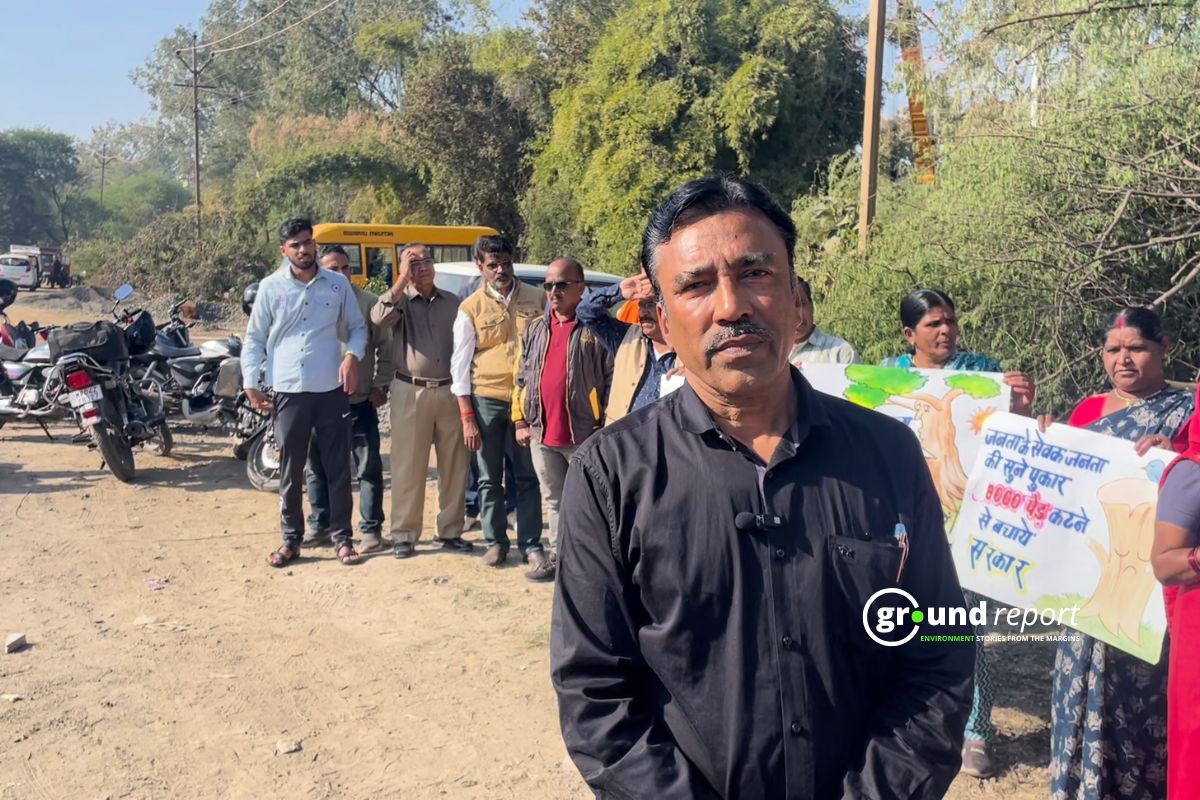
On Thursday afternoon, outside the Department of Legal Metrology office, Bhopal, the employees walked out of their offices and tied black bands around their arms. Then they hugged the trees in their compound and refused to move.
Women held handmade posters. Men and women stood together, arms wrapped around massive peepal and banyan trees. “Ped bachao, shahar bachao!” Save the trees, save the city. The slogan rings out.
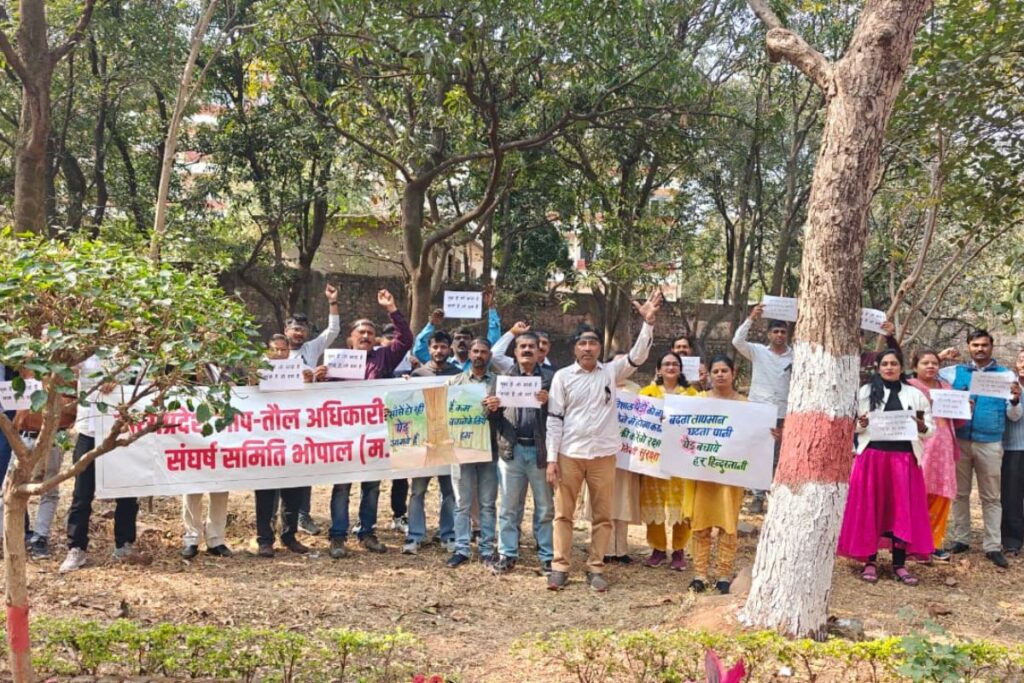
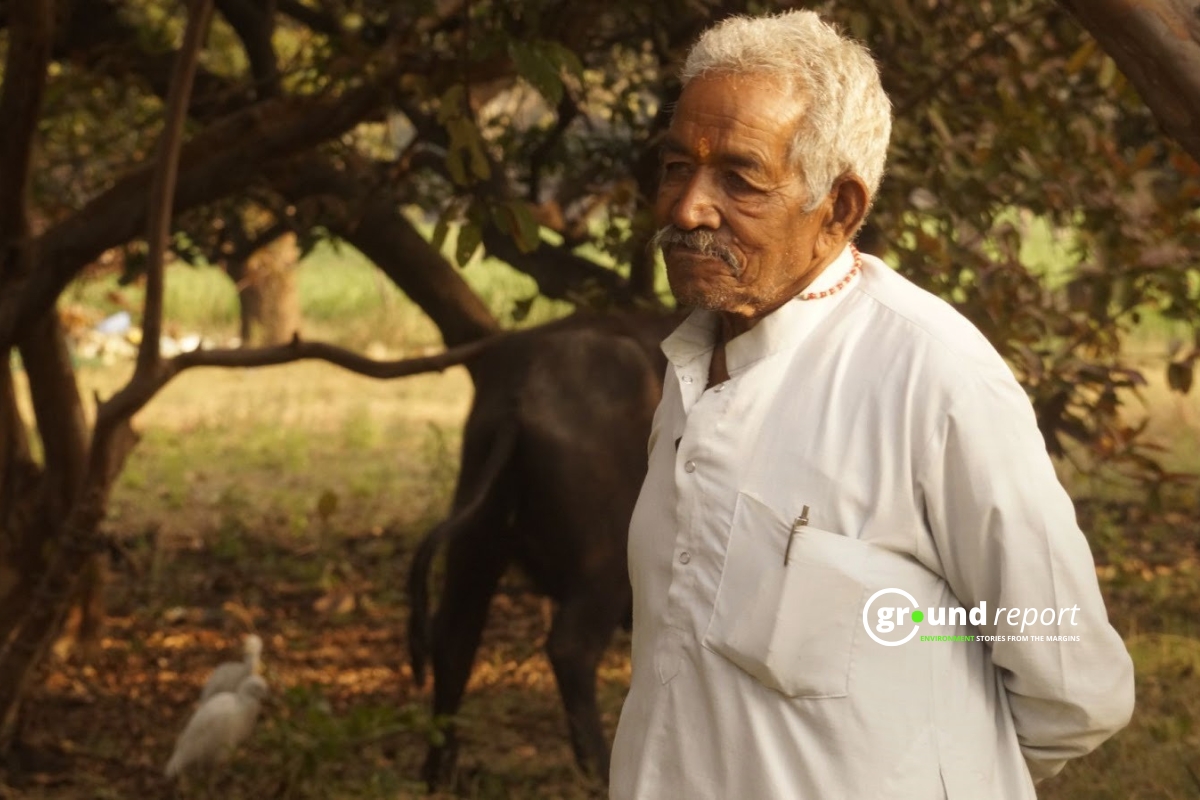
In the middle stood 58-year-old Umashankar Tiwari, a clerk in the Department office. His arms were locked around a peepal tree. This was not just any tree; he had planted it himself thirty years ago. Now it stands tall, almost three stories high.
The government plans to cut 150 trees to build a new six-story Food and Civil Supplies Department building, Dainik Bhaskar reported. The project aims to bring several food department offices under one roof.
“We held a statewide protest today by tying bands and hugging trees to oppose the proposal for the Food Building,” Tiwari said. “We appeal to the Chief Minister and everyone concerned with the environment to take note and cancel this proposal”.
Tiwari embodies the name that people have bestowed: “tree guardian”. For nearly 20 years, planted over 1,200 trees across the city and helped stop their cutting.
“People came because they trust me,” Tiwari told Ground Report. “I have spent 20 years building that trust.”
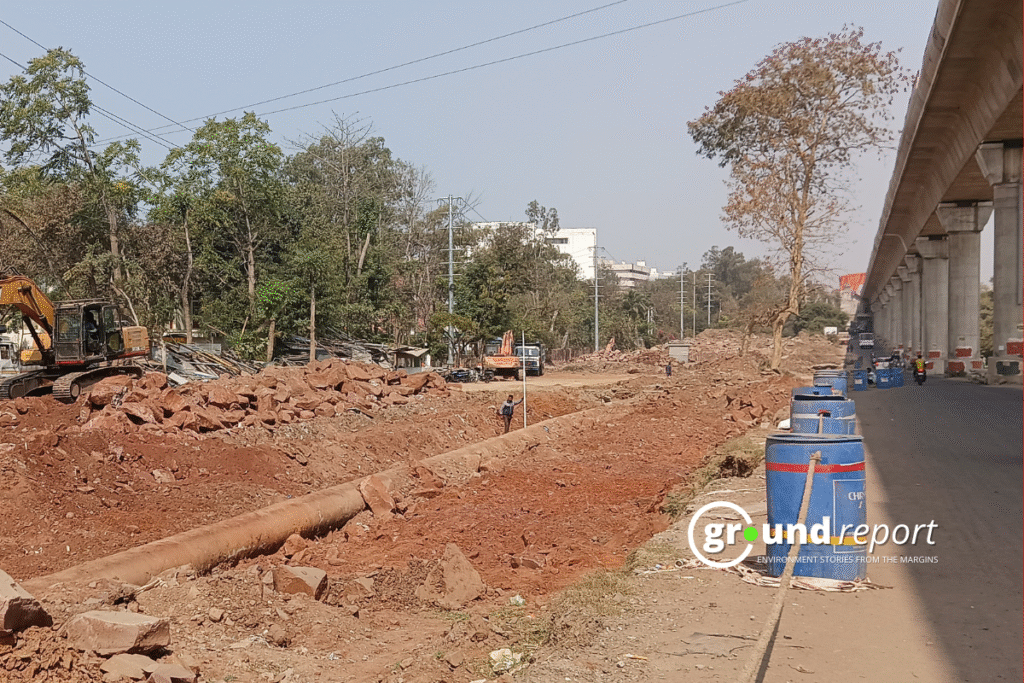
As Bhopal expanded, its roads widened, metro lines took shape, and Smart City projects rolled out. In the process, trees fell across the city.
Tiwari has seen the change and fought back.
Sometime in 2024, the Madhya Pradesh government announced plans to build bungalows for ministers and officers in MP Nagar. They would cut 29,000 trees to clear the land. Tiwari called people from his colony. He spread the word on social media. On June 14, hundreds gathered to protest.
They all stood together in front of the trees that were marked to be cut. “We all said no,” Tiwari recalled. “People from my colony came because they know me. They trust me.” People stood there for hours. The machines could not move forward.
The government blinked and withdrew the project. All 29,000 trees were saved.
Bhopal-based environment activist Rashid Noor said Tiwari’s strength lies in turning ignored local issues into public movements. Recalling this protest, he said, “Because of the protest, the project was stopped,” he said.
How Bhopal Lost Its Green Cover
Between 2017 and 2024, Bhopal lost over 46,000 trees. Metro projects alone cut more than 40,000 trees, the RTI data revealed. Bhopal Smart City projects cut 2,884 trees.
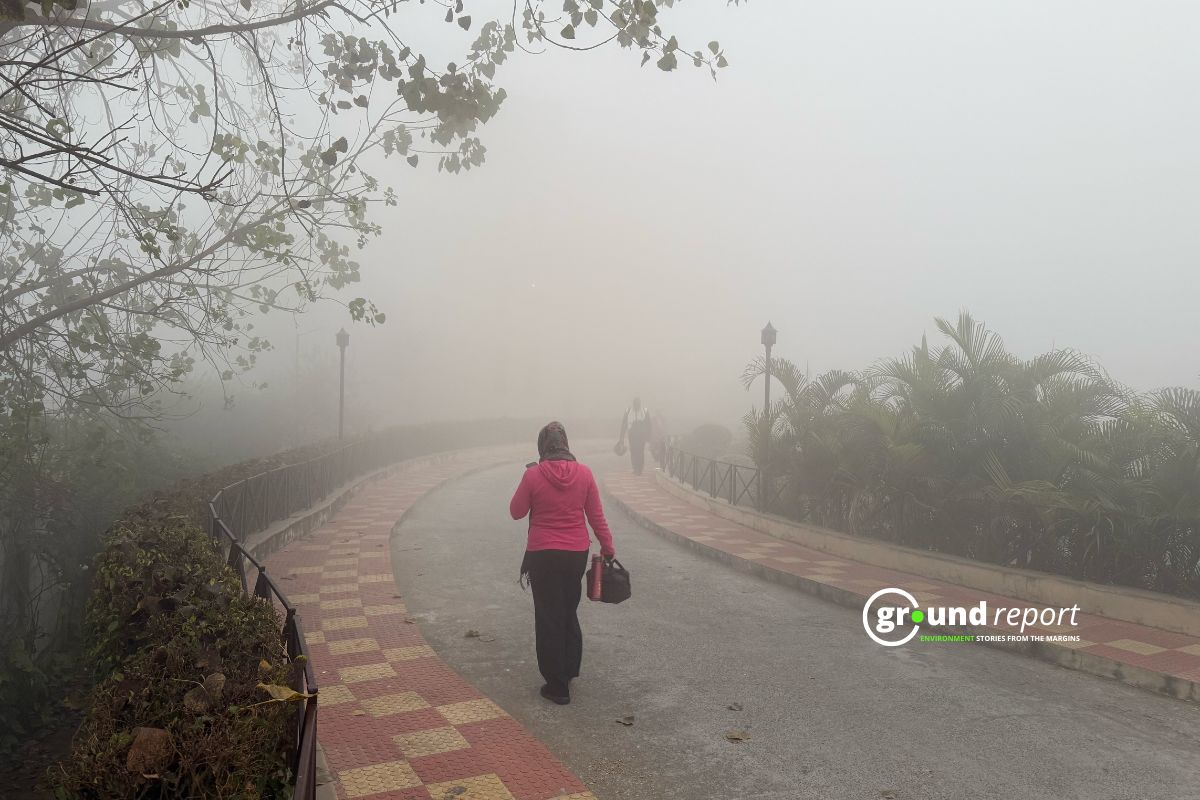
A study from 2014 to 2019 shows the damage. Bhopal’s green cover fell by 22 percent. The shrinking green cover has pushed up the city’s average temperatures. “Bhopal was beautiful,” Tiwari said. “We made it ‘smart’ and destroyed it. We cut all the trees and built concrete everywhere. Now the heat is killing people.”
Under the Madhya Pradesh Tree Preservation Act, 1994, developers must plant four trees for every tree cut or pay ₹1,450 per tree as compensation. RTI data shows that smart city projects deposited Rs 1.41 crore as tree compensation, while Metro projects deposited Rs 1.92 crore with the forest department.
How He Mobilizes People
When Tiwari moved to Baghmugaliya Extension Colony in the southern part of Bhopal two decades ago, the area was rocky with few trees. He started planting. Every single day, he watered them. He protected them from animals. He made sure they survived.
In his colony, Baghmugaliya Extension, where he is president of the Development Committee, when Tiwari calls for help, people respond.
“We made it a habit in people’s minds that trees are our gods,” Tiwari explained. “Just like a person can find a liquor shop in any new city, we trained people to care for trees.”

He also uses social media—sharing photos and videos, tagging government officials, and writing to newspapers.
Tiwari’s fight is for the environment and against its anthropogenic pressures.
Ten years ago, his family promised to avoid weddings or parties that used plastic. When a junior colleague invited him to his wedding, with a promise: “no plastic”. Tiwari went with his family. At dinner, he noticed plastic glasses. He stood up, took his family, and left.
He put up a sign outside his rental house. It says: “No plastic users can rent this house.” “Even if my house stays empty for months, I will not rent it to someone who uses plastic,” he said. “Saving the environment is more important than money.”
His colleague said, “Many people laughed. Some called him crazy, but Tiwari did not care”.
Noor said Tiwari lives by the values he asks others to follow. He even skips family weddings. He promotes people who follow these values and sets an example himself.”
The Price He Pays
Naseemuddin, Deputy Controller of Weights and Measures, Bhopal, has worked with Tiwari for years. He says his [Tiwari] fights come at a personal cost.
“He is a family-loving man who has been fighting for many years,” Naseemuddin said. “Because of his work, he has faced many hardships from powerful people. But he does not fear anyone and never gets intimidated.”
Tiwari acknowledges his pressures quietly. “People in power do not like protesters. They cannot punish you directly for activism. So they find other ways.”
He has been suspended a few times, though Naseemuddin said Tiwari draws strength from his clean record.
Tiwari focuses on trees, plastic, streetlights, water waste, and small civic issues; he takes these issues to the public and builds pressure on the ground. Noor said, “They do not depend only on legal cases. They organise protests. The public connects with them. That is why their protests work.”
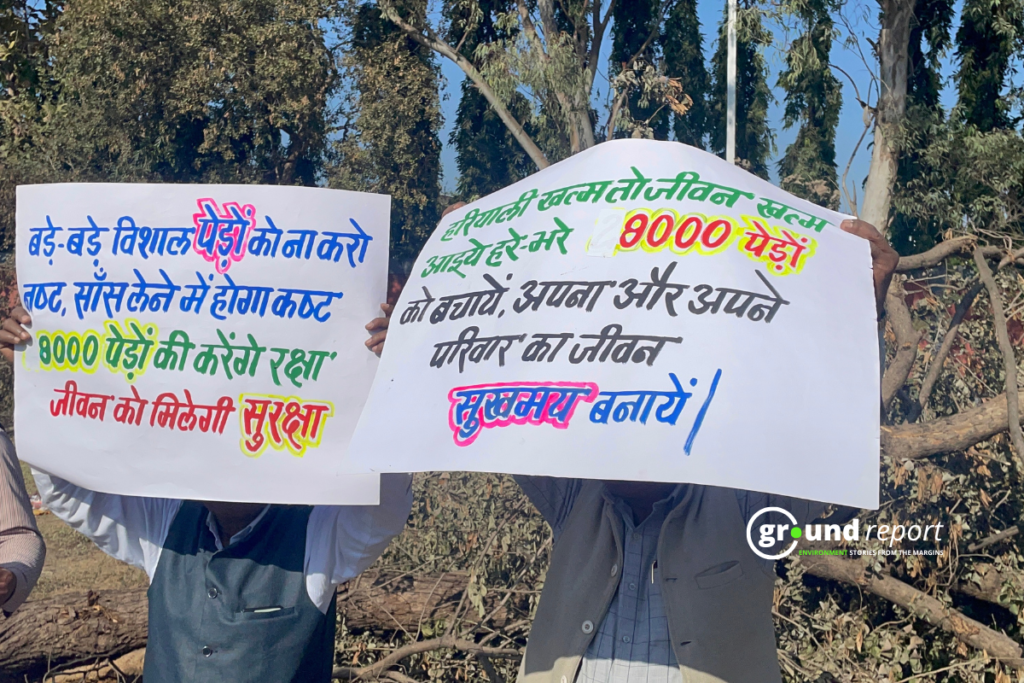
Recently, Tiwari and other activists filed a case in the National Green Tribunal (NGT) against cutting nearly 8,000 trees to widen a 16-kilometer Ayodhya Bypass.
Between the tribunal hearing and the final order, large-scale cutting continued before the stay took effect. “They moved so fast,” Tiwari said, his voice still angry. “You could not even see what happened.”
Ground Report covered the immediate protests organised, where Tiwari spoke against the cutting of trees. Please do whatever you can to save these trees, “ he, in a later conversation with Ground Report, said. “Write about it. Share it. Take this to the highest level. I am folding my hands.”
Support us to keep independent environmental journalism alive in India.
Keep Reading
Elephants Are Back in MP After a Century, But Can They Stay?
Solar Energy – A Paradigm Shift in Wildlife Conservation
Stay connected with Ground Report for underreported environmental stories.