
Apple growers welcome relief but say uncertainty remains as farmers seek permanent cancellation of proposed rail line.
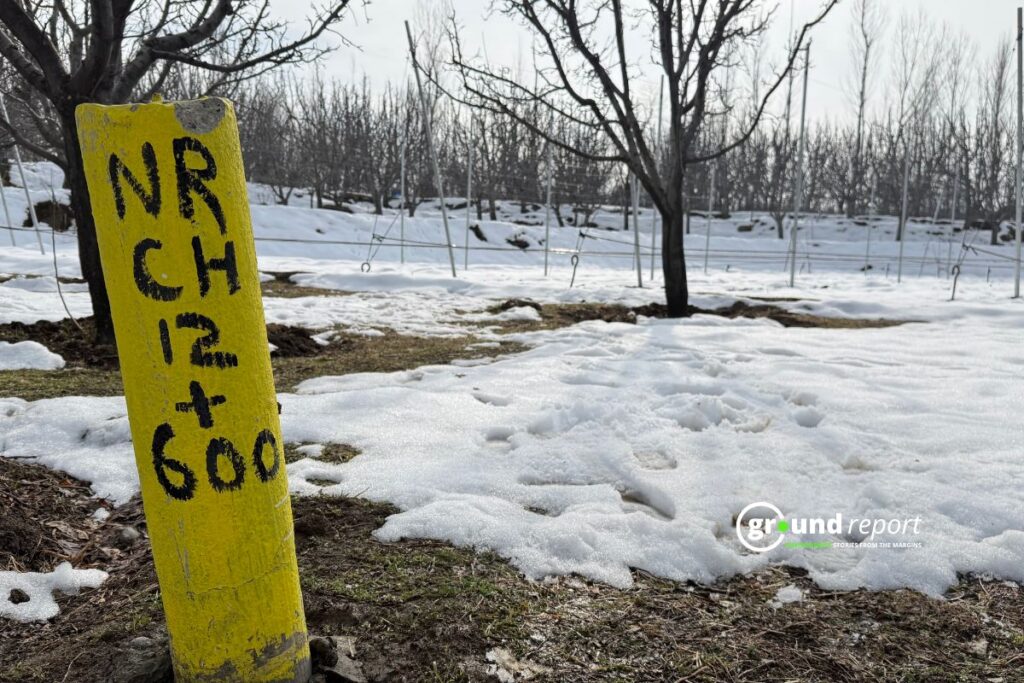
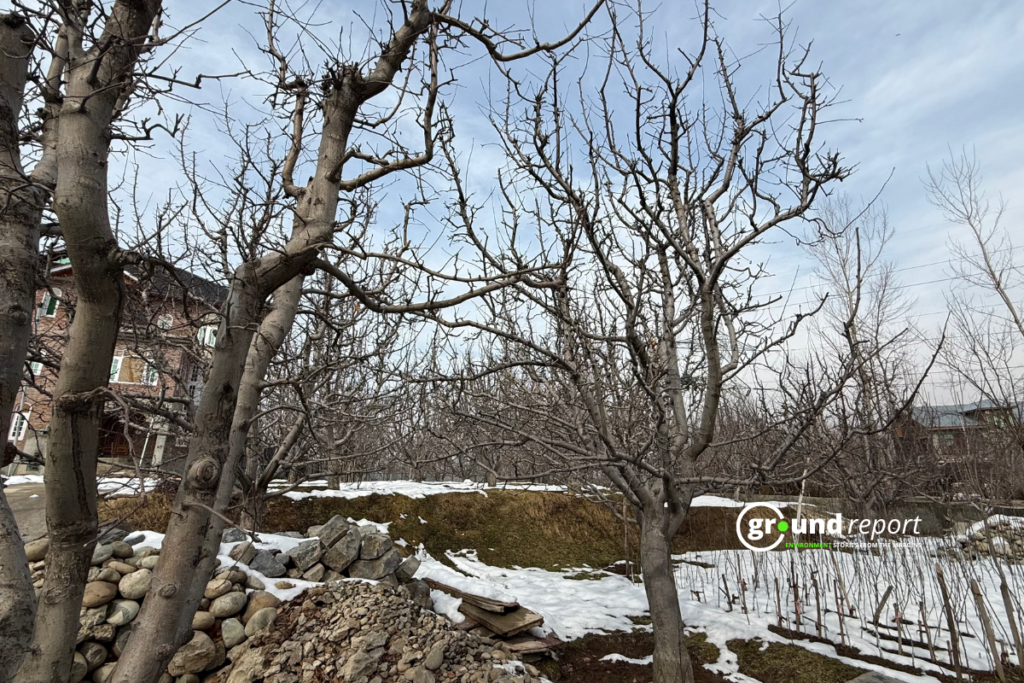
When Mohammad Aslam Mir first saw the yellow poles in his apple orchard, in Pulwama’s Babhara village, he stopped and looked around in silence. His family has cared for these trees for more than a hundred years, he said.
The poles appeared without warning, and he felt that this wasn’t his land anymore. The poles marked the survey line for a proposed railway passing through his land.
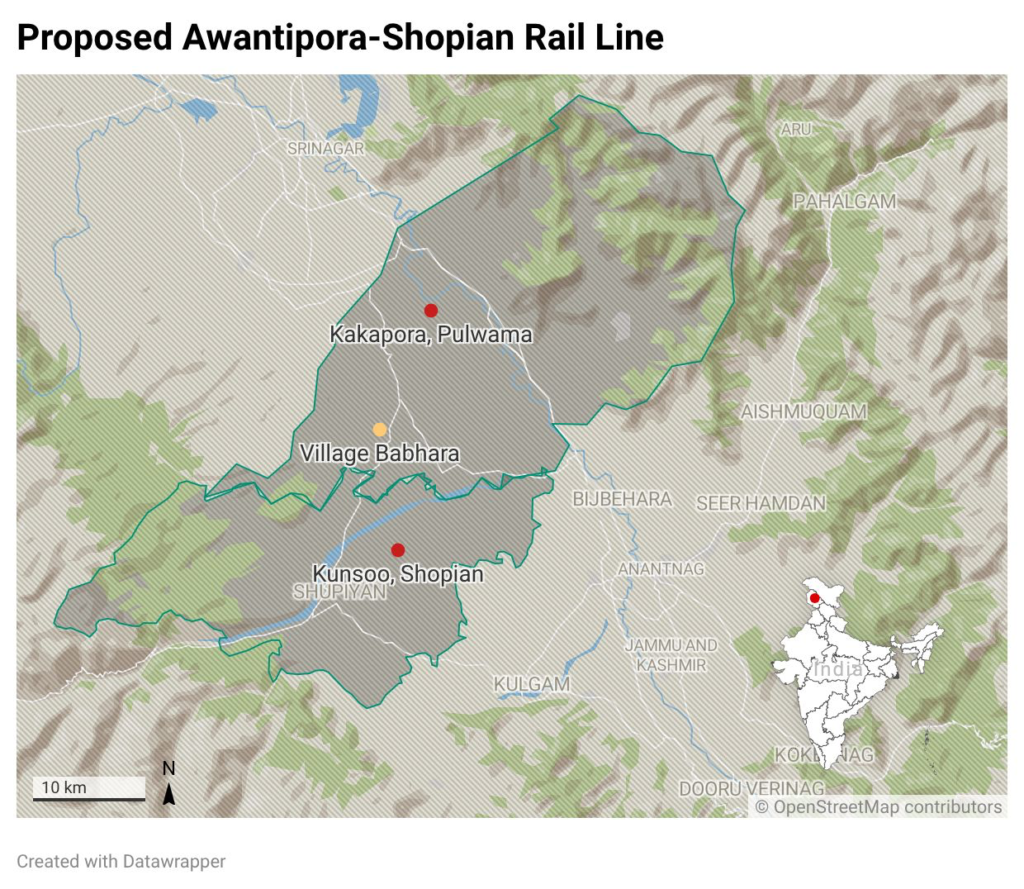
Across south Kashmir, from Kakapora in Pulwama to Kunsoo village in Shopian, the planned 27.6-kilometre railway line triggered protests. The two towns already have a 20-kilometre road and an existing railway station at Kakapora. Farmers said the new line would destroy orchards. Estimates suggested 500,000 to 700,000 trees could be affected. Nearly 3.3 million people in the region depend on horticulture for their livelihood. Kashmir now produces more than 75 percent of India’s apples.
In his orchard, farmer Feroz Ahmad Wani explained the stakes. “My children’s education and our daily needs come from these trees,” he said. Over the past 25 years, many farmers shifted from paddy to apple cultivation.
Ajaz Rasool, a hydraulic engineering specialist and an environmentalist, warned about the loss of biodiversity and damage to water systems. He said existing studies showed mostly negative environmental impacts.
Officials presented another view. Chief Horticulture Officer Reyaz Ahmad Shah said better rail links could help farmers reach markets faster. He said this could reduce post-harvest losses and improve income.
Residents allege survey work began without Social Impact Assessments or proper consultations. Protests then spread across villages.
On February 3, the Centre announced that three proposed railway projects in Kashmir, including the Kakapora–Shopian line, would be halted. The decision followed sustained protests by apple growers and residents in Pulwama, Shopian, and Anantnag.
Many locals expressed relief. Posts shared on Facebook and Instagram showed celebrations in affected villages. But the relief is cautious. Mohammad Aslam Mir said farmers still feel uncertain.
“We hope it will be rejected completely because this project has serious environmental and economic impacts,” he said. “Many farmers still live in fear — what if it starts again after some time? We want this project to end, not just paused.”
The yellow poles still stand in Babhara. The orchards remain for now. Farmers say they will feel secure only when the project is cancelled permanently.
Support Us To Sustain Independent Environmental Journalism In India.
Keep Reading
Highway Halt Puts Kashmir’s Fruit Economy at Risk
Railway line expansion plan put Kashmir’s apple orchards at risk
Warmer winters in Kashmir raise concerns over apple and crop yields