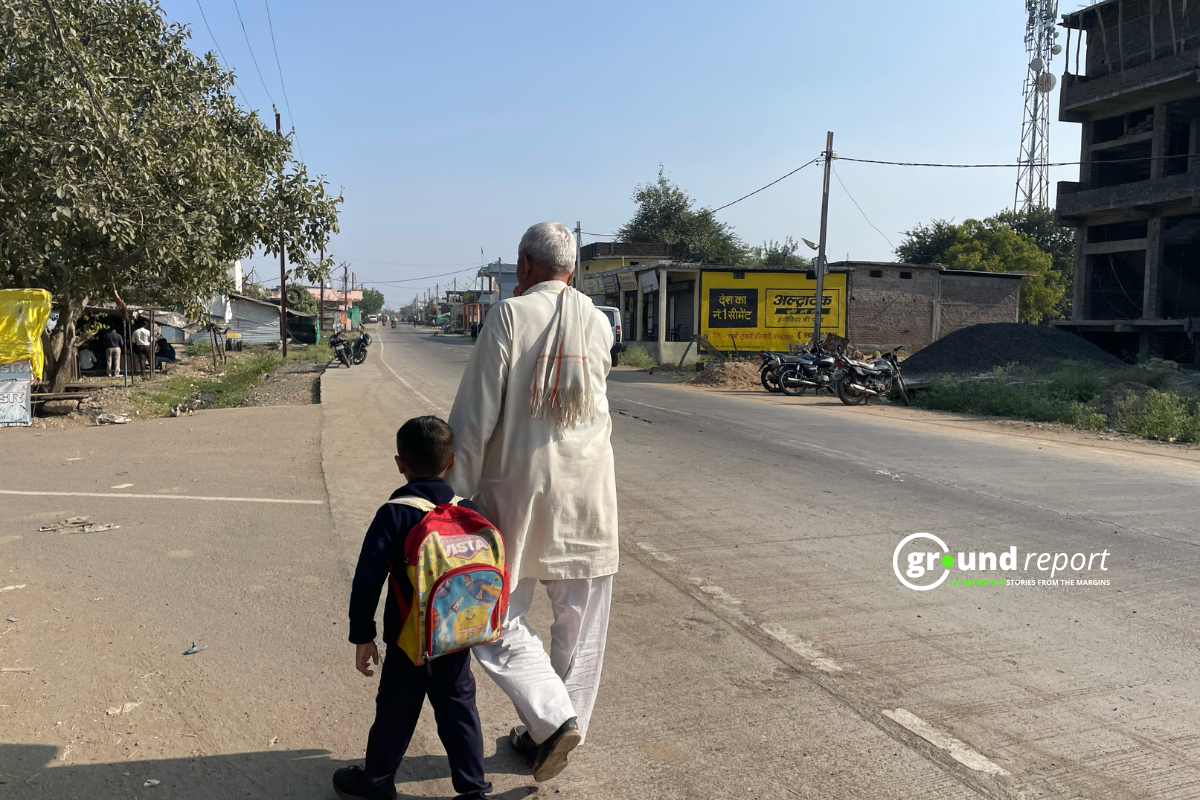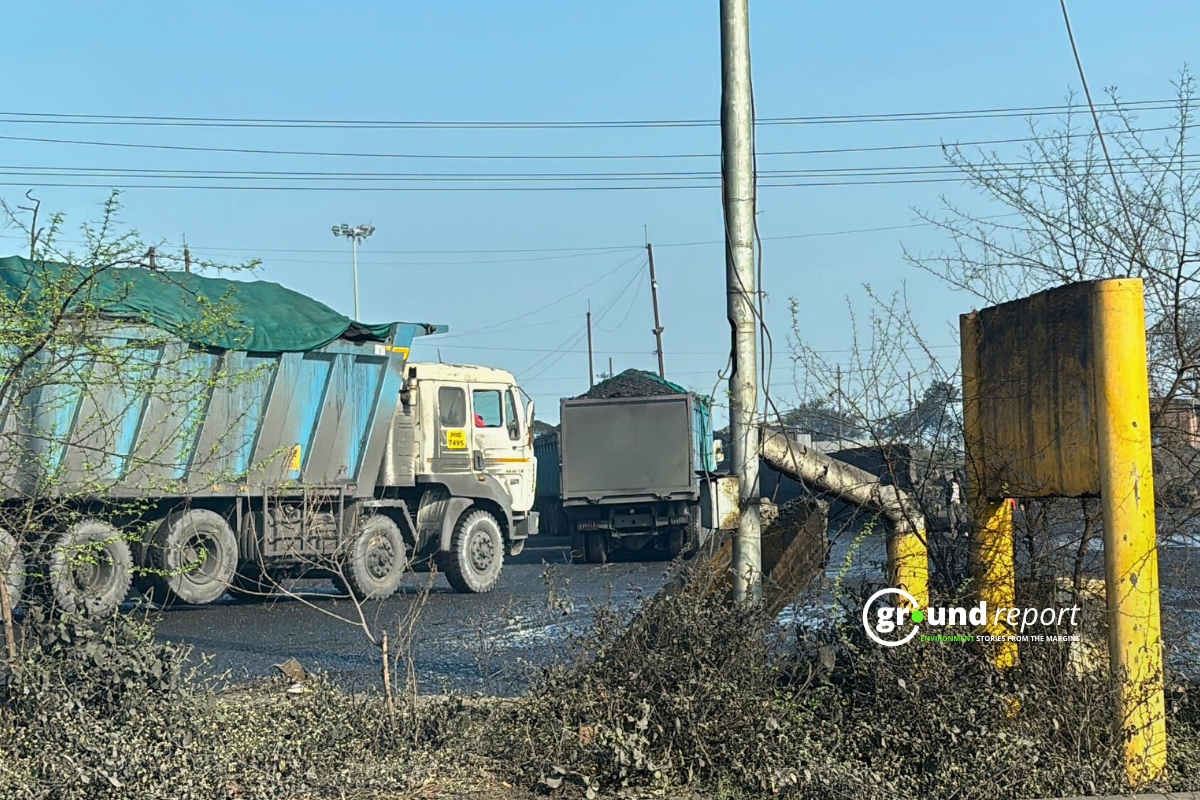
Indore, Madhya Pradesh | Sawan Harod’s dairy farm in Harshola village of Mhow tehsil, has 40–45 buffaloes and 20–25 cows. His farm has supplied a steady stream of milk to the city, but today, that supply has been cut in half. The reason is the shortage of Liquefied Petroleum Gas (LPG) cylinders, induced by the conflict in West Asia.
Every day, his dairy collects around 1,000 litres of milk—600 litres from his own farm and 300–400 litres from nearby farmers. While raw milk still sells locally, traders who once bought milk for sweets, paneer, and khoa have stopped purchasing altogether.
The crisis is linked partly to global supply disruptions. India depends heavily on LPG imports, much of which passes through the Strait of Hormuz—a route affected after military tensions involving Iran escalated on February 28. India imports around 60% of its LPG, with nearly 90% passing through the Strait of Hormuz. In response, the government has asked refineries to increase production and approved an additional 20% allocation of commercial LPG for sectors such as restaurants, hotels, food processing, and dairy.
Although two Indian vessels delivered 92,700 metric tonnes of cooking gas in mid-March, supply constraints persist.
No Easy Fix for Farmers
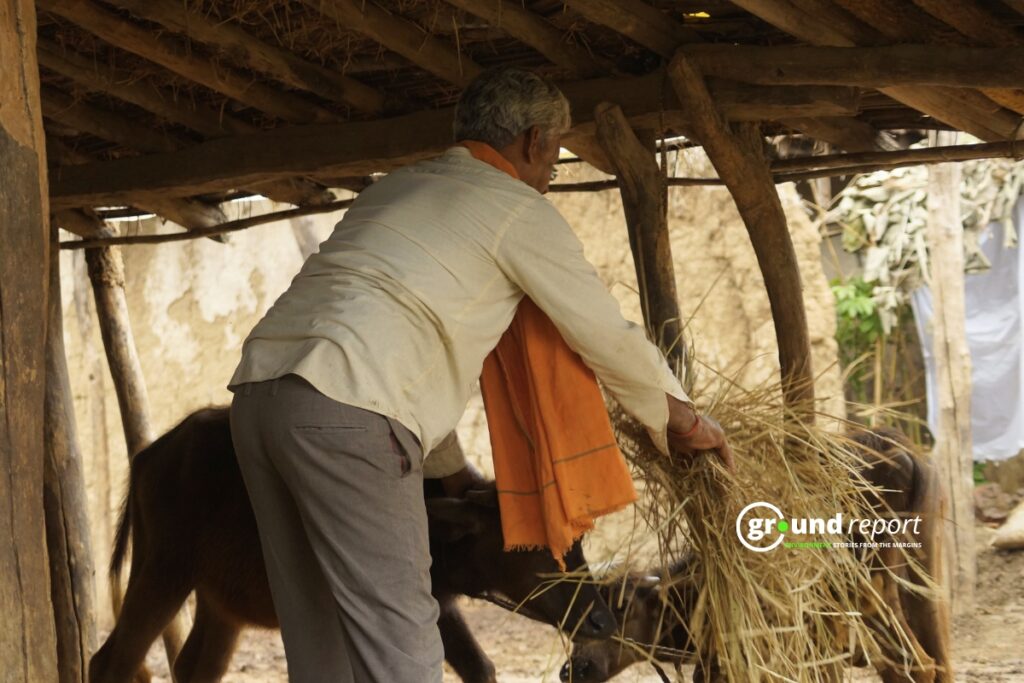
“My great-grandfather started this work… I am the fourth generation,” Harod says. “Profit margins were already low. The cylinder shortage has made things worse.”
Earlier, buffalo milk fetched ₹55 per litre and cow milk ₹40 per litre. Now, farmers are forced to sell surplus milk to powder manufacturers at a price difference of ₹10–15 per litre. Meanwhile, input costs remain unchanged. Feed, fodder, and labour together cost around ₹450 per animal per day.
Two of Harod’s workers, who had migrated from Bihar, returned to their village, as Harod couldn’t ensure LPG for their cooking either. Their absence has doubled the workload on the farm, even as earnings have fallen sharply.
Nilesh Chaudhary, a farmer and milk trader from Undel village, says their milk transport vehicles earlier made two trips daily to Indore. Now, only half the milk is sold.
“There’s no facility in villages to convert milk into khoa or ghee,” he says. “You can use firewood for a day or two, but it’s not a solution.”
In Chikhli village, farmer Hemraj Chandel—who owns around 90 cattle—estimates his losses at nearly ₹1 lakh. “Farmers have no options,” he says. “Only those tied to cooperatives can sell limited quantities. Producing ghee or khoa independently is not profitable.”
The state operates a three-tier cooperative structure based on the “Anand model”, where “the village dairy cooperative societies (DCSs) organized into milk producers unions (MPUs) at the district/regional level, which in turn were members of a statewide dairy cooperative federation,” describes the World Bank.
There are 6,961 functional dairy cooperative societies, with 2,19,605 farmers, as of November 2025.
Madhya Pradesh’s milk production has increased from 213.26 lakh tonnes in 2023-24 to 225.95 lakh tonnes in 2024-25, making it the third-largest milk-producing state in India. Buffaloes contributors 48% to the total milk production, while indigenous or nondescript cows contribute about 32%
Sweet Shops Fall Silent
The crisis has hit multiple sectors—catering, tiffin services, cloud kitchens, and dairy-linked businesses—at a time when markets were preparing for festivals like Eid, Navratri, Gudi Padwa, and Gangaur.
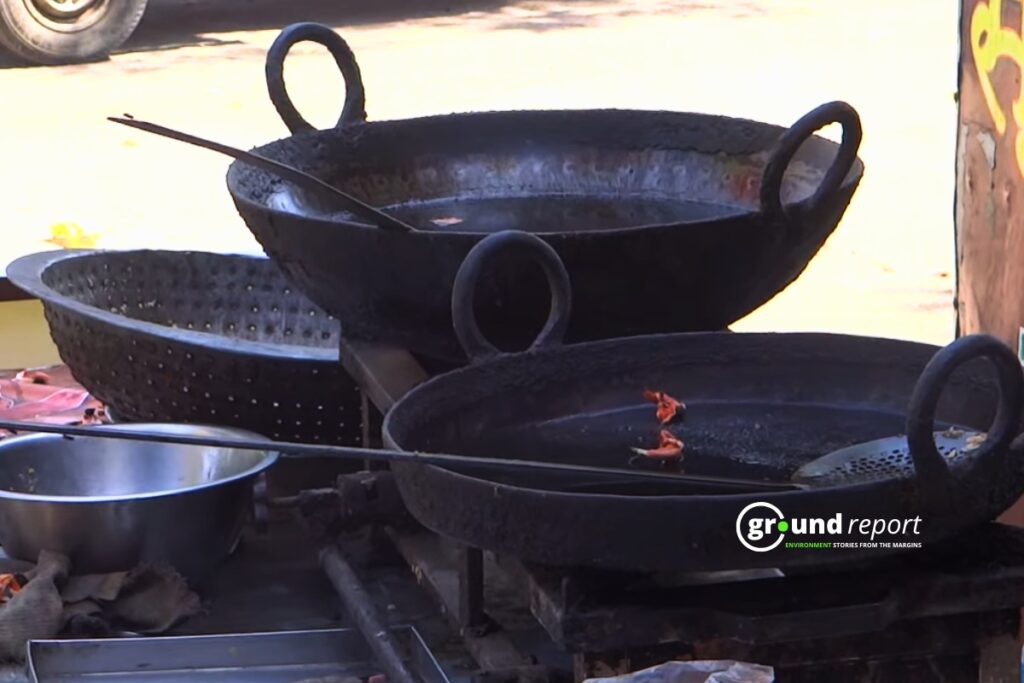
Indore Milk Vendors Association president Bharat Mathurawala explains that the city receives nearly 1.5 million litres of milk daily. Of this, around 500,000 litres are used for making sweets, paneer, and other products. Without LPG cylinders to make these products from milk, the production has dropped. The furnaces used for sweet-making remain idle due to the absence of gas.
Across Indore, food stalls and sweet shops have scaled back operations—or shut entirely—due to the lack of commercial LPG cylinders. While some vendors tried using domestic cylinders, authorities cracked down, seizing 1,827 cylinders across 1,341 locations by March 17.
“We are unable to procure milk from producers,” Mathurawala says. “Our large cooking vessels are empty. Bengali sweets cannot be made. Business has dropped by 40 percent.”
Limited Alternatives
Mathurawala says that some businesses that can afford it have shifted to diesel or electric furnaces, though rising demand has pushed up their prices. He himself is relying on a diesel furnace to sustain operations until the situation returns to normal.
On March 17, the Ministry of Petroleum and Natural Gas advised commercial users to shift to piped natural gas (PNG). But access remains limited. “PNG is not available everywhere in Indore,” says Mathurawala. Diesel furnaces are in high demand but are already regulated and overbooked.
Under the state’s Vision 2047, the government aims to further expand the dairy ecosystem by constructing more Bulk Milk Cooling Units (BMCU), strengthening cooperative banks through technological upgrades, and establishing. Even the National Programme for Dairy Development (NPDD) includes making bulk coolers.
A Wider Economic Ripple
For farmers like Sawan Harod, the equation is stark: the cost of keeping animals fed remains constant, but the milk market is shrinking by the day.
“Half the milk is selling,” he says. “The rest has nowhere to go.”
Support Us To Sustain Independent Environmental Journalism In India.
More Ground Reports
Not LPG, through solar-powered cooking, India can achieve net zero!
Amid Cooking Gas Crisis, Will Indian Weddings Return to Traditional Wood-Fired Kitchens?
Stay Connected With Ground Report For Underreported Environmental Stories.
Support Us To Sustain Independent Environmental Journalism In India.