If you search the internet for “GBS,” you’ll find medical information about a disease, along with photos and stories of people affected by it. But if you search for “GBS fighter,” one story stands out—that of Jeevan Kaneriya from Indore.
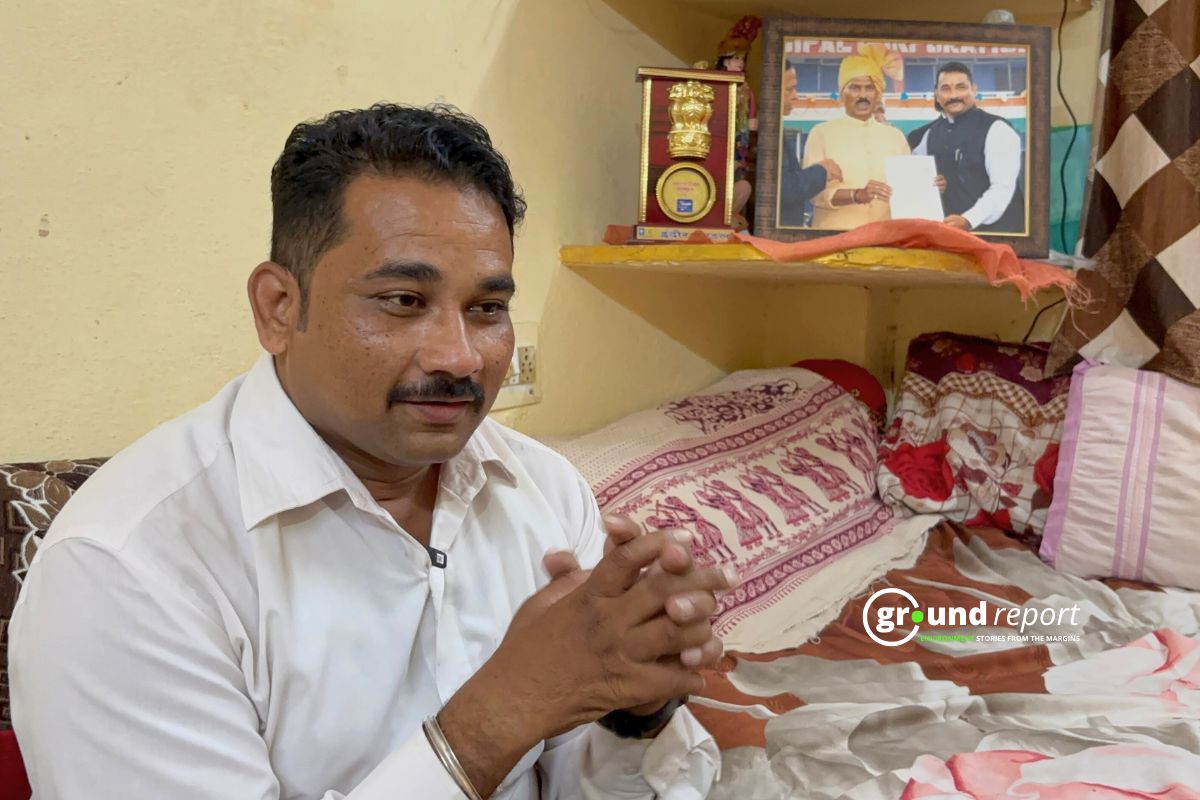
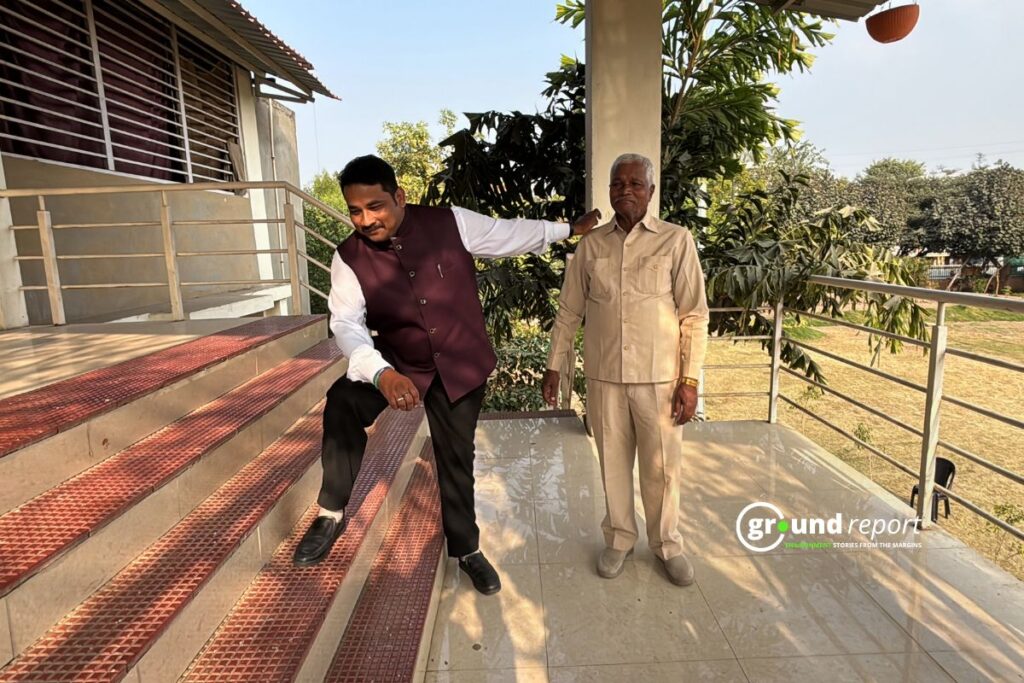
I met Kaneriya, a 44-year-old, in June 2025. He walked toward me carefully from his two-storey home in Laxmipuri, with his fingers slightly curled, but his face carried a constant smile.
Kaneriya was struck by Guillain-Barré Syndrome (GBS) ten years ago, in 2016. For nearly 20 months, he fought the disease in the hospital. After returning home, as he worked to make his body mobile again, memories of his treatment kept returning. Soon, he decided to encourage others suffering from GBS.
What began as motivational speaking has now grown into a network. Kaneriya helps GBS patients across the country access treatment and cope with its mental stress.
When illness struck suddenly
Kaneriya began his career in the circulation department of a Hindi daily newspaper. Every morning at 4 a.m., he would head out into the field to ensure newspapers reached readers.
On April 1, 2016, he couldn’t get up with his usual strength. One part of his body had gone numb. When he visited a general physician early that morning, the doctor noted that his blood pressure was abnormally high. Kaneriya had never had blood pressure (BP) issues or diabetes, so he was advised to consult a neurologist.
By the time he reached the neurologist at 8 a.m., he had completely lost sensation in one arm. Several tests were conducted to diagnose his condition. Finally, a nerve conduction velocity (NCV) test was done to assess the functioning of his nervous system. This test measures how fast electrical impulses travel through the body.
After this test, Kaneriya and his family heard the name Guillain-Barré Syndrome (GBS) for the first time. A man who had once been a state-level football player was now a GBS patient.
What is GBS?
Guillain-Barré Syndrome, a rare neurological disorder, is a condition in which an individual’s immune system mistakenly attacks its own peripheral nervous system. The peripheral nervous system lies outside the brain and spinal cord and connects the brain to all parts of the body.
Simply put, the disorder disrupts or breaks communication between the brain and the rest of the body. This can lead to paralysis, loss of sensation, and sometimes difficulty breathing. Initial symptoms often begin with numbness in parts of the body, but the severity can increase within hours.
The history of this disease predates the First World War. In 1859, French physician Jean-Baptiste Octave Landry identified its symptoms, and it was then known as Landry’s paralysis. During World War I, in 1916, French doctors André Strohl, Georges Guillain, and Jean-Alexandre Barré documented the disease systematically while treating two French soldiers with paralysis. After 1927, it came to be known as Guillain-Barré Syndrome.
According to the World Health Organization (WHO), the bacterium Campylobacter jejuni is one of the main causes of GBS and is associated with foodborne infections. However, Dr. Amit Vyas, a neurological specialist practicing in Indore for the past 17 years, says it can be caused by any kind of virus, even contaminated water.
In February 2025, cases of GBS were reported in Pune, Maharashtra, due to contaminated water. According to a reply given in the Lok Sabha on 28 March, 208 cases were recorded in Maharashtra. Media reports (WION, Feb 20, 2025) said that 23 people across the country died due to the disease.
Treating a rare disease is difficult
Kaneriya’s family had never heard of this disease before. How it is treated and what needs to be done were unanswered questions. As his condition worsened, Kaneriya had to be kept on ventilator support for three months. With savings running out and financial help from his sister, the family struggled to arrange intravenous immunoglobulin (IVIG) injections—the most effective medicine used to treat GBS.
After three months, he was brought home by ambulance. Physiotherapy continued to restore mobility. In 2017, Kaneriya’s physiotherapist asked him to speak to another patient in Indore who was struggling with paralysis. Kaneriya spoke to him every day, encouraging him not to give up. Recalling that time, Kaneriya says:
“On 2 June 2017, I told him on the phone that I was coming to meet him. When I reached his house, despite his condition, he was excited to see me. That enthusiasm and affection inspired me to help other GBS patients.”
How the network was built
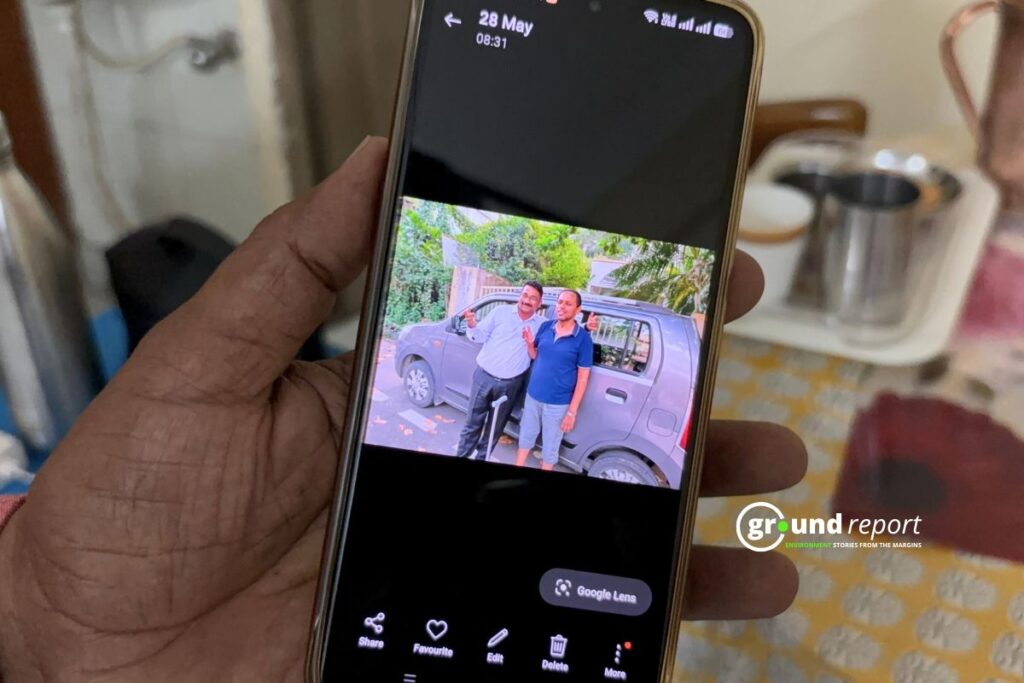
After this incident, Kaneriya searched on social media for people suffering from the disease. He also started reading extensively about GBS online. During this time, he learned about the GBS-CIDP Foundation, an international organization that supports GBS patients worldwide through a network. Kaneriya contacted them via email and is now one of four official representatives in India who help patients on behalf of the foundation.
Kaneriya says he uses two ways to connect with patients. Those seeking help through the GBS-CIDP Foundation website are connected to him or one of his three colleagues. Explaining the process, he says:
“First, we collect complete information from the patient or their family about symptoms and treatment. We ask what happened, how long it has been, which tests have been done, and how many IVIG injections have been given.”
He then explains what lies ahead in treatment and what precautions are needed. Since treatment is expensive, Kaneriya attempts to help patients access financial assistance through the Chief Minister’s Relief Fund or other sources.
Mayank Srivastava, son of Harinarayan Srivastava from Bhopal, developed GBS in October 2021. Amid confusion and stress about treatment, the family contacted Kaneriya through a relative. Srivastava says, “Kaneriya ji spoke to us every day and encouraged us. He explained that improvement would be visible after this stage of treatment, which kept our spirits up.”
He adds that IVIG injections cost ₹16,000 in Bhopal, but with Kaneriya’s help, they were able to buy them from Indore for ₹8,000. Srivastava says that in this disease, encouragement and mental support matter more than medicine, and Kaneriya provides this support free of cost.
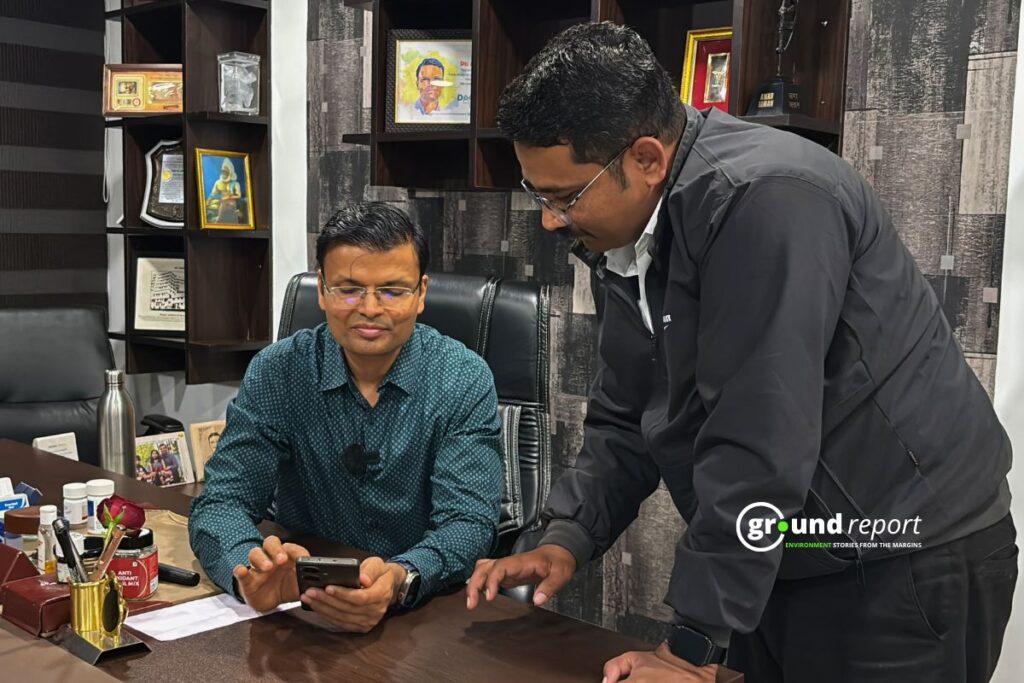
Dr. Vyas also considers Kaneriya’s work important. “There is still a lack of awareness about this disease in our society. When social workers like Jeevan, who have themselves been patients, explain the disease, it boosts the morale of patients and their families,” he says. Early diagnosis and correct treatment can prevent the disease from becoming life-threatening.
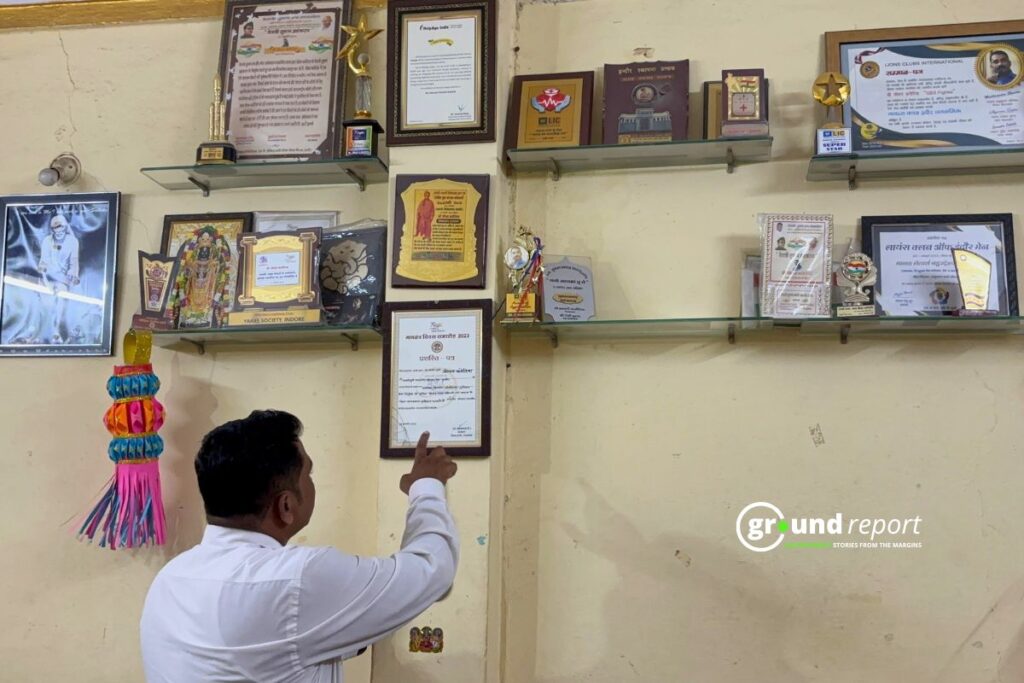
Kaneriya’s efforts continue. He has helped more than 1,000 patients across 23 states so far. Sometimes, after recovering, patients don’t stay in touch. Kaneriya says, “No one wants to remember their bad times.” But this doesn’t affect him. He says that when he fell ill, there was no one to guide him—and he wants to ensure that no one else faces the GBS treatment alone.
Kaneriya is slowly trying to return to his old life. He currently works as an insurance agent with India’s Life Insurance Corporation (LIC). He still needs the support of his father, son, or his twin daughters to climb stairs. Though he rides a two-wheeler on his own.
At the end of the day, he drives me through his city and drops me at the bus stand.
Support Us To Sustain Independent Environmental Journalism In India.
Keep Reading
Story of Mala Nimbalkar: Rag Picker to Manager of MRF centre in Bhopal
In Bhopal’s Idgah Hills, Who is Segregating Our Plastic Waste?