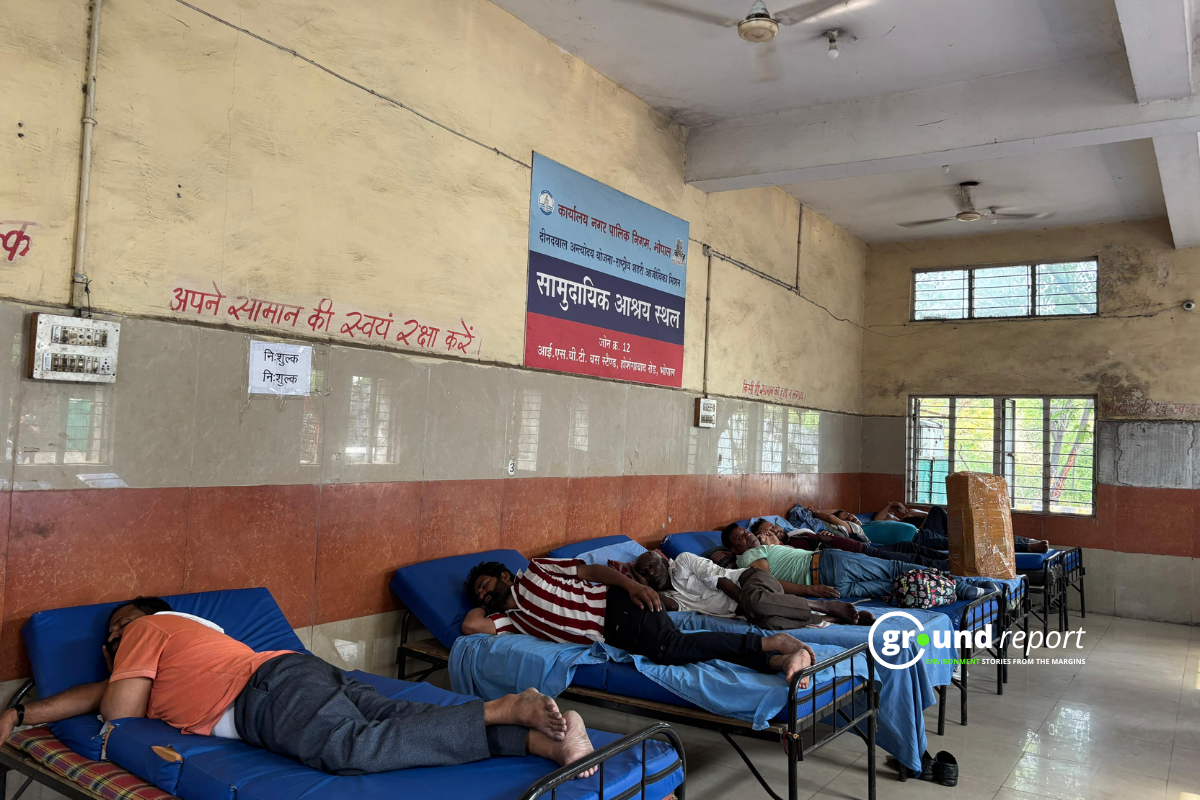
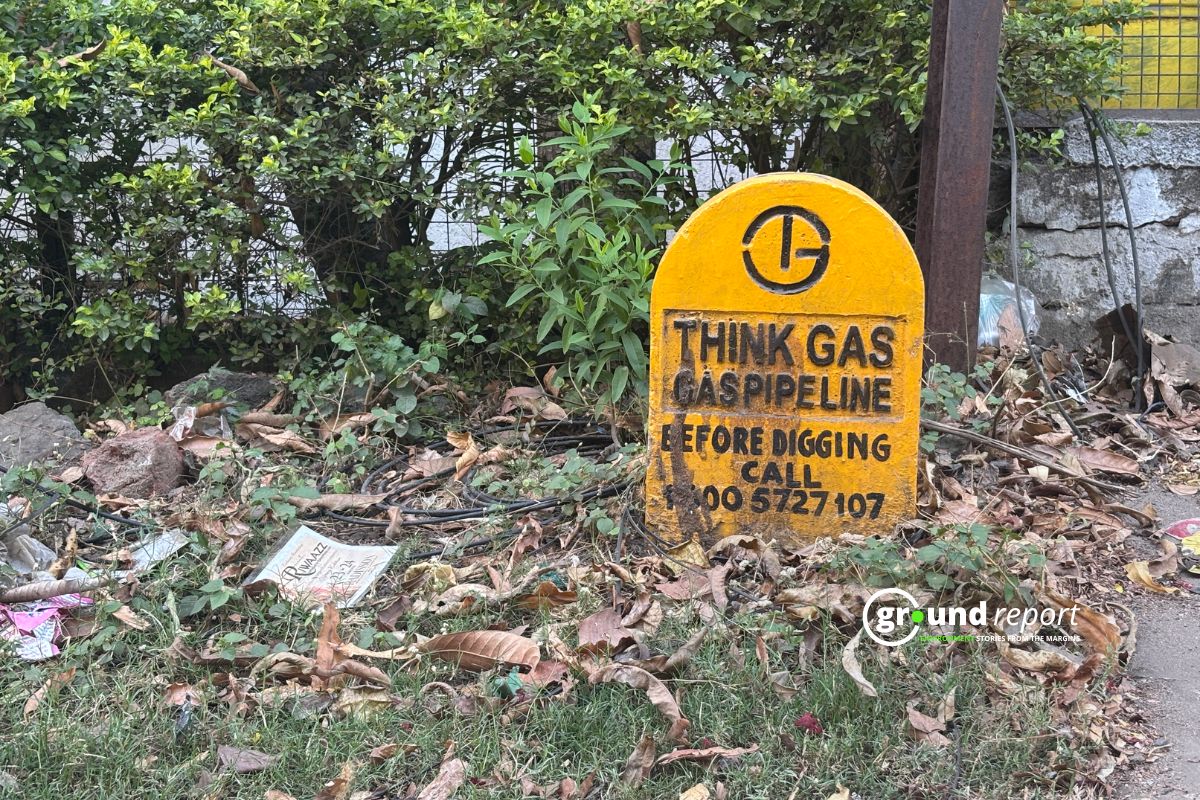
The Ministry of Petroleum and Natural Gas issued the Natural Gas and Petroleum Products Distribution Order, 2026, on March 24, under the Essential Commodities Act. The rule is simple: if a piped natural gas pipeline already runs near your home, you have 90 days to apply for a connection. If you refuse, your LPG supply stops.
Essentially, if there is a PNG pipe to the home, apply for connection or lose the LPG cylinder too.
India imports around 60 percent of its LPG, with nearly 90 percent of these imports passing through the Strait of Hormuz, the narrow sea route between Iran and Oman, according to the Ministry of Petroleum and Natural Gas. And the recent conflict in West Asia has challenged India’s energy security, as households and commercial users still rely on LPG as their cooking fuel.
How Widespread Is PNG Across India?
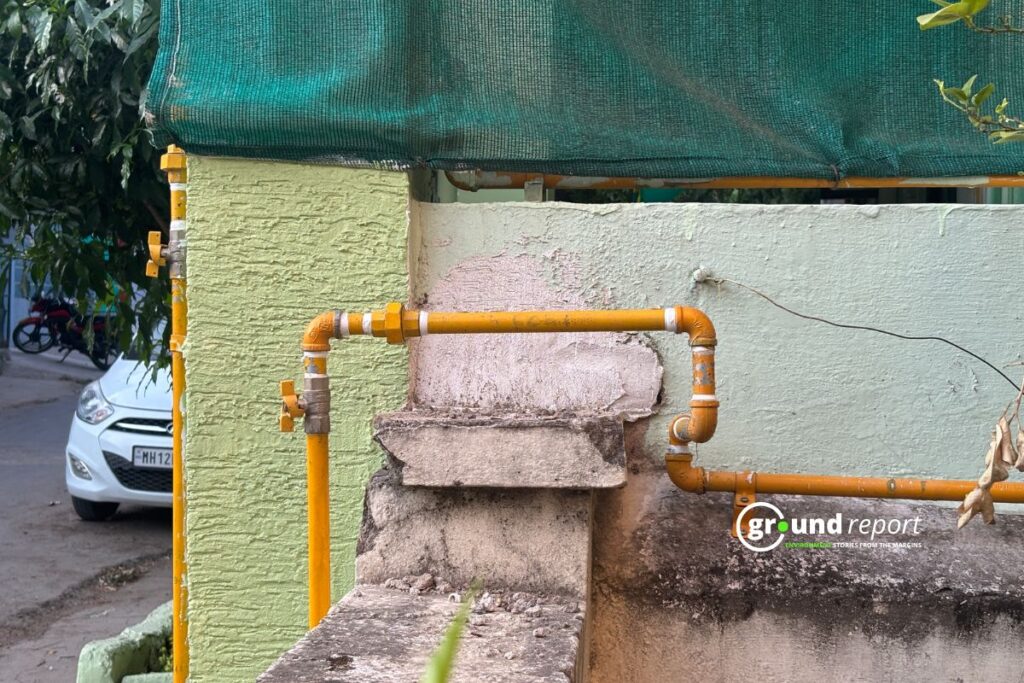
Piped natural gas reaches homes through the City Gas Distribution (CGD) network. This is a system of underground pipelines that carries natural gas from regional transmission lines continuously to kitchen burners, eliminating the need to book refills, according to the Petroleum and Natural Gas Regulatory Board (PNGRB).
The gas comes from domestic gas fields, primarily from the Krishna-Godavari basin in Andhra Pradesh and fields in Rajasthan and Gujarat, and LNG imports, sourced largely from Qatar, the United States, and Australia, which are transported through pipelines to cities and then supplied to homes.
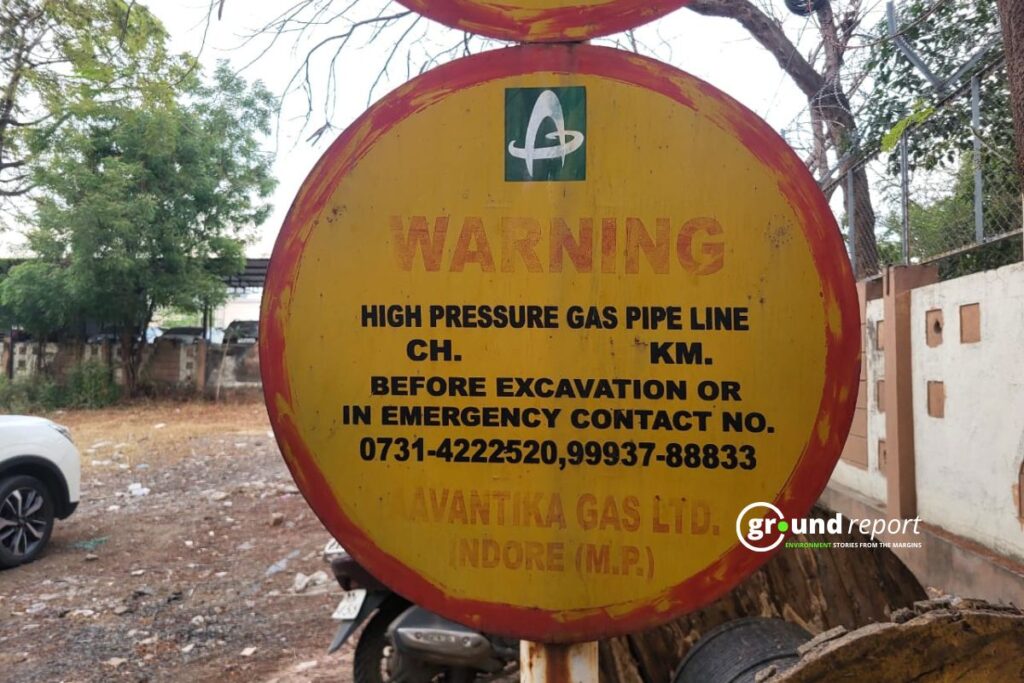
“Unlike some other countries, India does not import natural gas through cross‑border pipelines. We rely on liquefied natural gas (LNG) instead. The gas is cooled to about minus 165 degrees Celsius so that it becomes a liquid and can be transported in tankers. When it reaches India, it is warmed up again, regasified at import terminals along the coast, and then supplied in gas form through pipelines,” explained Purva Jain, lead energy specialist, gas & international advocacy, South Asia, at IEEFA.
As of September 2025, India had 1.57 crore domestic PNG connections. PNGRB has authorized CGD networks across 307 geographical areas.
The connections are heavily concentrated in a handful of states. Maharashtra and Gujarat lead PNG adoption, followed by Uttar Pradesh and Delhi. Madhya Pradesh has almost 3 lakh connections as of late 2025. India aims to reach 12.63 crore PNG connections by 2032, according to the PNGRB statement and the Ministry of Petroleum and Natural Gas.
How a Household Gets a PNG Connection
PNG supply is limited to locations where this network exists. After confirming availability, the consumer submits an application online or at a service centre with identity and address proof. The company carries out a site inspection and, where pipelines are already laid, activates the connection within 7 to 15 days.
Harsh Paroche, originally from Jabalpur but now living in Bhopal, works as a development professional. His landlord already had a PNG connection installed, but getting it activated was a struggle. “The first 4 days were very challenging; they [agency technicians] would say they would come but never did,” he told Ground Report.
It was only after he pressured his landlord to intervene that the technicians finally showed up on the fifth day. He further added, “It wasn’t a long process; it took about half an hour. They turned on the meter, installed the app, linked it completely, and the gas started working fine.”
Madhya Pradesh’s Situation on the Ground
The state of Madhya Pradesh has about 1.25 crore LPG consumers, as per PPAC data. Against this, PNG connections remain limited. As of May 2025, the state had around 2.94 lakh domestic PNG connections.
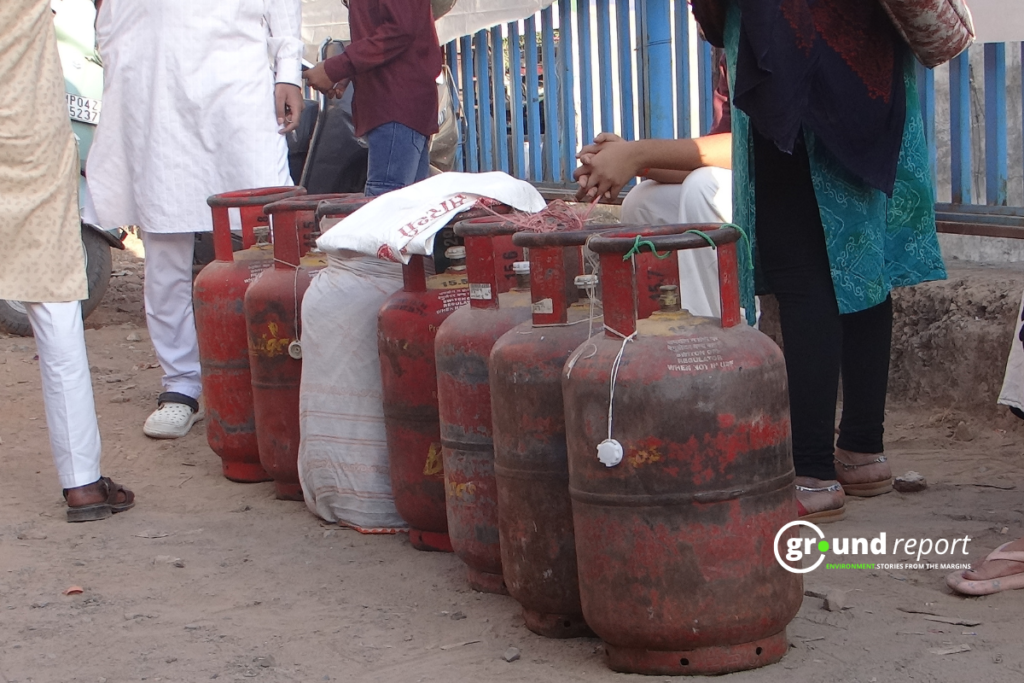
The state’s primary PNG distributor is Aavantika Gas Limited, a joint venture between GAIL and Hindustan Petroleum Corporation Limited, operating in Indore, Ujjain, Gwalior, and Pithampur. GAIL Gas Limited covers Dewas, while expansion to Bhopal, Rajgarh, Rewa, and Satna is still underway.
When the crisis hit, the additional chief secretary of MP’s Food and Civil Supplies Department, Rashmi Arun Shami, reviewed the situation and directed industrial and commercial units to take PNG connections wherever pipeline infrastructure was available.
District-level data from PNGRB, as of September 30, 2025, tells an uneven story. While Satna–Shahdol has done relatively better, achieving 9,611 connections against a target of 15,600, most districts remain far behind. In Bhopal–Rajgarh, only 39,373 domestic PNG connections have been achieved against a target of 5,50,222. Jabalpur, Katni, Khandwa, Khargone, and Burhanpur report zero connections despite targets running into lakhs, and Betul, Chhindwara, Balaghat, and Seoni together have recorded only 154 connections against a target of over four lakh.
What MP Has Done, and What Remains
The MP government launched the City Gas Distribution Network Development and Expansion Policy on February 14, 2025, aiming to increase the availability of clean cooking fuel through PNG and clean transport fuel through CNG across the state.
Before the 2025 policy, expansion relied primarily on PNGRB’s central authorisation rounds and GAIL’s joint ventures. The 2025 state policy marked the first time MP gave CGD expansion its own dedicated administrative framework.
According to the MP Economic Survey, the CGD network under this policy now spans 25 geographical areas covering 55 districts. The Minimum Work Programme sets a target of 59.71 lakh PNG connections. Achieved so far: 3.51 lakh, just under six percent.
On September 25, 2025, MP launched a single window portal for CGD companies to obtain no objection certificates (NOC) from district administrations in one place, cutting months of bureaucratic delay.
At the central level, the government has offered states additional commercial LPG allocation, up to 50 percent of the quota, in exchange for faster CGD approvals, including processing all new PNG permits within 24 hours and waiving road restoration charges for pipeline companies, according to Business Today.
Progress Uneven, Gaps Remain
In cities where the CGD network is mature, such as parts of Delhi, Mumbai, and Ahmedabad, the process is relatively smooth.
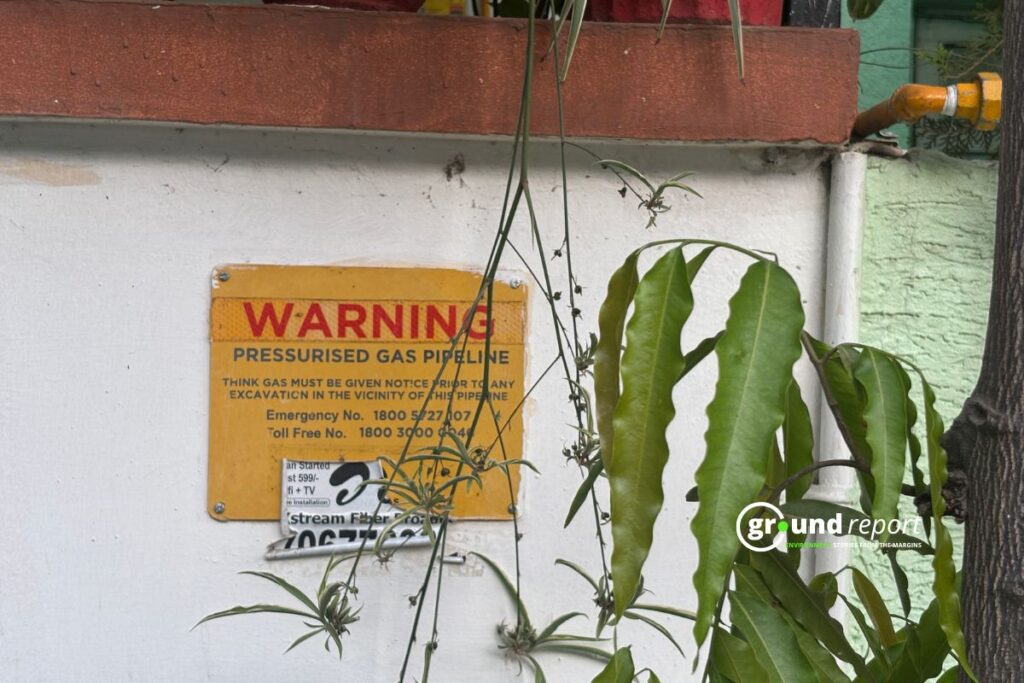
However, in many areas, the pipeline runs right outside homes, yet households remain unconnected. Nationally, around 60 lakh households are in the same situation; the pipeline exists, but the last-mile connection is never followed, according to Dainik Jagran.
“One of the biggest reasons is affordability, both the upfront connection cost and the monthly gas bills. In cities where the network is not fully available, that also limits how many households can connect,” Purva Jain told Ground Report. “The connection is around 6,500 rupees, with all the security deposit and everything for transferring from an LPG connection to a PNG connection.”
However, Paroche’s experience has been different. Having previously lived in Delhi, Paroche had no choice but to buy cylinders in the black market for ₹1,100 to ₹1,200 each. The recharge-based PNG system in Bhopal, Paroche says, has made things far more convenient.
He also sees a larger convenience that goes beyond cost. “…People everywhere are searching for cylinders. They are selling them for ₹3,000 in black in Bhopal, but there hasn’t been any such problem with gas. Whenever you turn on the gas, there’s no problem.”
Jain points to a structural gap: “In many cities, the grid network is not fully available, and that limits how many households can connect.”
In Paroche’s hometown, “the major Gwarighat area, which is considered very important in Jabalpur, PNG hasn’t arrived there yet,” he says.
“LPG has been around for decades. Its distribution system is strong, and that is why the government introduced subsidies to push its use. PNG is much newer. We have only been building it seriously for the last 10 to 12 years. Today, it covers only about 10 to 15 million homes. It is simply not widely available yet,” she said.
She says the government never felt the need to subsidize both fuels at once. “The government was already spending on LPG subsidies. So there was no push to do the same for PNG.”
Jain says quiet price support does exist for PNG. “There is a sort of indirect subsidy; you would not really call it a subsidy, but there is a price ceiling under the older administered price mechanism. Because of the Russia-Ukraine crisis, when prices were really high, a ceiling of about $6.50 was introduced to make gas more affordable and help people transition to gas-based use for cooking, transport, and industry. If you look at PNG prices in Delhi, they have been around ₹48.5 for the last three years. There has been no movement,” she said.
The 2026 Distribution Order has tried to fix the structural delays. Housing societies must now allow pipeline access within three working days. Authorities must clear right-of-way permissions within 10 days, with silence treated as deemed approval.
Top States by Domestic PNG Connections
| S.NO | State | PNG Connections |
| 1 | Maharashtra | 45–46 lakh |
| 2 | Gujarat | 38–39 lakh |
| 3 | Uttar Pradesh | 21–22 lakh |
| 4 | Delhi | 18–19 lakh |
| 5 | Karnataka | 6 lakh |
| 6 | Haryana | 5.5–6 lakh |
| 7 | Rajasthan | 5 lakh |
| 8 | Madhya Pradesh | 2.94 lakh |
Shishir Agarwal contributed to reporting.
Support Us To Sustain Independent Environmental Journalism In India.
Keep Reading
Highway Halt Puts Kashmir’s Fruit Economy at Risk
Railway line expansion plan put Kashmir’s apple orchards at risk
Warmer winters in Kashmir raise concerns over apple and crop yields
Stay Connected With Ground Report For Underreported Environmental Stories.