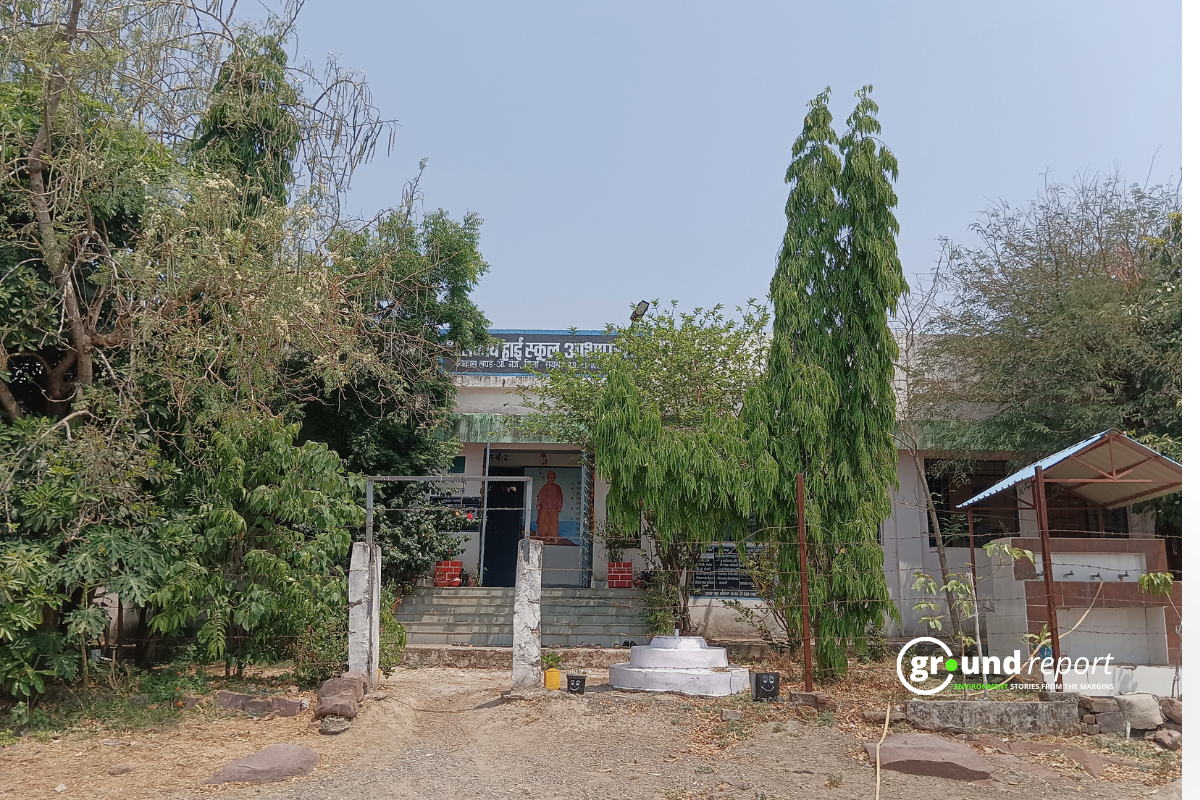
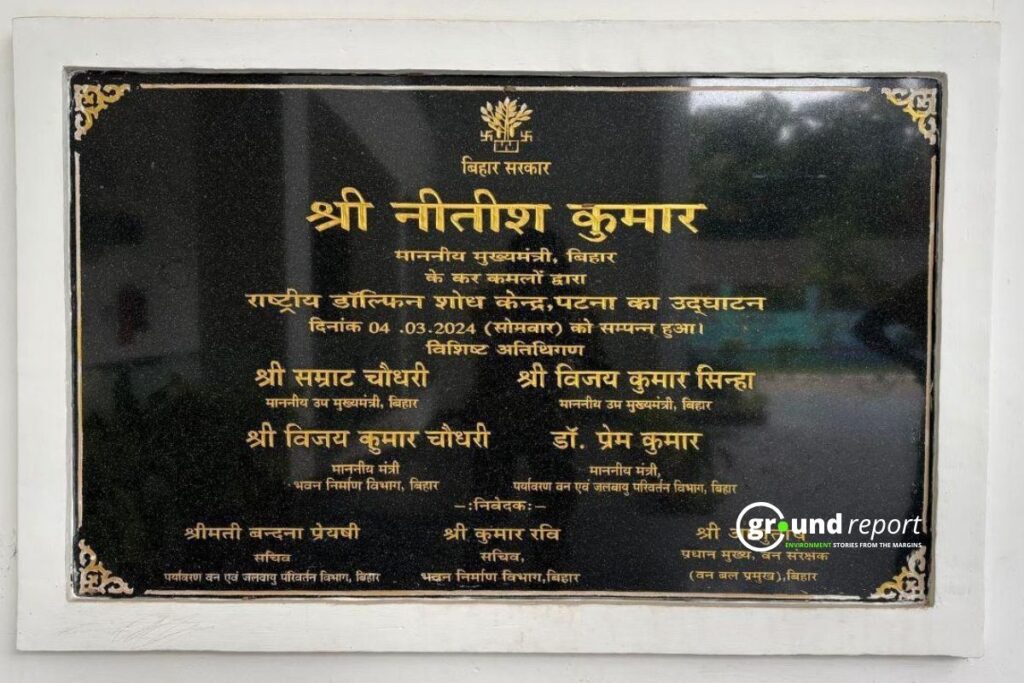
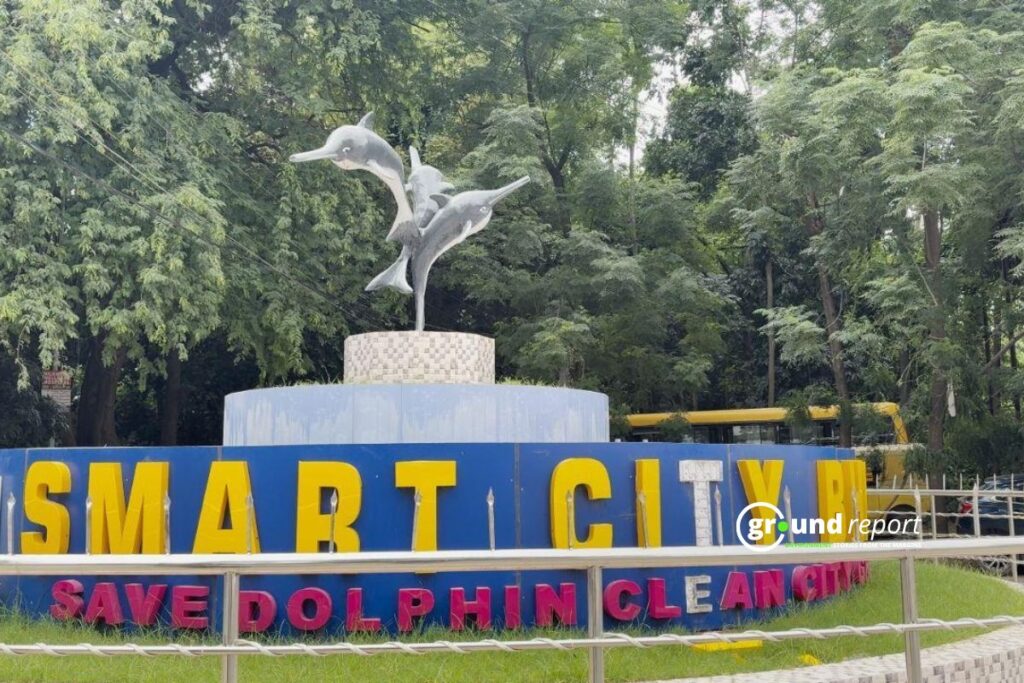
The National Dolphin Research Centre in Patna—inaugurated in March 2024 to safeguard the endangered Gangetic dolphin—now stands abandoned. Its halls sit empty, the promised labs, scientists, and rescue teams not in sight. Inside the sprawling building, dust settles on unused furniture, while outside, only gardeners and guards keep the premises alive.
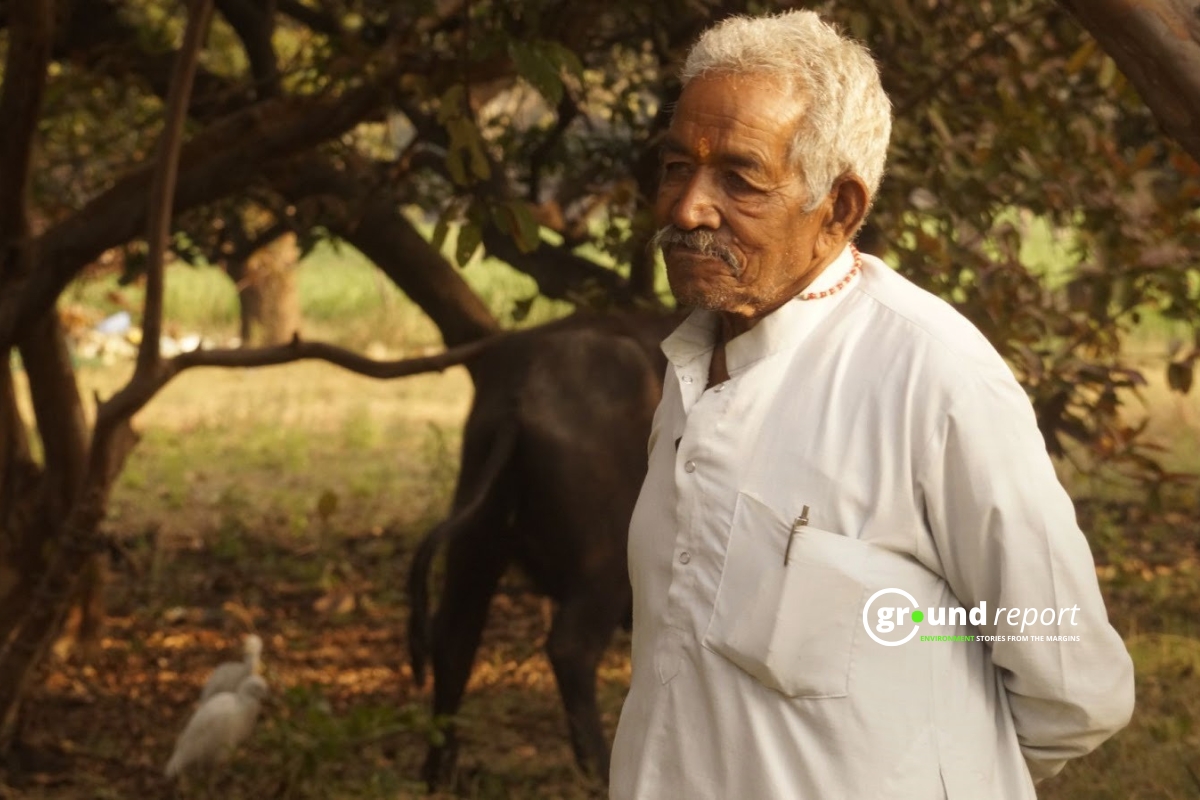
“We are awaiting funds from the government. Some vacant seats will also be filled. For now, I am the only staff member,” Dr. Gopal Sharma, interim Director of the NDRC, told Ground Report in July this year. The centre would take at least six months to be operational. He added that the guards, cleaners, and caretakers are employed by the Forest Department, not the NDRC. “We have no equipment as of now except for my personal cameras, but everything will be purchased soon.”
While right beside the centre, in the river Ganges, assailed with chemical pollution, raw sewage, collapsing infrastructure, and illegal sand mining, the dolphins swim.
Dirty river puts dolphins at risk
Across India, the population of Gangetic dolphins has more than halved since 1957, and their living area has shrunk by nearly 25 percent, despite being the national aquatic animal. Experts warn that India could face a disaster similar to the possible extinction of the Yangtze River dolphin in China.
The idle research centre is just one part of a larger failure. Incomplete sewage projects and aggressive sand mining are ravaging the Ganga’s ecology and eroding the endangered Gangetic dolphin’s remaining habitat.
The river is a lifeline for millions, a sacred entity, and yet, a dumping ground. Over 80 drains flow into the Ganga in the Bhagalpur district alone.
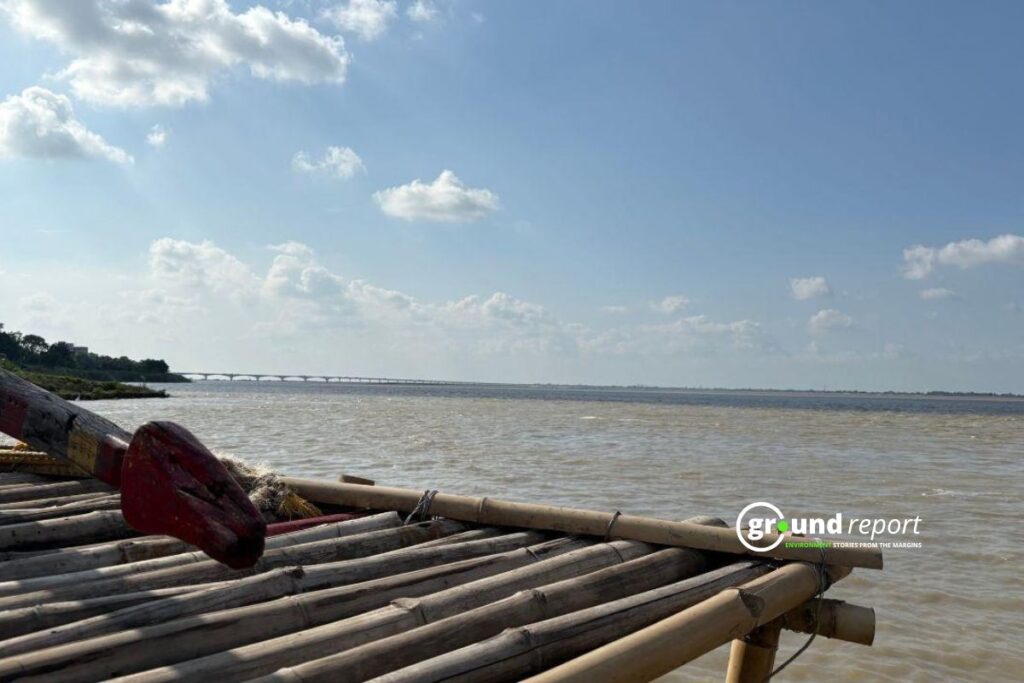
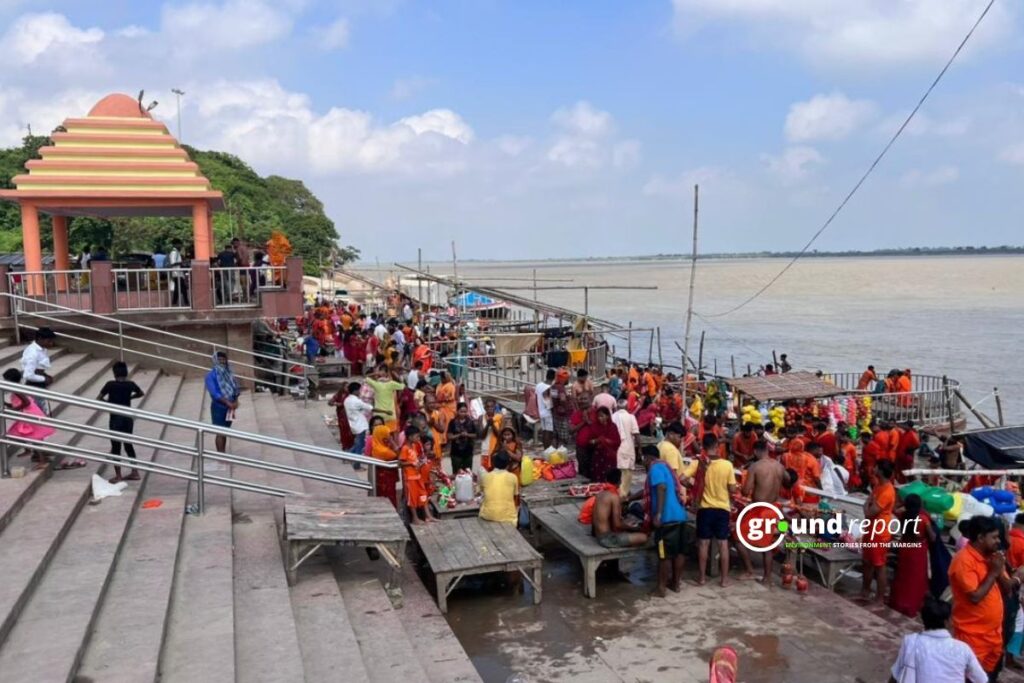
The full impact of this incomplete infrastructure becomes clear during the auspicious month of Sawan in July. Devotees, unwavering in their faith, thronged the Ganga ghats of Bhagalpur. They descended into the murky waters, offering prayers, taking holy dips, their hands scooping up the very water that silently carried bacteria, chemical residues, and untreated sewage.
The Namami Gange Programme, an ambitious central government initiative to clean the river Ganga, aimed to staunch this flow by constructing sewage treatment plants.
Delayed projects leave river exposed
Four sewerage infrastructure projects had been sanctioned—Bhagalpur in 2017, Sultanganj in 2019, Naugachia in 2020, and Kahalgaon in 2019— with a total capacity of 70 million litres per day. Two of these, in Sultanganj and Naugachia, are completed. But the other two, which are meant to tackle the bulk of Bhagalpur city’s and Kahalgaon’s waste, are still under construction.
The massive sewage treatment plant planned for Bhagalpur city has a capacity of 45 million litres per day. But it has faced numerous delays. While the plant structure might be declared “completed,” the accompanying effluent pipelines, which would carry treated water into the river, are incomplete.
Bhagalpur District Magistrate Dr. Nawal Kishor Choudhary said, “We are treating all waters coming into the Ganga. The sewage treatment plants, which are ready, will be operational very soon.”
This May, a study by the Wildlife Institute of India examined the fish species in the dolphins’ diet. Researchers discovered 39 hormone-disrupting chemicals and other noxious pollutants.
The researchers discovered high levels of industrial pollutants, such as di(2-ethylhexyl) phthalate (DEHP) and di-n-butyl phthalate (DnBP), accumulating in these fish. They also detected banned pesticides, including DDT and Lindane. The toxins then move up the food chain, reaching the dolphins.
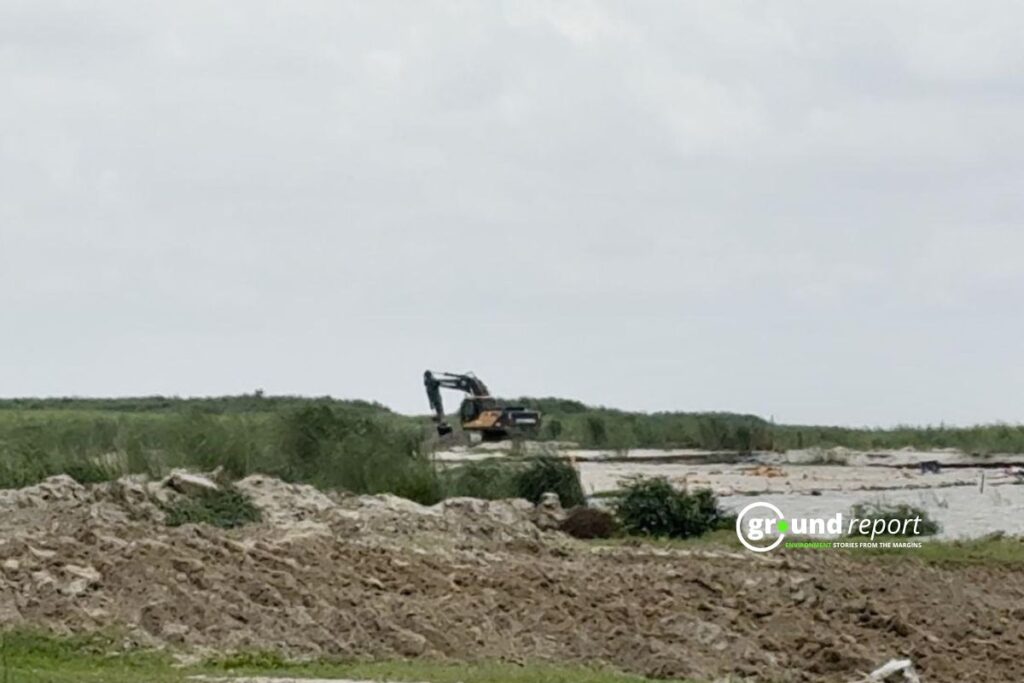
Another, equally destructive force, sand mining, is reshaping the very bed of the Ganga. For years, enormous dredgers have gouged sand from the Ganga’s riverbed, often in open defiance of the law. Despite an official ban, illegal sand mining by Bihar’s sand mafia continues unchecked.
“There is a blanket ban on mining activities in the concerned area except with permission of the appropriate authority,” said Chaudhary.
Sand mining wipes out habitat
A 2025 study has explicitly linked rampant sand mining to habitat degradation for Gangetic dolphins, among other aquatic species.
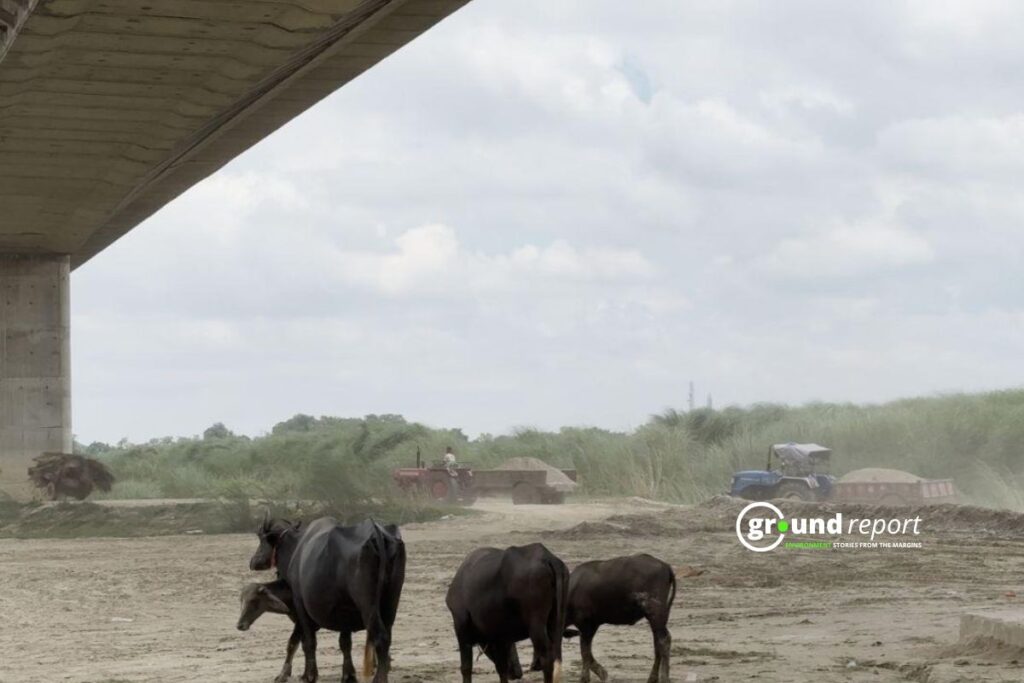
This activity is actively destroying the Gangetic dolphins’ critical habitat and food supply in Bhagalpur.
Sand mining threatens the survival and persistence of endangered riverine species, including the Gangetic dolphins,” says Nachiket Kelkar, a researcher associated with ATREE and the Wildlife Conservation Trust in Mumbai.
The noise from the machines made it harder for dolphins to sense their surroundings through echolocation– their primary sense for navigation and hunting. Their safe deep channels were disrupted, and the shallow birthing areas disappeared.
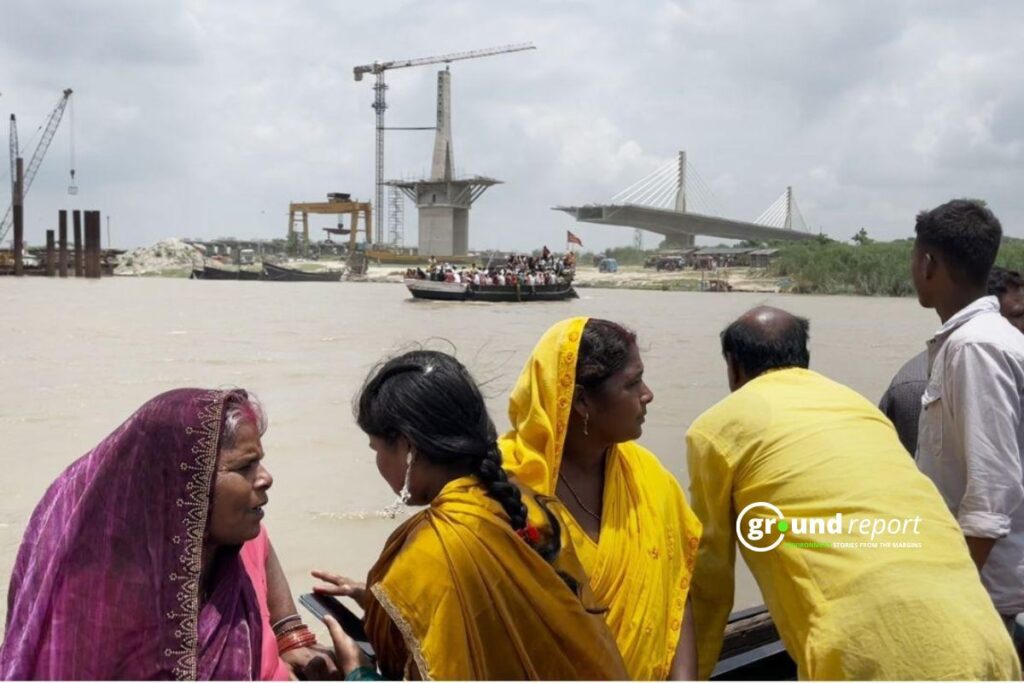
Along with pollution and habitat loss, the animals have had to contend with repeated failures of the under-construction Agwani-Sultanganj bridge. It partially collapsed into the Vikramshila Gangetic Dolphin Sanctuary in Bhagalpur three times between 2022 and 2024 (see Part 1 and Part 2 of this story).
Tourists, though not in large numbers, glide in small boats with their phone cameras ready, hoping to catch a glimpse of the dolphins. And, the potential to sight a dolphin depends on a fundamental: a healthy, thriving dolphin population.
While tourism provides only a modest source of income for locals, river ecologist Subhasis Dey remains critical of efforts to promote ecotourism in the region.
“Ecotourism in dolphin habitats should be entirely prohibited. The area must be left undisturbed as it is,” having worked for 25 years with the Gangetic Dolphins, Dey says. “Tourist vessels are disrupting the habitat, which is already in a state of disorder. The animals must simply be left alone and not subjected to further interference. These habitats have already been disturbed far too much. The government refuses to heed our advice. After investing so much time and effort, it is disheartening to see our recommendations consistently ignored.”
He was part of the Riverine Ecosystems and Livelihoods program at the Wildlife Conservation Trust in Mumbai.
For Dey, the solutions stem from community involvement through Dolphin Mitras “Friends of Dolphins.” They talked about the initiative in the first part of the series. Dey points to the rifts the initiative has unknowingly created within the community.
“These dolphins sometimes die in fishing nets. Dolphin Mitras emerge from the community itself, yet they end up complaining about people from the same community. This has created rifts within their own communities,” Dey said. Now the work to save dolphins is being done through policing instead of cooperation.”
“The big challenge, however, remains unaddressed. Real conservation needs community involvement, and that is sorely lacking. Sand mining affects fish populations and destroys dolphin breeding grounds. Disturbances like embankment construction further destroy habitats. Pollution, too, has a severe impact,” Dey elaborated.
The story of the Gangetic dolphins in Bhagalpur is a microcosm of a larger environmental crisis. The solutions are known, the studies are published, and the potential for a brighter future exists.
This story was produced with support from Internews’ Earth Journalism Network.
Support us to keep independent environmental journalism alive in India.
Keep Reading
Read Part First: “Bihar’s Dolphin Mitras Are Real Crooks”: Saving Gangetic Dolphins Against Mosquito Nets
Read Part Second: Inside Repeated Collapse Of A Bihar Bridge And Its Ecological Impact