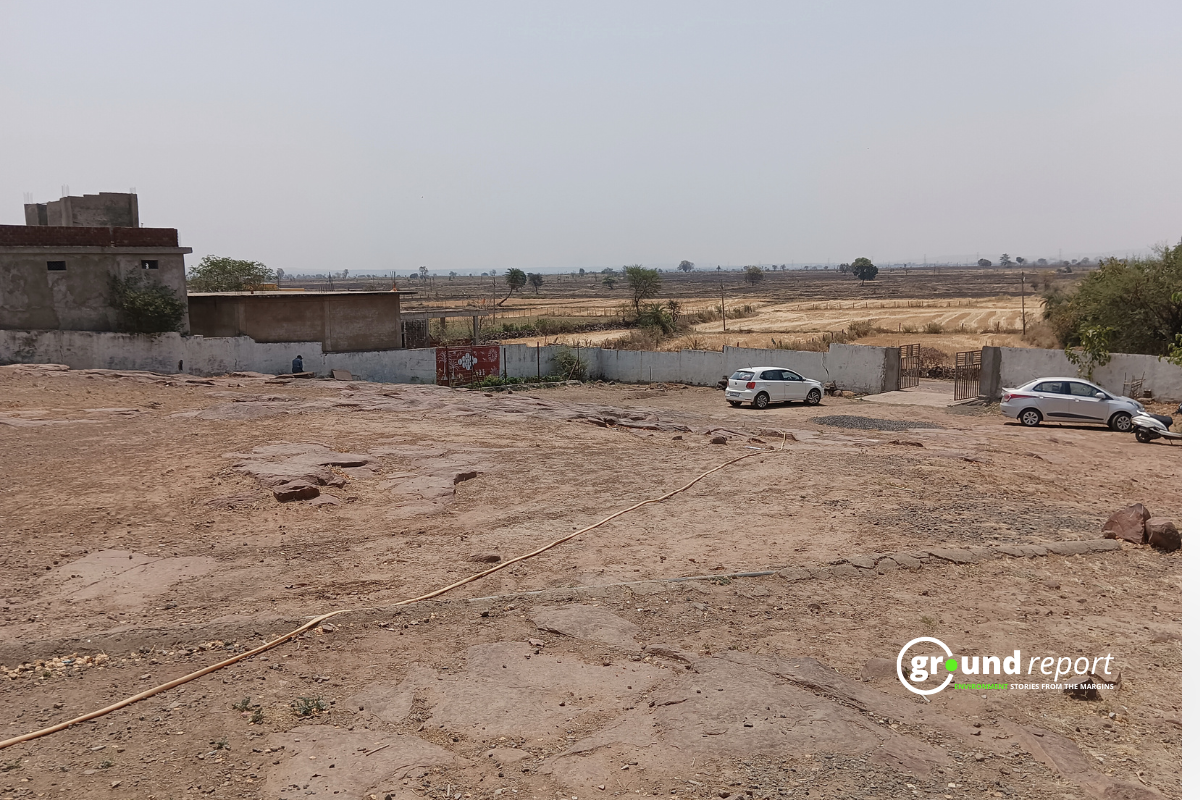
Kashmir Valley received just 100.6 mm of rain and snow between December and February—over 60% below the normal 284.9 mm, Mukhtar Ahmad, Director of the Meteorological Department in Srinagar, told Ground Report.
Temperatures across Kashmir stayed unusually high through February and into early March. Srinagar touched a maximum temperature of 21.2°C on several days, nearly 9°C above normal. Qazigund recorded a maximum of 21.2°C, almost 9°C above normal. Kupwara recorded a maximum of 20.3°C, and Kokernag recorded temperatures close to 19°C, according to Meteorological Department data.
“Kashmir did not receive enough western disturbances this winter,” Ahmad said. “The temperature rise is due to dryness and clear skies. It has a negative impact and leads to premature blooming of vegetation,” Ahmad said.
Western disturbances are the weather systems that bring most of the region’s rain and snow, drawing moisture primarily from the Mediterranean Sea and the Atlantic Ocean.
These conditions have triggered early flowering in orchards across the valley. Scientists and officials warn that if heavy rain hits during the blooming period now, the harvest could fail, threatening the livelihoods of more than seven lakh families who depend on agriculture and horticulture for their income.
Agriculture Department Advises Crop Shift
Ahmad said the dry weather could speed up snowmelt in the higher mountains, briefly raising river levels but leaving the Valley short of water later in summer, when farmers need it most. Though the water levels have already fallen in the Vishaw, Lidder, Brengi, Sandran, and Sindh tributaries of Jhelum. These tributaries support irrigation and local water supply across parts of the Valley.

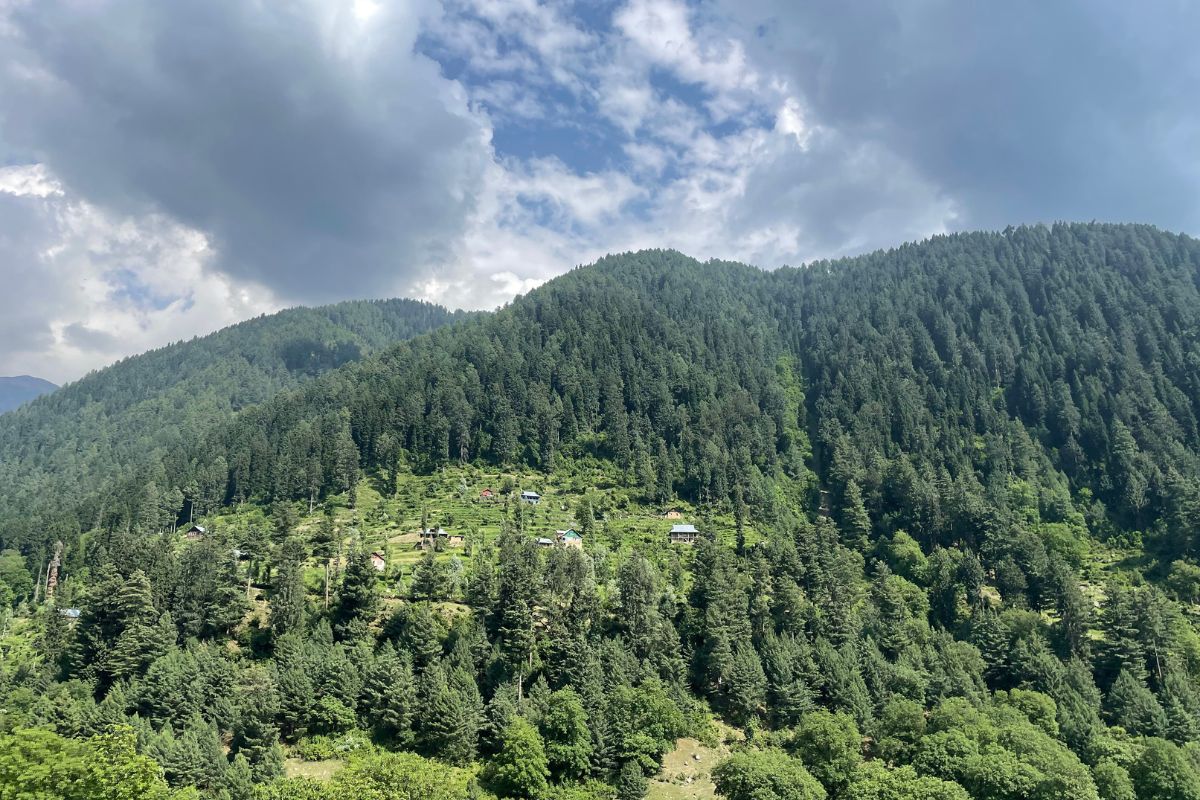
“If you see the surrounding mountains, snow coverage is minimal. With the precipitation deficit this winter… the river discharge could remain unstable if the rainfall deficit continues into spring (March–May season),” he said.
Considering this, the Department of Agriculture, Kashmir, and Sher-e-Kashmir University of Agricultural Sciences and Technology of Kashmir (SKUAST-K) have advised farmers in areas with weak irrigation to avoid water-intensive crops such as paddy and vegetables this season.
Instead, the department has encouraged farmers to grow crops that require less water, such as maize, pulses, and millets. Director of Agriculture Kashmir Sartaj Ahmad Shah said the advisory aims to reduce the risk of crop losses if dry weather persists. “If the situation continues, the chances of drought may increase,” Shah told Ground Report.
Early Bloom
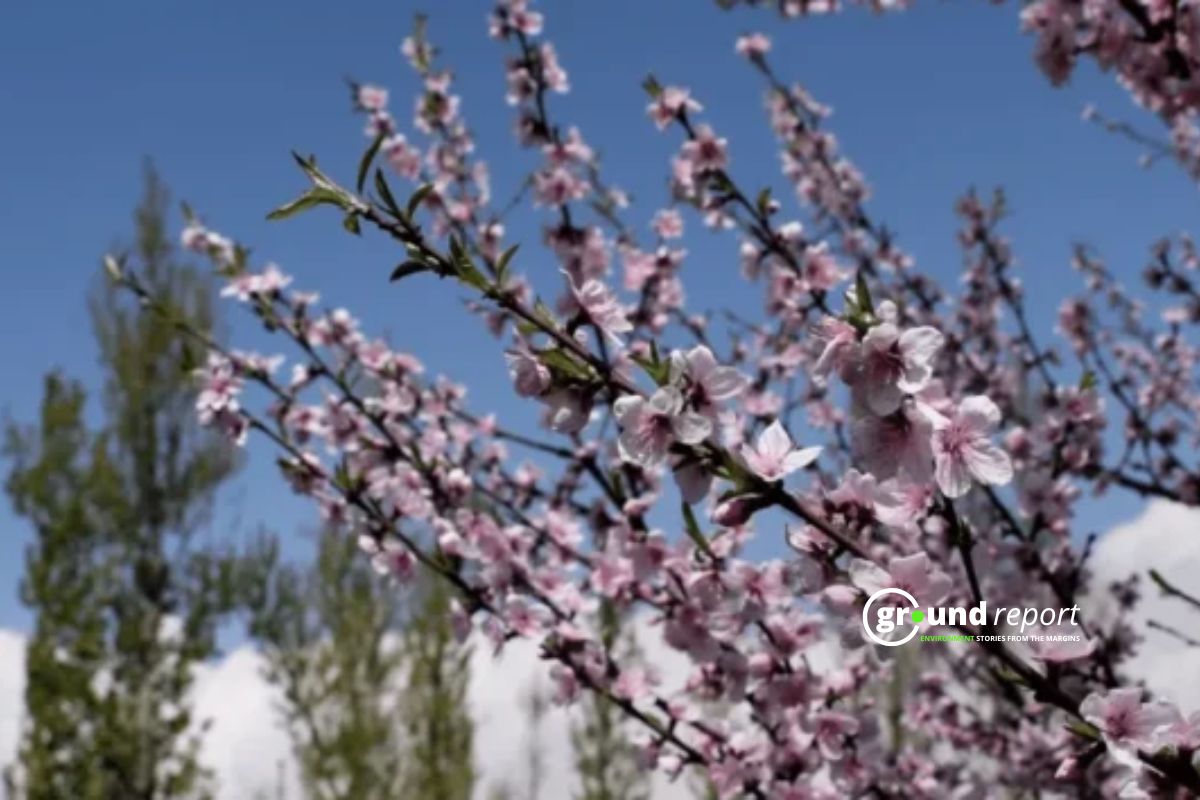
Unusually warm weather has also triggered early blooming in orchards across Kashmir. Almond, apricot, and mustard trees have started flowering weeks ahead of schedule. In Srinagar’s Badamwari garden, a 300-kanal garden at the base of Hari Parbat, almond trees opened in late February. They normally flower around mid-March.
Dr. Ashaq Pandit, Professor and Head of Fruit Science at SKUAST-K, said the warm weather pushed the season forward by nearly 20 days. He said the next phase will be crucial for fruit production. “If temperatures fall or rainfall occurs during the flowering stage, pollen may wash away, and flowers can abort. That means fewer fruits later,” he said.
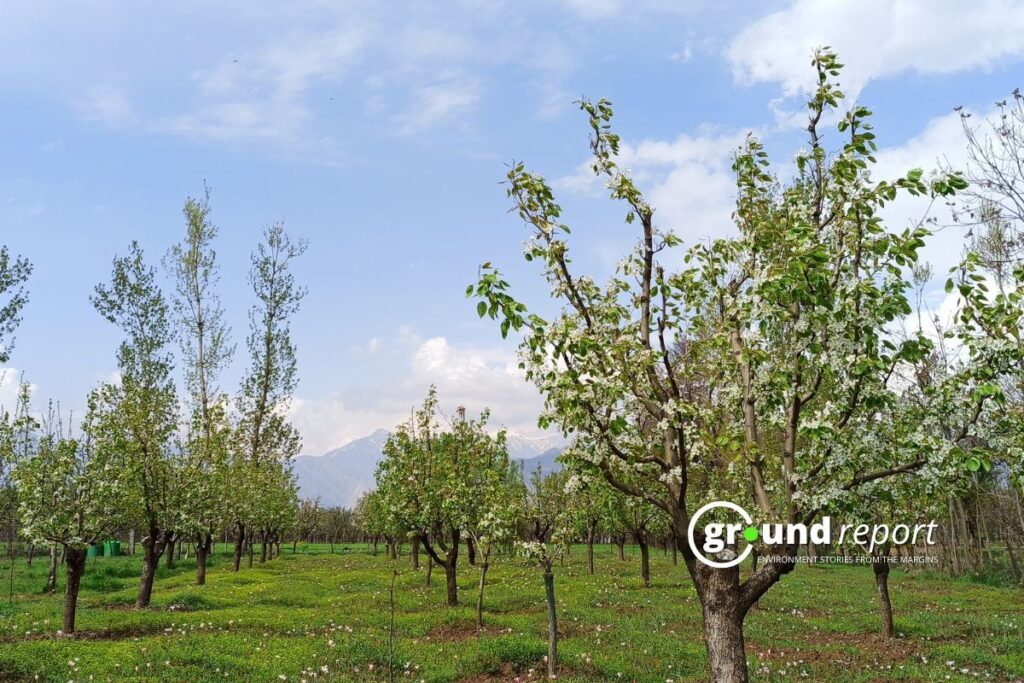
The Meteorological Department has forecast rainfall and a drop in temperatures in the coming days. Pandit said that is exactly when pollination is most at risk. “Most fruit crops depend on honeybees for pollination. When temperatures fall below 13°C, bees do not come out of their hives,” Pandit said.
Ajaz Rasool, an environmental researcher based in Kashmir, said the early bloom reflects wider climate changes across the Valley. Rasool said weather conditions in the coming weeks could determine how much fruit orchards produce this year. “If rain is heavy, the flowers may fall prematurely, and fruit production could decline,” he said.
More than seven lakh families depend on horticulture for their livelihood. The sector generates nearly ₹10,000 crore annually and contributes about 9 percent to the region’s economy.
Support Us To Sustain Independent Environmental Journalism In India.
Keep Reading
Highway Halt Puts Kashmir’s Fruit Economy at Risk
Railway line expansion plan put Kashmir’s apple orchards at risk
Warmer winters in Kashmir raise concerns over apple and crop yields
Stay Connected With Ground Report For Underreported Environmental Stories.