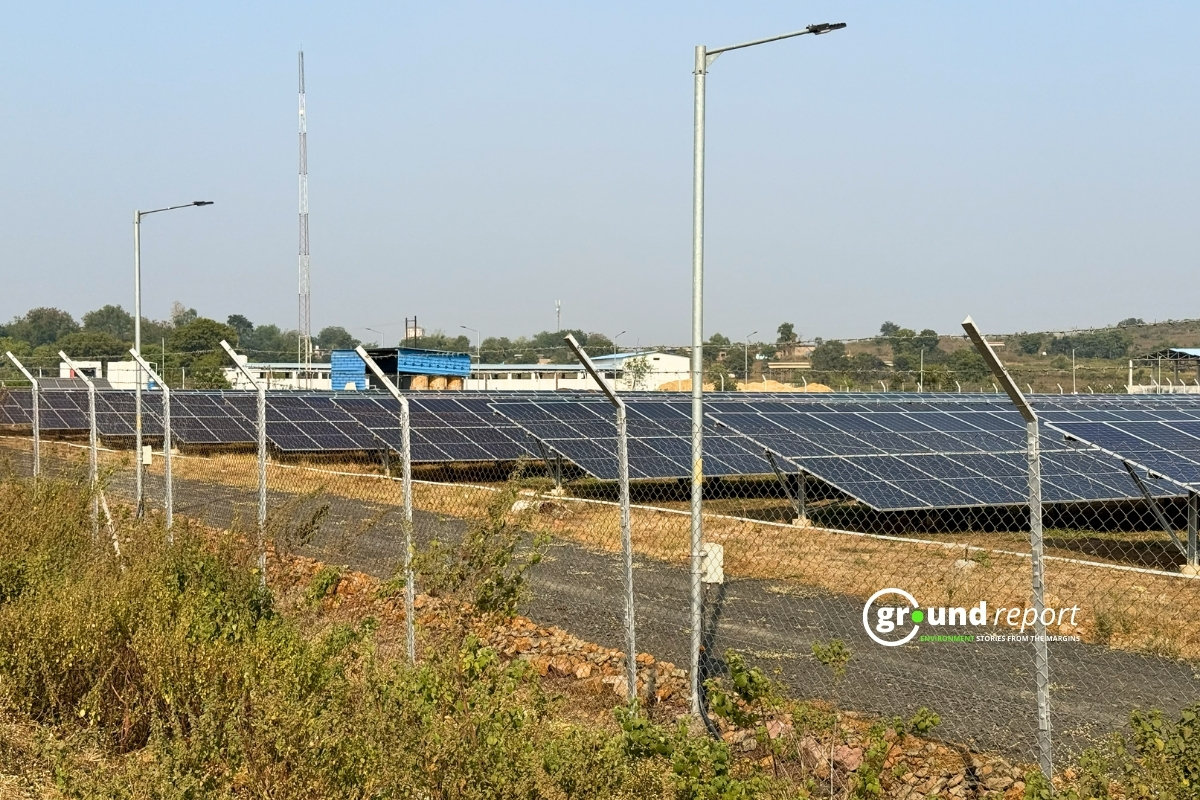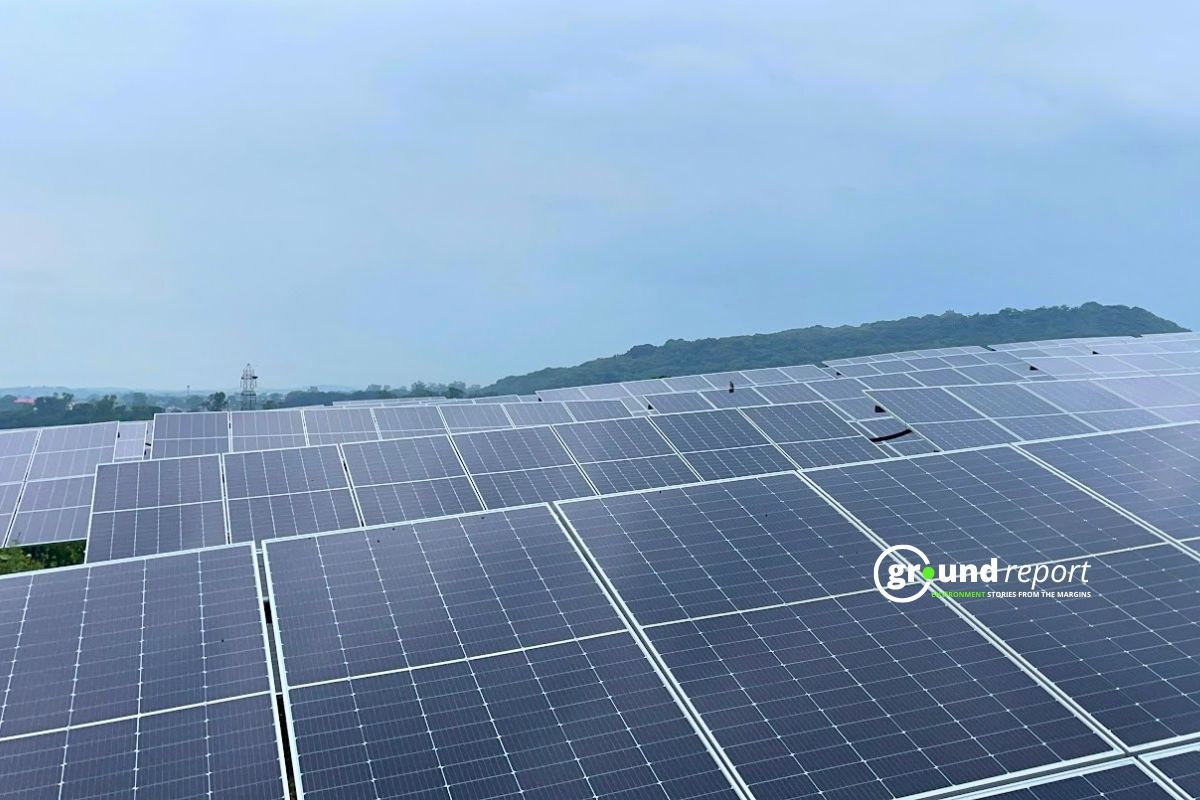
Solar power is the energy that comes from the sun. It is clean and renewable. Solar power does not cause pollution or climate change. It can help India meet its energy needs and reduce its dependence on fossil fuels. India has huge potential for solar power because the country enjoys many sunny days throughout the year. It also has a large land area suitable for solar installations. With a growing population and rising electricity demand, India needs reliable and clean energy sources, and solar power offers the perfect solution.
India’s solar journey shows remarkable growth over the past decade. In March 2014, India had only 2.82 GW of solar power capacity. By October 2025, this number jumped to an impressive 129.92 GW. This means India added more than 127 GW of solar power in just 11 years.
This tremendous growth shows India’s strong commitment to renewable energy and fighting climate change. The Minister of State for New and Renewable Energy and Power, Shripad Yesso Naik, recently shared this information in the Lok Sabha while answering questions about India’s progress in promoting solar, wind, and biomass energy across the country.
Total Renewable Energy Achievement
As of October 31, 2025, India’s total renewable energy capacity stands at an impressive 250.64 GW. This includes solar energy at 129.92 GW which increased from just 2.82 GW in March 2014, wind energy at 53.60 GW which increased from 21.04 GW in March 2014, and biomass power at 11.61 GW which increased from 8.18 GW in March 2014.
These numbers show that India is serious about clean energy. The country is steadily moving away from fossil fuels and embracing renewable sources to power homes, businesses, and industries across the nation.
Year wise data, Solar power growth in India
| Year | Added Capacity (MW) | Cumulative Capacity (MW) |
|---|---|---|
| Till 31.03.2014 | 2821.91 | 2821.91 |
| 2014-15 | 1171.62 | 3993.53 |
| 2015-16 | 3130.36 | 7123.89 |
| 2016-17 | 5658.63 | 12782.52 |
| 2017-18 | 9563.69 | 22346.21 |
| 2018-19 | 6750.97 | 29097.18 |
| 2019-20 | 6510.06 | 35607.24 |
| 2020-21 | 5628.80 | 41236.04 |
| 2021-22 | 12760.50 | 53996.54 |
| 2022-23 | 12783.80 | 66780.34 |
| 2023-24 | 15033.24 | 81813.58 |
| 2024-25 | 23832.87 | 105646.45 |
| 2025-26 (Apr–Oct 2025) | 24277.37 | 129923.82 |
Major Government Schemes Promoting Solar Power
The government runs several schemes to help people and states adopt solar power. These programs make solar energy affordable and accessible.
1. PM Surya Ghar: Muft Bijli Yojana
This scheme aims to install rooftop solar panels for one crore (10 million) households by 2026-27. The government provides financial assistance to families who want to install solar panels on their roofs.
Financial Support for Households:
First 2 kWp capacity: Rs 33,000 per kWp in North Eastern Region
Additional 1 kWp: Rs 19,800 per kWp
Above 3 kWp: No additional support
Group housing societies get Rs 19,800 per kWp for up to 500 kWp
This scheme helps families generate their own electricity. They can save money on electricity bills. Some families can even sell extra power back to the grid.
2. PM-KUSUM Scheme
This scheme helps farmers in three ways:
Component A: Farmers can set up solar power plants on their barren or unused land. The government gives incentives to electricity distribution companies (DISCOMs) at Rs 0.40 per unit for five years. This totals up to Rs 33 lakh per MW.
Component B and C: Farmers in North Eastern Region, hilly areas, and islands get 50% financial assistance for installing solar agriculture pumps up to 7.5 HP capacity. The government also supports feeder-level solarization with Rs 1.75 crore per MW.
This scheme benefits farmers, states, and electricity companies. Farmers get reliable power for irrigation. They can also earn extra income.
3. Solar Parks Development Scheme
The government approved a scheme to develop solar parks with a total target of 40,000 MW capacity. These are large areas where many solar panels are installed together.
Under this scheme, the government helps develop infrastructure including land, roads, power evacuation systems, and water facilities. The government provides:
Up to Rs 25 lakh per solar park for preparing detailed project reports
Up to Rs 20 lakh per MW or 30% of project cost (whichever is lower) for infrastructure development
This makes it easier and faster to set up large solar projects. Developers get ready-to-use land with all necessary facilities.
4. Tribal Areas Solar Power Scheme
The government runs special programs for tribal and remote areas under PM JANMAN and DA JGUA schemes. These programs provide:
Rs 50,000 per household for 0.3 kW off-grid solar systems for 1 lakh tribal households
Rs 1 lakh per village for solar street lighting in 1,500 tribal villages, Rs 1 lakh per kW for solarizing 2,000 public institutions (maximum 20 kW per institution)
These schemes bring electricity to areas where grid connection is difficult or expensive.
5. Bio-Energy Programs
The government also promotes other forms of renewable energy:
Waste to Energy Program: Converts urban, industrial, and agricultural waste into electricity. Special category states including North East get 20% higher financial assistance.
Biomass Program: Supports manufacturing of briquettes and pellets. Also promotes biomass-based power generation in industries.
Biogas Program: Helps families install biogas plants. North Eastern Region gets 20% higher assistance than other areas.
Special Focus on North Eastern Region
The government gives extra support to North Eastern states. These states include Assam, Arunachal Pradesh, Manipur, Meghalaya, Mizoram, Nagaland, Tripura, and Sikkim.
All major renewable energy schemes provide special benefits to this region. The financial assistance is higher. The government wants to ensure that remote and hilly areas also benefit from clean energy.
India’s Ambitious Targets
India set a target of reaching 100 GW of solar power by 2022. The country has already crossed this target. Now India aims for even bigger goals.
2030 Target: 300 GW Solar Power
India has set a target of 300 GW of solar power by 2030. This will make India one of the largest solar power producers in the world. With the current capacity at 129.92 GW, India needs to add about 170 GW more in the next five years.
This goal is challenging but achievable. India is working on multiple fronts. The government creates supportive policies. It provides financial assistance. It develops infrastructure and encourages private sector participation.
Why India Will Succeed
Several factors support India’s solar power success:
Abundant Sunshine: India receives excellent solar radiation throughout the year. Most parts of the country get 300-330 sunny days annually.
Strong Government Support: Multiple schemes provide financial assistance. The government simplifies procedures. It removes barriers for solar installations.
Falling Costs: Solar panel prices have dropped significantly. This makes solar power more affordable for everyone.
Growing Awareness: People understand the benefits of solar power. More families and businesses want to switch to clean energy.
Technology Improvement: Better and more efficient solar technologies are now available. Indian companies are also manufacturing solar equipment.
Benefits for Common People
Solar power helps common people in many ways:
Lower Electricity Bills: Families with rooftop solar pay less for electricity
Reliable Power: Farmers get dependable power for irrigation
Extra Income: People can sell surplus power back to the grid
Clean Environment: Less pollution means better health
Energy Independence: Reduced dependence on imported fossil fuels
India’s solar power capacity has grown a lot in the last 10 years. In 2013-14, India had only 2,822 MW of solar power. By 2023-24, India had 73,319 MW of solar power. This means that India added more than 70,000 MW of solar power in 10 years.
India’s solar power story is a success story. From just 2.82 GW in 2014 to 129.92 GW in 2025, the growth is remarkable. The government’s commitment is clear. Multiple schemes support different sections of society.
India is on track to achieve its 300 GW solar power target by 2030. This will transform India into a global leader in renewable energy. It will also ensure clean and affordable power for all citizens.
The future is bright for solar power in India. Every household, every farmer, and every business can be part of this clean energy revolution. The sun shines on India, and India is making the most of it.
Support us to keep independent environmental journalism alive in India.
Keep Reading
Small Wild Cats in Big Trouble: India’s First National Report Released
After Tragedy, Families Face Delays in Tiger Attack Compensation
Stay connected with Ground Report for underreported environmental stories.