On a quiet July night, a camera trap in Gandhi Sagar Wildlife Sanctuary captured a surprising image. At 2:35 a.m. on July 1, a wild cat with black ears walked through the dry bushes. It was a caracal, a species not seen in Madhya Pradesh for almost 20 years.
Local media shared photos of the rare caracal taken three times in one day, once in the morning and twice at night, clearly proving its presence. The Wildlife Institute of India (WII) confirmed the sighting, which happened inside the Cheetah Closed Natural Area, a fenced part of the sanctuary with motion-sensitive cameras used to track cheetahs and their prey.
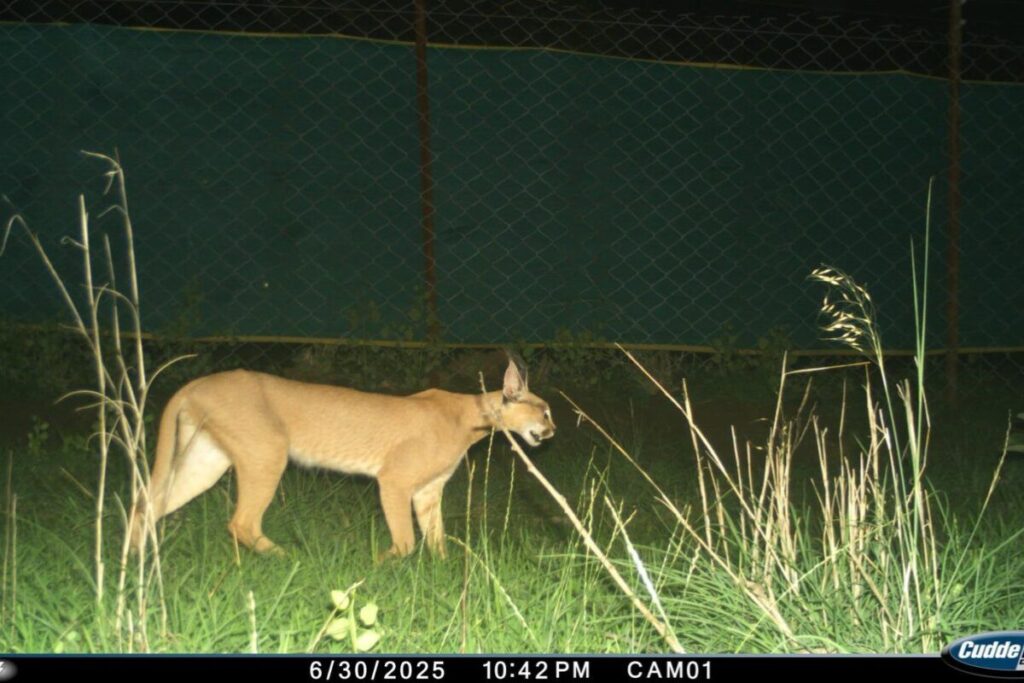
“We are delighted to inform you that photographs of caracal (Caracal caracal) were obtained,” said Dr. Bilal Habib, Scientist ‘F’ at WII and project investigator for Project Cheetah. “This is the first confirmed record since monitoring began under Project Cheetah.”
The sighting has made headlines, but beyond the rare sighting lies a bigger story. While the elusive cat has been photographed in the state for the first time in nearly two decades, what sets this moment apart is how it’s sparking renewed conservation interest in a region once written off as a ‘habitat sink.’ With new data-gathering efforts, habitat restoration plans, and the sanctuary’s evolving role in grassland species recovery, this sighting is more than just a rediscovery, it may be a turning point in India’s efforts to protect one of its most endangered wild cats.
Not seen in Madhya Pradesh before
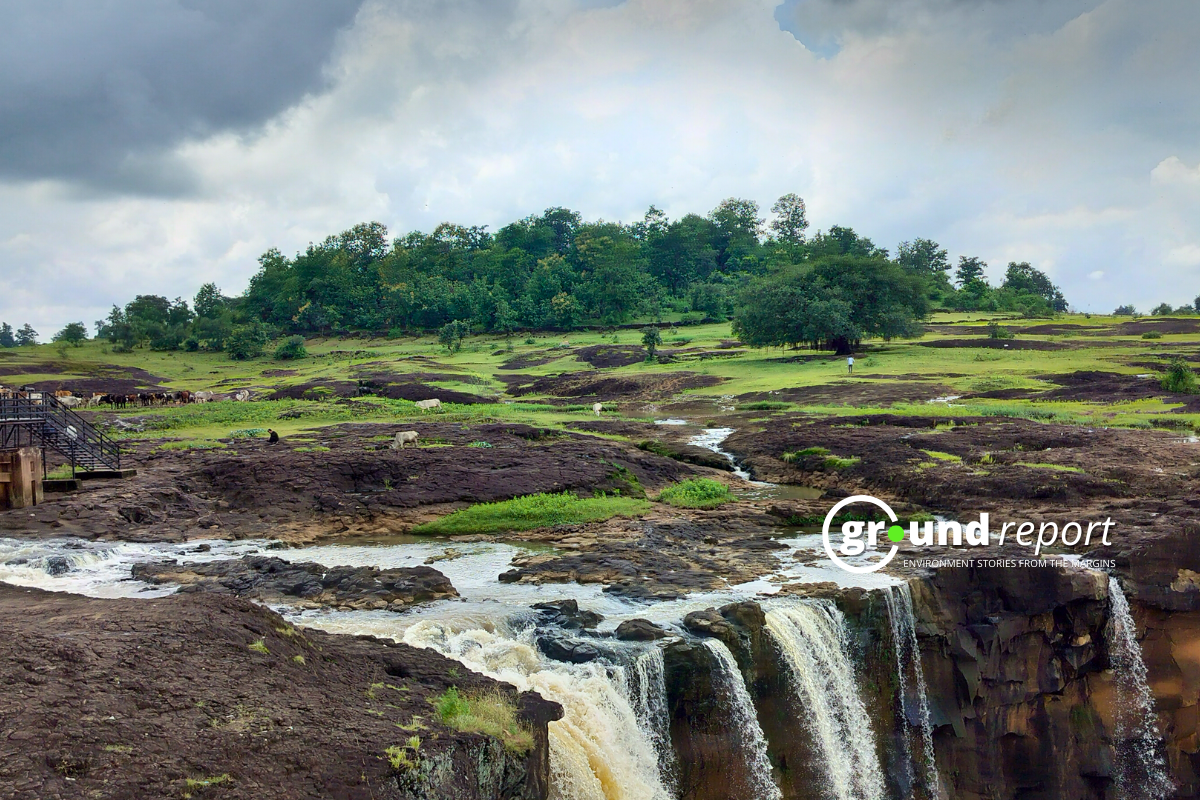
The caracal appeared in the Golabavdi beat of the sanctuary’s western range, an area not previously known for hosting the rare cat. For many wildlife experts, the sighting is more than a lucky break, it is a sign that the region still holds ecological value.
“This shows the area’s ecology is still intact enough to support rare species like the caracal,” said Sanjay Raikhere, Divisional Forest Officer at Gandhi Sagar. “It’s a matter of pride for the state.”
Known locally as siyagosh, the caracal is a solitary and mostly nocturnal carnivore that thrives in dry scrublands, rocky outcrops, and open grasslands. In India, it is listed under Schedule I of the Wildlife Protection Act, granting it the highest level of legal protection. Yet its population is considered critically endangered, largely due to habitat loss, human pressure, and low detection rates.
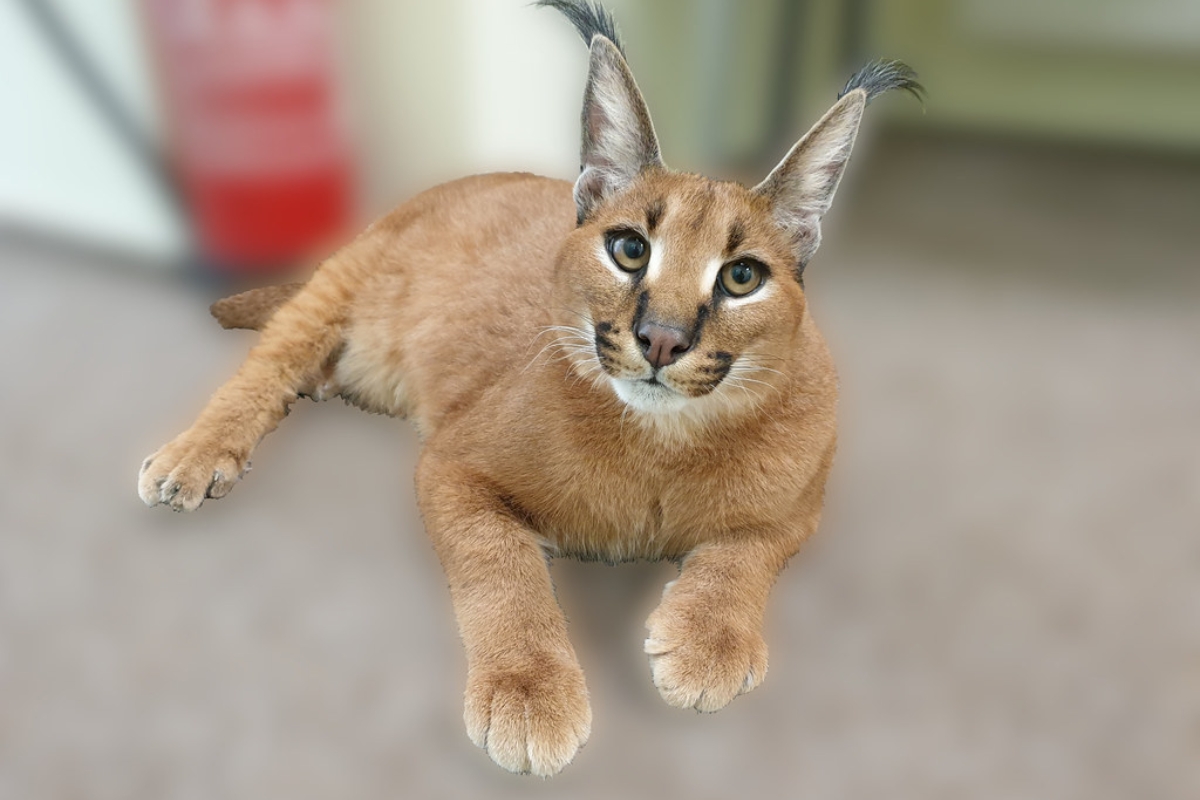
Caracals are built for stealth and speed. They have reddish-gold coats and long black tufts on their ears, which may aid in communication or hearing. Unlike other wild cats in India, they lack distinctive stripes or spots. Agile and muscular, they can leap as high as six feet to catch birds mid-flight. Their diet includes rodents, birds, rabbits, and small antelopes.
Hope versus doubts
The sighting has prompted renewed action by forest officials, who are now expanding camera surveillance and adjusting human activity in surrounding areas to reduce disturbance. The hope is to find a female caracal, which would offer stronger evidence of a breeding population.
“If there’s a male, there’s a chance a female is nearby,” said Raikhere. “We’re adjusting human activity in potential zones to give the animal space.”

But wildlife experts urge caution. Shekhar Kolipaka, a wildlife scientist with experience studying large carnivores, said this lone sighting doesn’t confirm population stability.
“This is most likely a young, dispersing male,” he said. “Such individuals often travel alone, far from their birthplace, in search of territory and mates. It’s a promising sign, but not evidence of a stable population.”
Kolipaka suggested that the caracal may have traveled from neighboring Rajasthan, where isolated but viable populations still exist. “Many habitats in Madhya Pradesh have become what ecologists call ‘habitat sinks,’” he explained. “These are areas where survival rates are low due to fragmented landscapes and high human impact.”
The caracal’s presence in Madhya Pradesh has long been uncertain. In 2019, the forest department launched a focused campaign in the Ujjain forest circle, distributing posters in villages and asking locals to report any sightings. That effort produced no results, only misidentified images of jungle cats. In 2023, officials proposed a caracal reintroduction plan in Gwalior after confirming that no record had surfaced in nearly 20 years.
Some conservationists believe the region has always had potential. Dharmendra Khandal, a biologist with Tiger Watch, said he personally spotted a caracal in 2006 just 30 kilometers from Gandhi Sagar, on the Rajasthan side of the border.
“I recorded a sighting in 2006, just 30 kilometers away,” said Khandal. “This region has always had potential.”
Khandal co-authored Caracal: An Intimate History of a Mysterious Cat and led a 2020 study that documented the species’ drastic range contraction. According to the research, caracals once lived across 13 Indian states. Today, they are found only in Gujarat, Rajasthan, and small parts of Madhya Pradesh, a 95 percent decline since 1947.
Is this a turning point?
Earlier this year in March 2025, a caracal was photographed in Rajasthan’s Mukundra Hills Tiger Reserve. Captured during a winter camera trap survey, it marked the first photographic record in the reserve since its creation. The species has no national population estimate, but experts believe fewer than 50 individuals survive in the wild in India.
Globally, caracals are listed as “Least Concern” by the International Union for Conservation of Nature. But in India, they face a more precarious future. Habitat fragmentation, human-wildlife conflict, and poaching continue to threaten their survival.
The Gandhi Sagar sighting also reconnects with an older vision for the sanctuary. U.K. Sharma, now Additional Principal Chief Conservator of Forests and Director of Project Cheetah, had earlier served as Divisional Forest Officer in Mandsaur. During his tenure, Sharma prepared a 10-year wildlife management plan that identified key threats to the area: overgrazing, tree cutting, and seasonal livestock migration from Rajasthan.
He pointed out that earlier conservation efforts failed due to low public awareness and high dependence on forest resources. The plan called for habitat restoration, better water conservation, reduced grazing, and collaboration with scientific institutions to monitor wildlife more effectively.
That vision is beginning to take shape. In April 2025, Gandhi Sagar became the second site in Madhya Pradesh to host cheetahs. Two individuals were released as part of an effort to revive grassland ecosystems. The sanctuary’s dry landscape, ideal for cheetahs, may also benefit caracals and other species adapted to arid conditions.
A broader push for caracal conservation has also been underway. In 2022, the Wildlife Institute of India, in collaboration with ISRO, the Madhya Pradesh Forest Department, and the Leo Foundation of the Netherlands, conducted a habitat survey across nine Indian states. The goal was to identify regions where caracals might still survive. The study highlighted four key areas: the Kutch region in Gujarat, the Aravalli hills in Rajasthan, the Malwa plateau spanning Rajasthan and Madhya Pradesh, and the Bundelkhand region in northern Madhya Pradesh.
Among these, the Ranthambore-Kuno landscape was identified as a high-priority conservation site. This transboundary zone supports diverse dryland ecosystems, and the Madhya Pradesh Biodiversity Board is now leading a focused study to gather more data on caracal presence, movement, and habitat use.
New data could guide protection
In 2021, the National Board for Wildlife and the Ministry of Environment, Forest and Climate Change added the caracal to India’s Species Recovery Plan. The initiative covers 22 species and focuses on better habitat protection, stronger regional coordination, research partnerships, and knowledge-sharing platforms. It also includes goals for gender inclusion within field teams.
Though still early, the Gandhi Sagar sighting has breathed new life into efforts to track and protect the caracal. The forest department plans to continue using camera traps across potential habitats. Conservationists agree that while a single image doesn’t mark recovery, it does open a rare window into the caracal’s continuing struggle for survival.
“We are working to understand how many individuals might be moving through this area,” said Raikhere. “This is only the beginning.”
For a species long thought to have vanished from central India, even a fleeting glimpse is a reason to pay closer attention, and take action before it disappears again.
Support us to keep independent environmental journalism alive in India.
Keep Reading
Indore Startup Swaaha takes the lead in making Amarnath Yatra eco-friendly
Amarnath Yatra: Tackling rising death toll from extreme weather events
Amarnath yatra pilgrims urinating in Sindh river: A threat to environment
Stay connected with Ground Report for underreported environmental stories.
Follow us onX, Instagram, and Facebook; share your thoughts at greport2018@gmail.com; subscribe to our weekly newsletter for deep dives from the margins; join ourWhatsApp communityfor real-time updates; and catch our video reports on YouTube.
Your support amplifies voices too often overlooked, thank you for being part of the movement.