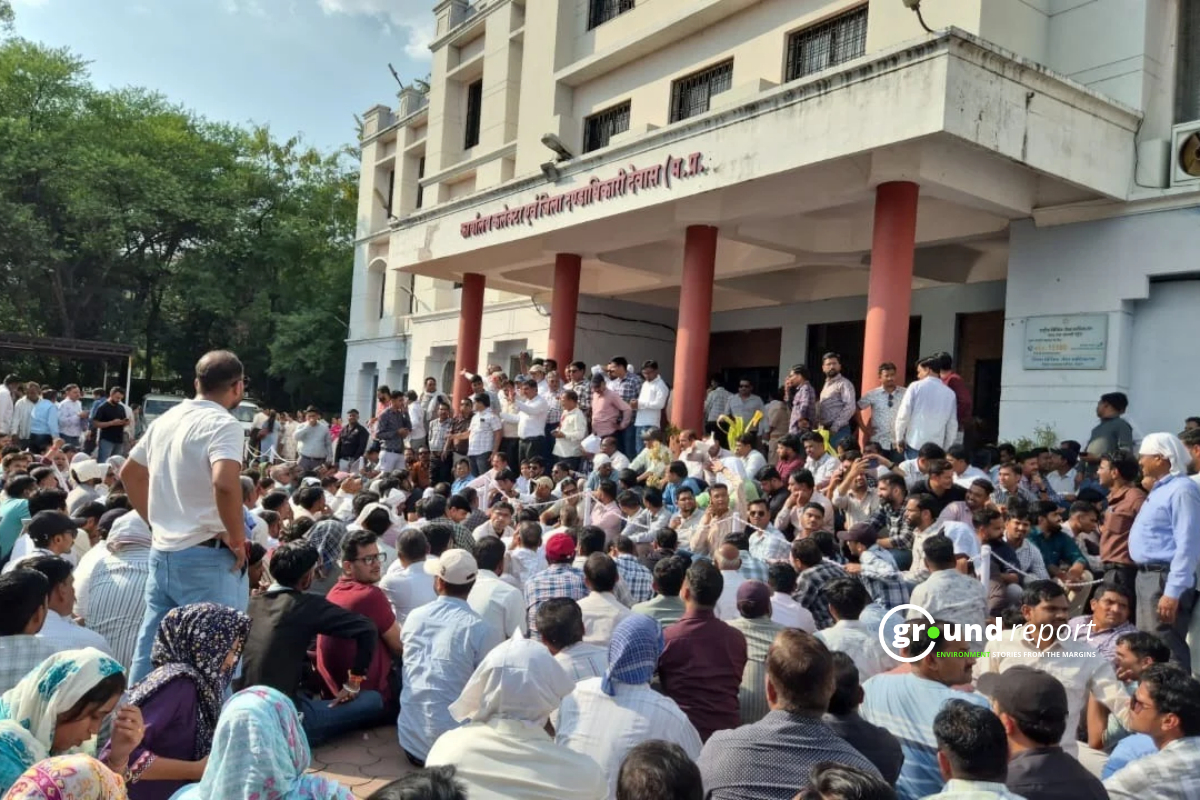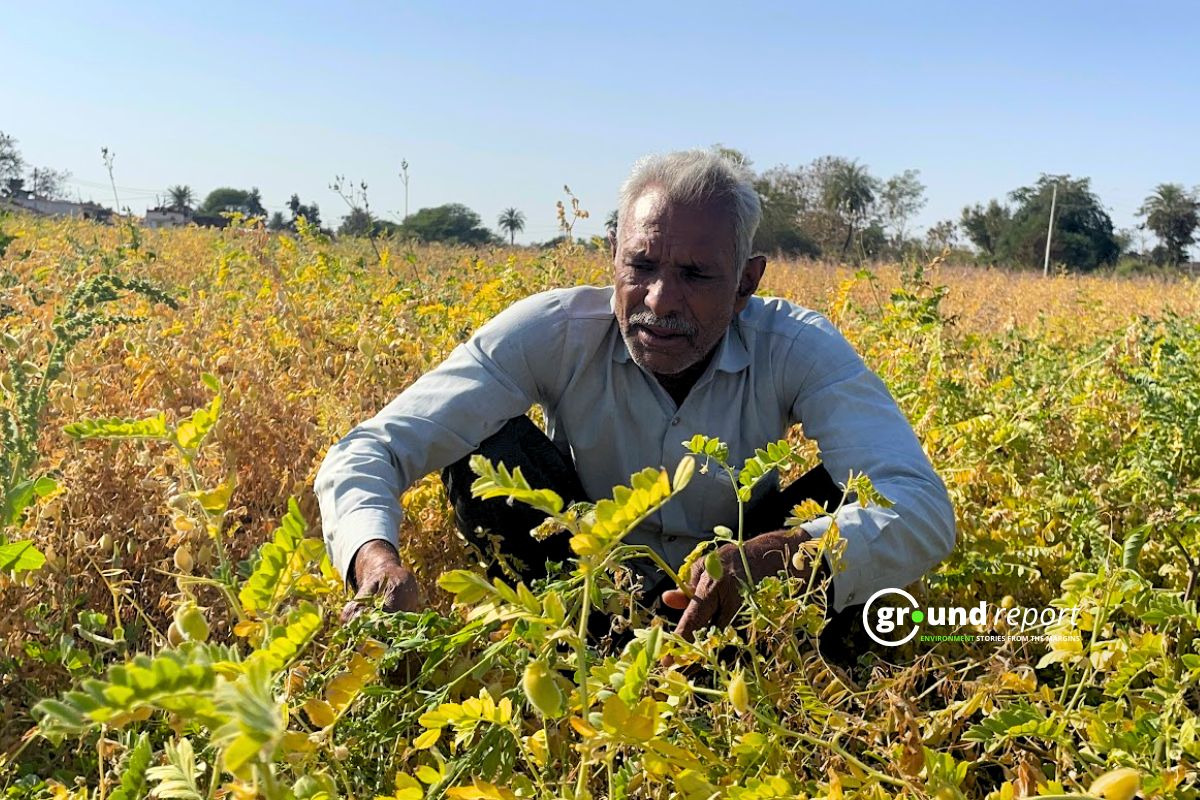
Madhya Pradesh, once counted among India’s leading pulse-producing states, lost nearly a quarter of its pulse output in a single year. The Madhya Pradesh Economic Survey 2025-26, presented in the state Assembly, recorded a 21.90 percent drop in total pulse production, from 7,296 thousand tonnes in 2023-24 to 5,698 thousand tonnes in 2024-25. Behind that number is a quieter crisis, farmers abandoning crops their families have grown for generations, driven out by disease and falling prices.
What Happened?
According to the Madhya Pradesh Economic Survey 2025-26, the total area under pulse cultivation fell by 17.29 percent to 4,492 thousand hectares.
| Pulse Crop / Indicator | Area Change (%) | Production Change (%) |
|---|---|---|
| Gram | -35.83% | -38.49% |
| Urad | -37.11% | -32.87% |
| Lentil | -11.89% | -26.94% |
| Pigeon Pea | -2.58% | -7.30% |
Two crops moved against the trend. The same survey records moong area growing by 6.01 percent and production by 5.14 percent, while peas recorded a 105.43 percent increase in cultivated area and production rising by 77.95 percent. The survey connects this to favorable seasonal conditions and diversification efforts. These gains, however, were not enough to offset the broader collapse.
Where the Decline Hits Hardest?
The scale of the decline becomes clearer when set against Madhya Pradesh’s own recent history. According to data from the National Food Security Mission, a total of 8,111.584 tonnes of pulses were produced across just 7,480 hectares in the state in 2024-25. Between 2014 and 2019, Madhya Pradesh produced more urad than any other state in the country, cultivating the crop across 14.65 lakh hectares and producing 8.62 lakh tonnes, accounting for 33 percent of total national urad output.
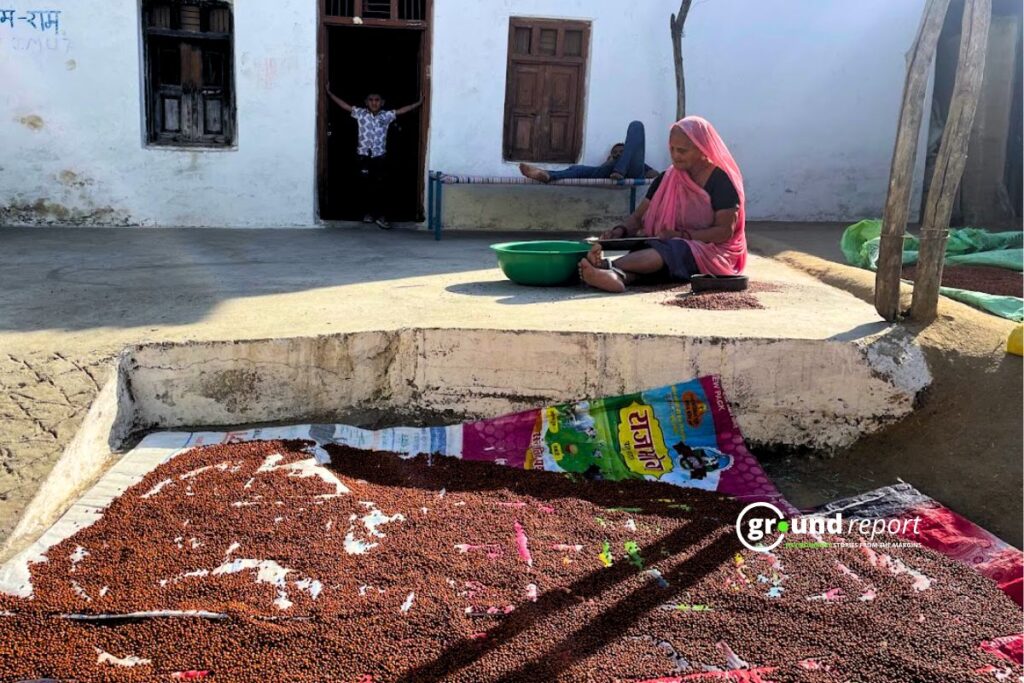
The Farmer Welfare and Agricultural Development Department of Madhya Pradesh identifies the reason on its own official website, pulse area is shrinking because farmers are shifting to soybean. The survey states that the area under soybean cultivation decreased by 3.10%. It dropped from 6,060 thousand hectares in 2023–24 to 5,872 thousand hectares in 2024–25.
Anil Singh, national spokesperson of the Bhartiya Kisan Union (Tikait), says the steepest declines in gram and urad recorded by the Economic Survey 2025-26 reflect exactly this shift playing out across the state. “In Shivpuri, there used to be a large gram belt. People used to cultivate gram in large numbers,” he told Ground Report. “That has changed.”
Where Policy Contradicts Itself
The Madhya Pradesh Economic Survey 2025-26 calls for high-yield varieties and climate-resilient practices to revitalise gram and urad, and promotes pulses as an alternative to water-intensive wheat and paddy. Singh agrees with the survey’s stated direction but says government import decisions are actively dismantling what these schemes try to build.
“On one hand, they run these plans and missions and say ‘go for pulses, don’t grow wheat,'” Singh says. “On the other hand, they import and sit idle.”
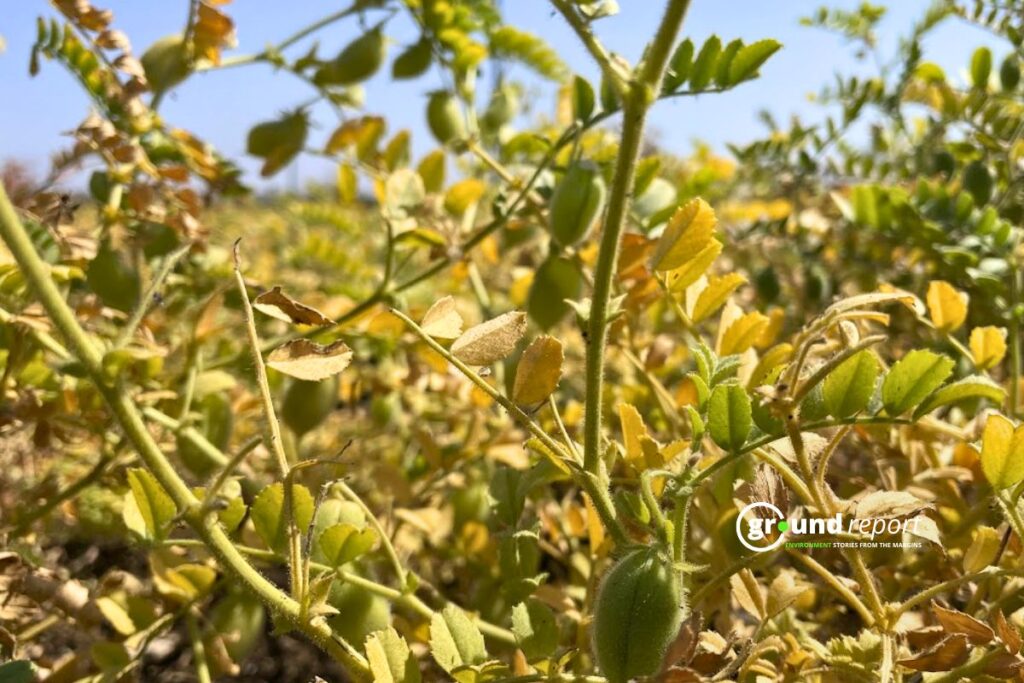
When summer moong arrives in markets around April and May, Singh points out, the government has often already placed import orders. Incoming foreign supply drives down domestic prices before farmers can sell, directly contradicting the Economic Survey 2025-26’s own stated goal of ensuring farmer income stability through pulse promotion.
When Procurement Fails
The survey records substantial MSP procurement, 98,979 metric tonnes of gram from 29,658 farmers worth Rs 559.23 crore, and 2.12 lakh metric tonnes of lentils from 94,698 farmers worth Rs 1,422.50 crore during Rabi 2024-25. On summer crops, procurement reached 7.72 lakh metric tonnes of moong from 2.75 lakh farmers worth Rs 6,706.27 crore, while summer urad procurement stood at 8,778 metric tonnes from 5,952 farmers valued at Rs 64.96 crore.
The minimum support price system, meant to protect farmers from market crashes, also fails in practice, according to Singh. “The government runs a procurement drama every year,” he says. “They register farmers, announce support prices but procurement starts late. “The poor farmer sells well in advance because he cannot afford to wait,” Singh says. “He doesn’t have the ability to hold stock because of the huge expenses involved.”
The Economic Survey 2025-26 also highlights the Bhavantar Bhugtan Yojana as a compensation mechanism suited to pulses. Singh sees potential in such instruments but argues they cannot work when import-driven price crashes pull market rates far below what any formula can cover. “If the government wants farmers to get a profitable price, they should strengthen procurement and stop imports,” Singh says. “These two things can keep pulses alive.”
Ground Report spoke last year with Anokhilal Nagar, a 70-year-old farmer from Obedullaganj in Raisen district, 36 kilometres from Bhopal, who has farmed nine acres for 55 years. Wilt disease, a fungal infection that can destroy an entire field in one season, forced him to abandon pigeon pea and lentils permanently.
Support Us To Sustain Independent Environmental Journalism In India.
Keep Reading
Highway Halt Puts Kashmir’s Fruit Economy at Risk
Railway line expansion plan put Kashmir’s apple orchards at risk
Warmer winters in Kashmir raise concerns over apple and crop yields