In December 2023, the agricultural university in Gwalior inaugurated its aeroponic unit, a soil-free cultivation method, to produce disease-free potato seeds.
At the Rajmata Vijayaraje Scindia Krishi Vishwa Vidyalaya in Gwalior, the scientists are producing potato mini-tubers through controlled aeroponic systems. The initiative is part of a broader push in India to modernize seed production systems, improve productivity, and reduce dependence on traditional seed multiplication cycles that are vulnerable to disease and climate variability, agricultural scientist Dr. Sushma Tiwari explained.
This is the same technique that Prime Minister Narendra Modi said produces “Jain Aloo”.
Producing More Potato Seeds
Potato is one of India’s most important food crops, but unlike cereals, farmers do not plant seeds; they plant tubers.
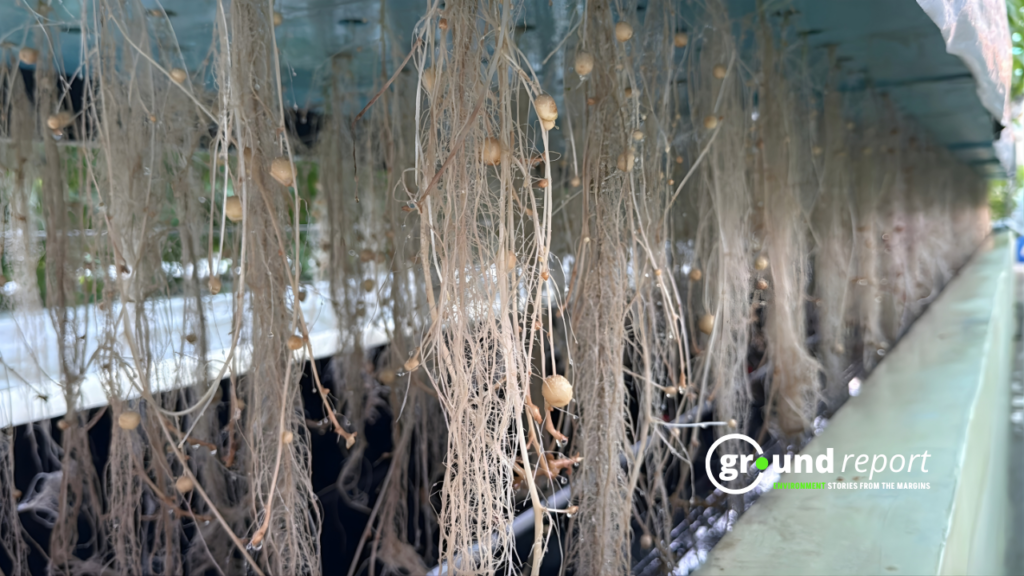
Aeroponics produces disease-free mini-tubers under controlled conditions. According to agricultural scientist Sushma Tiwari from the Agriculture University in Gwalior, the method allows researchers to generate significantly higher numbers of seed tubers from a single plant while maintaining genetic purity and health.
As she explains in the field demonstration, one plant in aeroponics can produce 50 to over 100 mini-tubers, compared to only five to seven in conventional field conditions, substantially increasing multiplication rates.
The Science Behind Aeroponics
Aeroponics is a cultivation technique in which plant roots are suspended in air rather than soil or water. The roots are periodically sprayed with a fine mist containing dissolved nutrients, allowing them to absorb water and minerals efficiently while receiving abundant oxygen. Higher oxygen availability improves root respiration and growth, which accelerates plant development and increases tuber formation in potatoes.
“Nutrients reach the roots through a mist system. A timer controls the fogging every few minutes, and the unused water returns to the tank, so very little water is wasted.” Tiwari said. “Compared to conventional irrigation, this technique can save up to 90–95 percent of water.”
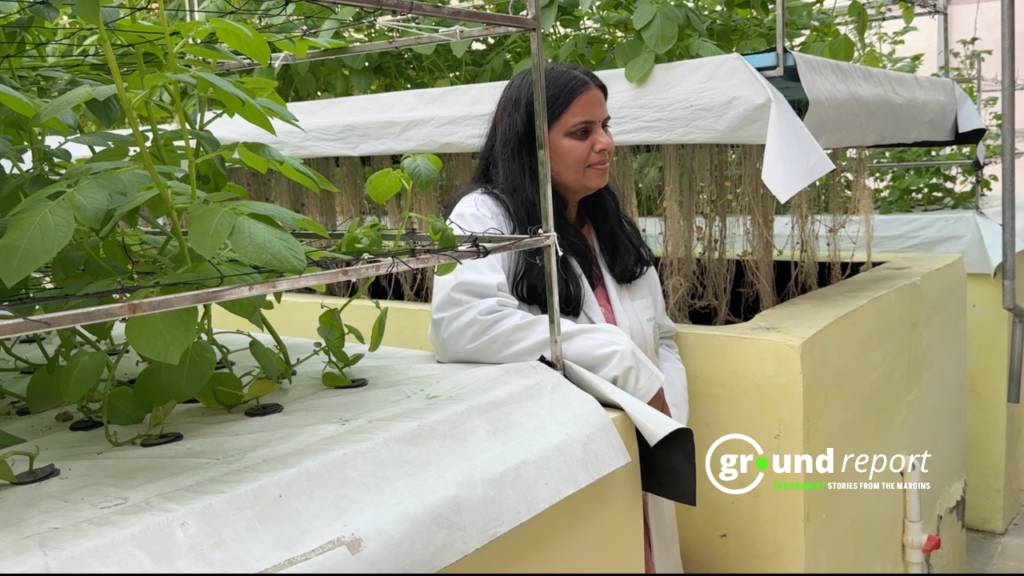
Because the system operates in a controlled environment, exposure to soil-borne pathogens is minimized, resulting in disease-free planting material. Sensors regulate temperature, humidity, and nutrient delivery, ensuring optimal growing conditions and enabling precise monitoring of plant health and productivity.
How the System Works in Gwalior
“I am basically a biotechnologist. Earlier, we were working on tissue culture and molecular work here, so the interest developed from there.” Tiwari said, “Our Vice Chancellor had earlier worked on potato, and the idea was that since some institutes had already patented this system and charged high amounts, why not standardise it ourselves.”
She explained that they submitted a project proposal and received funding of about ₹9.5 crore from the Madhya Pradesh Mandi Board. The other two facilities in Indore and Sehore also assist in the same experiment.
In the aeroponic unit at Gwalior, potato plants are grown in a semi-controlled environment, with temperature maintained at 22–23°C through exhaust systems, cooling pads, and overhead misting. The plants are placed on panels, allowing their roots to hang freely in enclosed chambers. Nutrient-rich mist is sprayed at regular intervals, providing moisture without waterlogging.
The harvested mini-tubers are classified as the “G0” generation, the earliest disease-free stage. These are later multiplied in open fields over two further generations before being distributed to farmers. Researchers are also screening around 20 potato varieties, including international and Indian lines such as Lady Rosetta (LR), Neelkanth, Thar, and Himalini, to evaluate nutritional traits, yield potential, and adaptability.
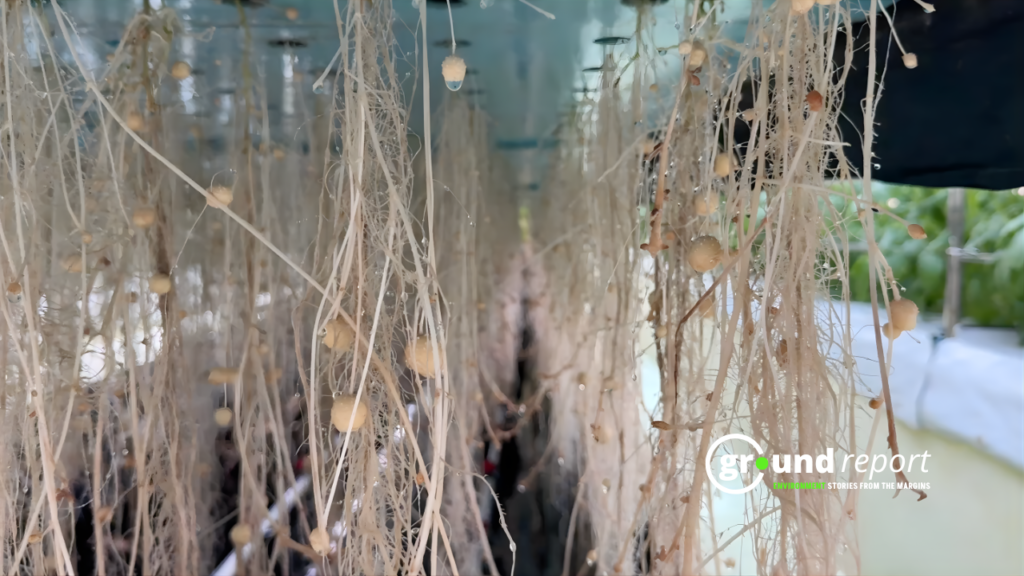
Aeroponics in Madhya Pradesh remains largely at the research and demonstration stage. Interest among farmers, however, is growing as awareness spreads about the benefits of uniform and disease-free seed material.
“We are screening different varieties to understand which ones have higher or lower levels of nutrients and which are suitable for Madhya Pradesh’s conditions,” Tiwari said.
At the university, Tiwari’s facility intends to learn more about the nutritional value of different potato varieties. She explained, “For the LR variety, we have read that it is sugar-free and has lower starch content, so it is considered better for diabetic patients. We are also researching whether this is actually true.”
In another case, “this variety [Neelkanth] has purple skin. It contains higher antioxidants, so it is considered more effective under stress conditions and has slightly higher nutritional value compared to normal potatoes,” she said.
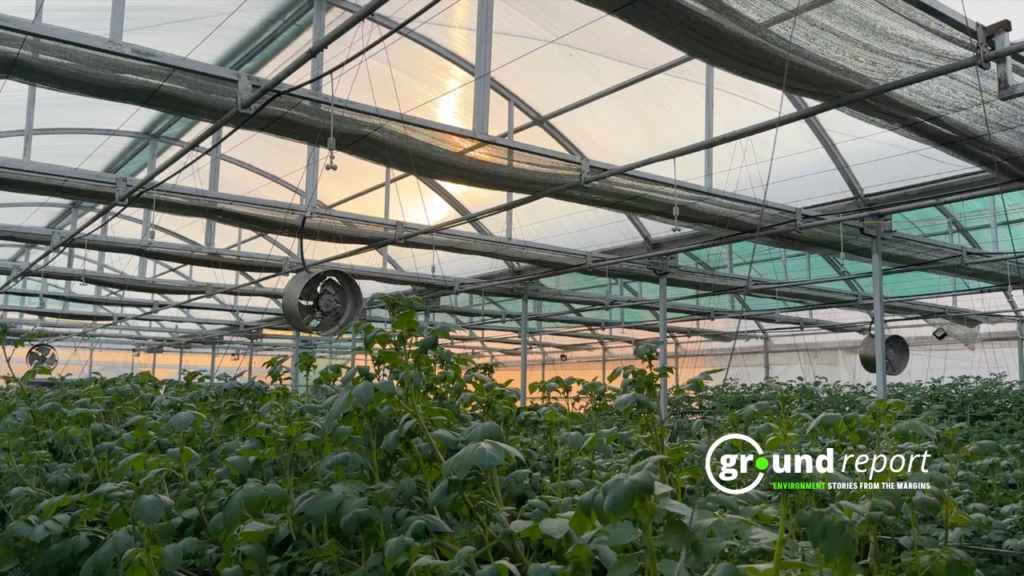
India’s Aeroponics Push
Across India, aeroponics has gained attention over the past decade through initiatives led by the Indian Council of Agricultural Research (ICAR), the Central Potato Research Institute (CPRI), and state agricultural universities. Demonstration units have been established in Punjab, Uttar Pradesh, Himachal Pradesh, and parts of Gujarat, primarily for breeder seed production.
India is the world’s second-largest producer of potatoes. Traditional seed production takes multiple years, while aeroponics shortens multiplication cycles and reduces disease transmission risks, as mentioned.
Hydroponics, Aeroponics, and Aquaponics: What’s the Difference?
Although often grouped, these three systems differ significantly in how plants receive nutrients:
Hydroponics: Plants grow without soil, but their roots remain submerged in nutrient-rich water or supported by inert media such as cocopeat or perlite. Oxygen availability is lower than in aeroponics, and water use is higher.
Aeroponics: Roots hang in the air and are sprayed with nutrient mist. This provides maximum oxygen exposure, leading to faster growth and higher efficiency in crops like potato where root development is critical.
Aquaponics: Combines hydroponics with aquaculture. Fish waste provides nutrients for plants, while plants help purify water for fish. It is more suited for leafy vegetables than seed crops.
Support Us To Sustain Independent Environmental Journalism In India.
More Video Reports
Rail Projects Halted in Kashmir After Apple Farmers Protest, Uncertainty Remains
After Indore, 22 Fall sick in Mhow Due To Drinking Contaminated Water