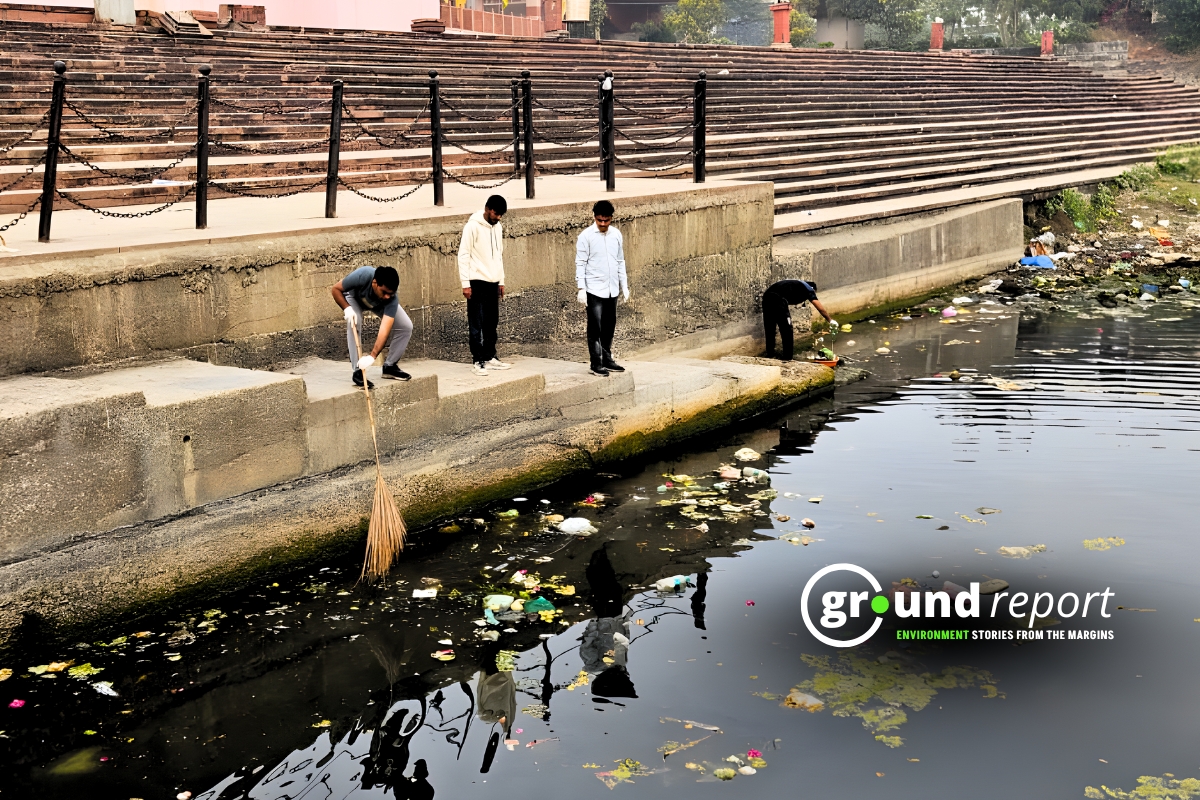
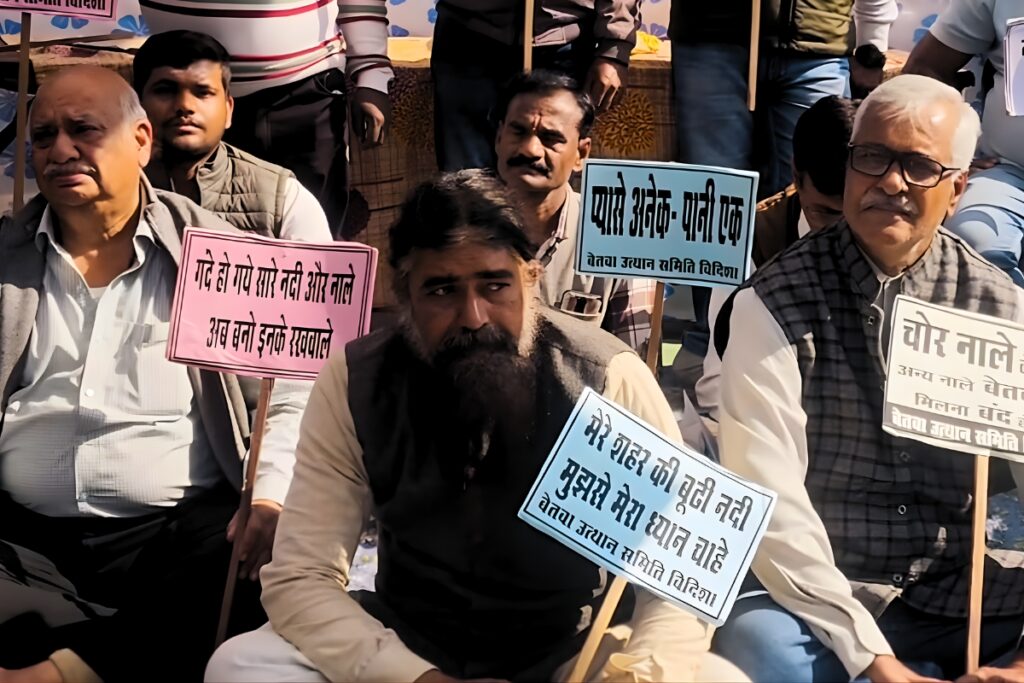
At Madhavganj Square in Vidisha, a group of residents stands in protest, holding placards that read, “Protecting rivers is protecting the nation” and “Betwa belongs to everyone.” The demonstration is a call to make the Betwa River pollution-free. Protesters cite recent deaths caused by contaminated water in Indore and demand that the Betwa be cleaned on priority, warning that five city drains empty into the river and could seriously affect public health.
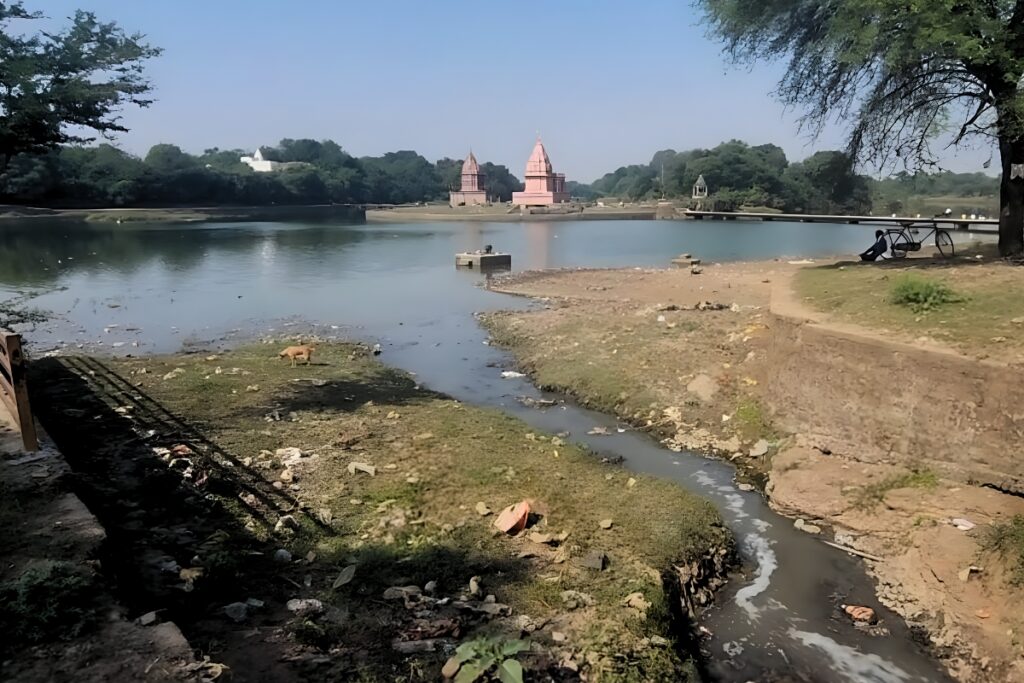
The Betwa River originates in Jheri (Kumra) village of Madhya Pradesh and flows nearly 590 kilometers before joining the Yamuna in Uttar Pradesh. Yet, a roughly seven-kilometer stretch through Vidisha has pushed it into the national category of critically polluted rivers. At several ghats, the water is not even fit for bathing. The reason is stark: untreated sewage from city drains flows directly into the river, exposing administrative negligence on the ground.
Twelve years of struggle for conservation
Neeraj Chaurasia, a resident and environmental activist who has been fighting to protect the Betwa for nearly 12 years, says:
“Betwa is the only lifeline river of Vidisha, yet today it is among the most polluted. On festivals and religious occasions, thousands of people come to bathe at its ghats. Driven by faith, they enter the river without knowing that this water is not even fit for sipping. The water is green, foul-smelling, and devoid of aquatic life. Dead fish and other organisms are seen floating almost every day.”
Vidisha has two sewage treatment plants (STPs) at Jatrapura. One, near the old cremation ground, has been shut for years, allowing sewage to flow into the Naulakhi and Betwa–Bais confluence, where illegal brick kilns also operate. The second STP, built near PM Awas housing, often remains non-functional. The municipality has failed to connect major upstream drains—Piliya Nala, Chorghat Nala, and smaller drains near the cowshed and cemetery—to the STP, and has also not provided sewer connections to the 25,000 houses planned under the AMRUT (Atal Mission for Rejuvenation and Urban Transformation) scheme.
Violation of NGT orders
The orders of the National Green Tribunal (NGT) are being openly violated. Neither the silt and waste deposited on the riverbed have been removed, nor has any mechanical desilting been carried out.
In 2024, taking suo motu cognizance of a news report, the NGT directed that polluted drains such as Chorghat and Gaushala be intercepted and diverted to STPs under the AMRUT 2.0 scheme. It also ordered the removal of sludge from the riverbed, restoration of depth, and repair of ghats to ensure bathing-quality water (BOD < 3 mg/l).
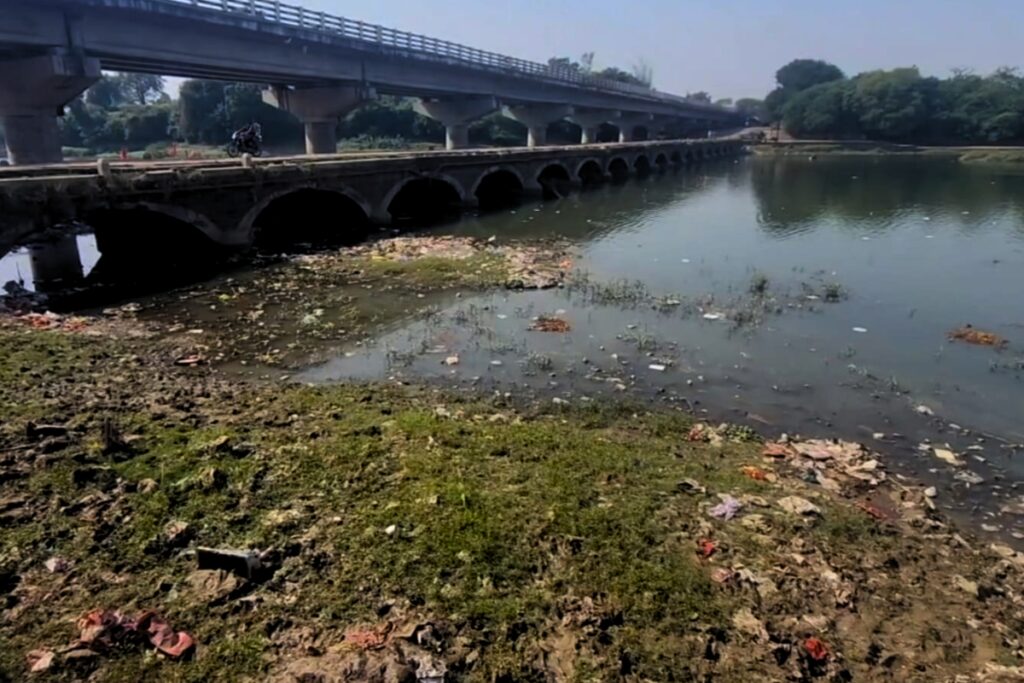
According to Vidisha Municipal CMO Durgesh Singh, work is underway on plans to divert the Chorghat and Gaushala drains, and a detailed project report (DPR) is being prepared for the Piliya drain. However, tenders related to river cleaning are still stuck in the process.
What the data says
The official data from the Central Pollution Control Board’s (CPCB) 2025 report shows that the target remains unmet. The Betwa, which stretches from Kanjia to Vidisha, is still listed under Priority II polluted rivers, with a Biological Oxygen Demand (BOD) of 20.4 mg/l.
Although some 2024 figures show improvement (BOD 4.2 mg/l), the river’s continued polluted status indicates that drain diversion and cleaning efforts have not fully succeeded on the ground.
In 2022–23, the BOD level at Charnteerth Ghat was recorded at 20.4 mg/l—signifying severe pollution. By 2024, it had dropped to 4.2 mg/l, an improvement of nearly 80 percent. Yet, scientifically, bathing-quality water requires BOD below 3 mg/l. Other locations show mixed results: 4.7 mg/l at Kanjia Road Bridge, 2.9 mg/l near the Raisen industrial area, 2.9 mg/l near the intake well, and 3.2 mg/l at the Betwa–Bais confluence. Several sites still exceed safe bathing standards.
Paper claims vs ground reality
While the Madhya Pradesh Pollution Control Board’s 2023–24 report placed the Betwa in Category ‘B’, declaring an average BOD of 3 mg/l at Charnteerth Ghat, the NGT’s inspection in August 2024 challenged these claims. Inspectors found that only 12.2 MLD of sewage was reaching the 22.25 MLD-capacity STP at Jatrapura, while around 10 MLD of untreated wastewater was directly entering the river. Chorghat, Gaushala, and cemetery drains were identified as major pollution sources.
Vidisha’s drinking water supply also depends on the Betwa. Water from treatment plants at Kalidas and Chhota Stop Dam (with a combined capacity of 27 MLD) is supplied through a 285-kilometer pipeline network. During summers, water from the Halali Dam is released into the Betwa, further underlining the river’s importance.
An urgent need for action
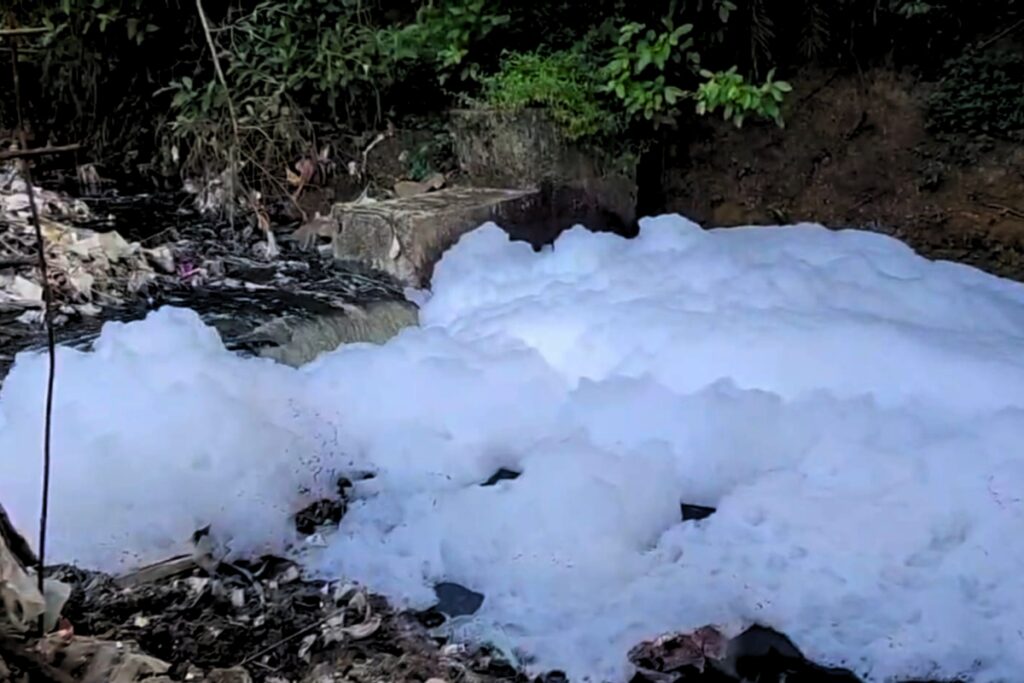
Despite claims of improvement on paper, the Betwa continues to suffer in Vidisha. Several ghats still have water above bathing standards. Five major drains, incomplete sewage treatment, and partial compliance with NGT orders show that the core problem remains unresolved.
Local concerns are justified. The Betwa is a river of faith and the city’s primary drinking water source. Without timely action—blocking toxic drains, enhancing STP capacity, and cleaning the riverbed—the crisis will only deepen.
Saving the Betwa now demands more than announcements. It requires firm, transparent action on the ground so that this “River of Ram” can once again become a lifeline—rather than a polluted stream confined to official files.
Support Us To Sustain Independent Environmental Journalism In India.
Keep Reading
Story of Mala Nimbalkar: Rag Picker to Manager of MRF centre in Bhopal
In Bhopal’s Idgah Hills, Who is Segregating Our Plastic Waste?
Stay Connected With Ground Report For Underreported Environmental Stories.
Authors
Support Ground Report to keep independent environmental journalism alive in India
We believe climate change should be the basis of current discourse, and our stories attempt to reflect the same.
Connect With Us
Send your feedback at greport2018@gmail.com
Newsletter
Subscribe our weekly free newsletter on Substack to get tailored content directly to your inbox.
When you pay, you ensure that we are able to produce on-ground underreported environmental stories and keep them free-to-read for those who can’t pay. In exchange, you get exclusive benefits.
Your support amplifies voices too often overlooked, thank you for being part of the movement.