“रत्तूसिंह मर जाएगा तो क्या होगा? इतने लोग मर गए तो क्या-क्या हुआ?… क्या होगा? कुछ नहीं होगा।”
“What will happen if Rattusingh dies? So many people have died, so what happened?… What will happen? Nothing will happen.”
— Phanishwar Nath ‘Renu’, Hrinjal Dhanjal
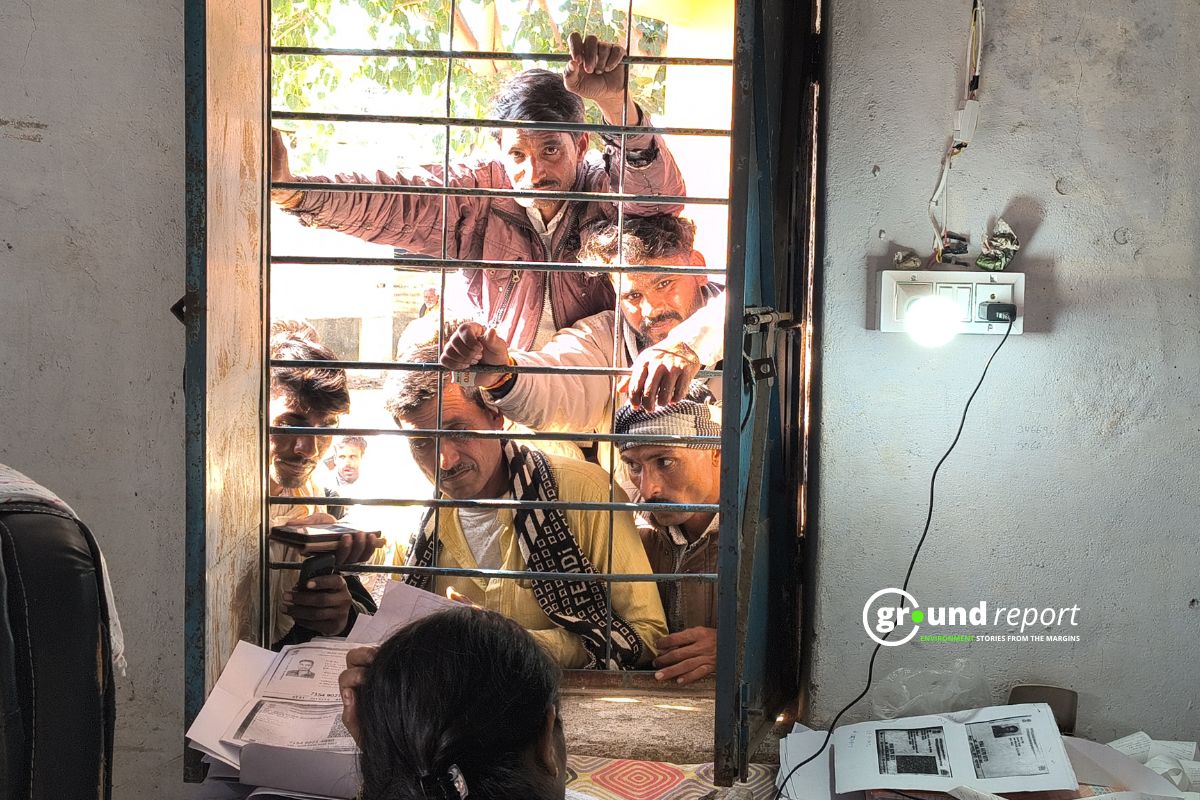
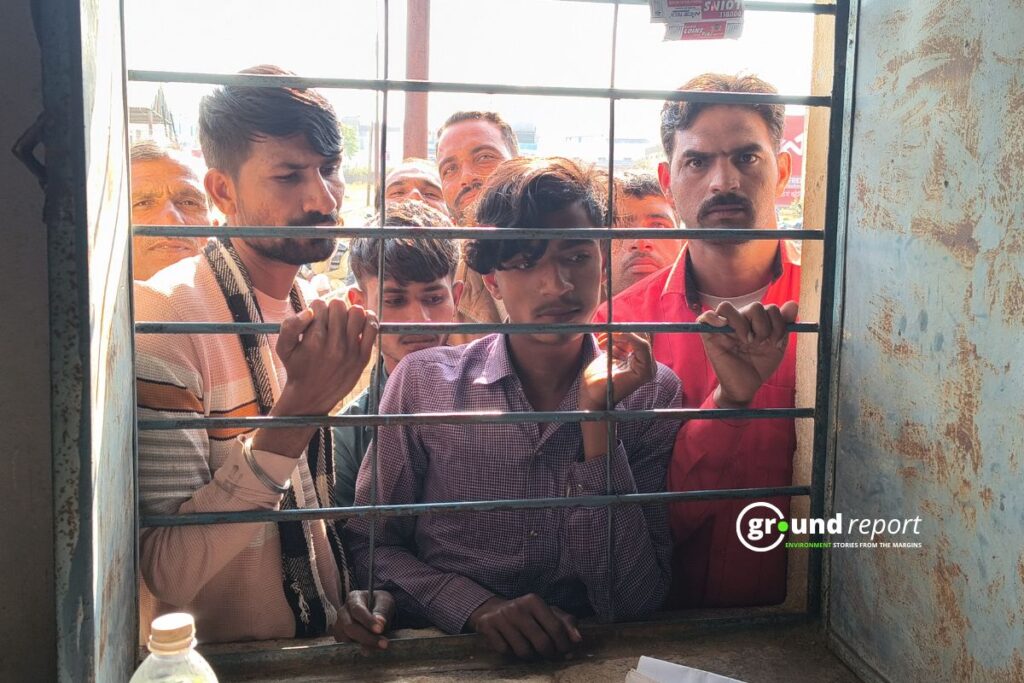
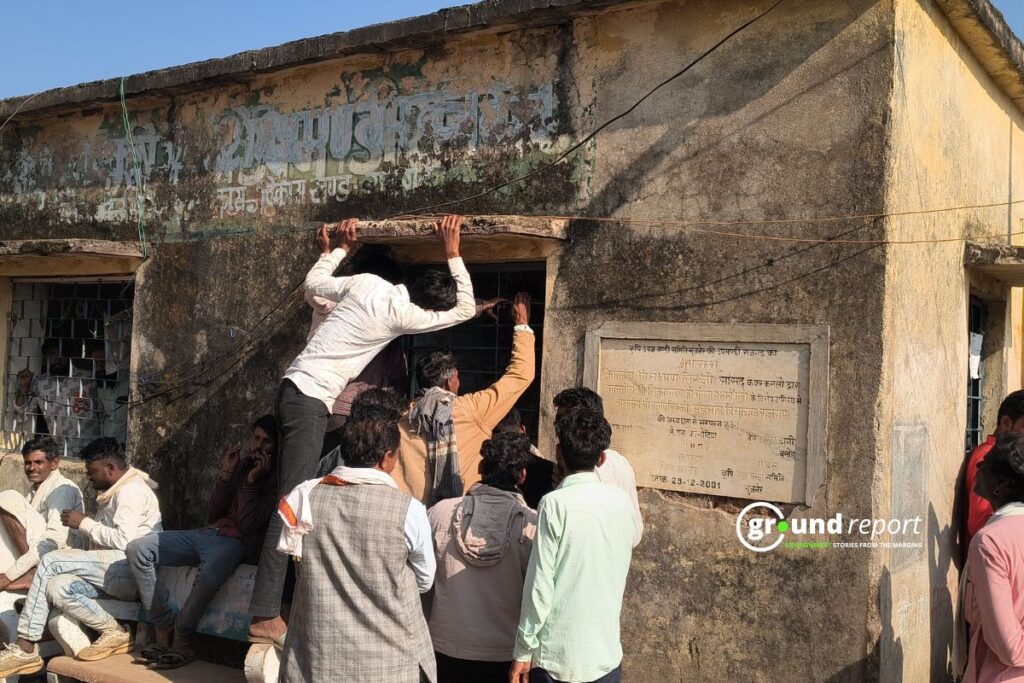
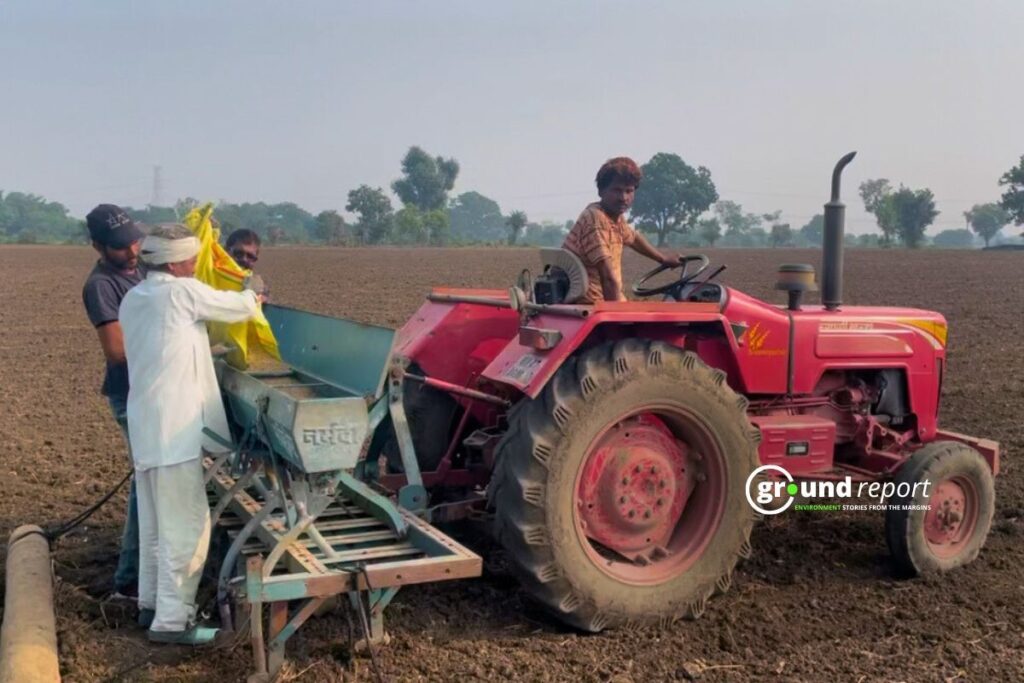
As the Rabi season gets underway, the recurring fertilizer crisis in Madhya Pradesh has worsened once more. Year after year, as the sowing period approaches, reports surface of endless queues, arguments, and protests at government fertilizer distribution centers. This time, however, the crisis has claimed lives. Two farmers collapsed and died while waiting in line in separate districts. One was a woman from the Sahariya tribal community.
In both cases, the farmers endured days of repeated travel and prolonged standing in queues under harsh conditions, with little or no success in obtaining the urgently needed urea. The physical toll is compounded by exhaustion, hunger, and the stress of uncertainty. Exhaustions could have possibly led to sudden health collapses from which they did not recover.
Two Weeks, Two Districts, Two Deaths
The first incident occurred in the Bamauri block of Guna district. On Tuesday, November 25, 58-year-old Bhuriya Bai came to get fertilizer. This woman from the Particularly Vulnerable Tribal Group (PVTG) hoped she would receive fertilizer by evening. However, after standing in line until evening, she had to return empty-handed to her village, Shikari Tapre, located 20 km away.
After sowing wheat and mustard on her 20 bigha farm, Bhuriya Bai desperately needed urea. So the next day, she stood in line again, but once more didn’t receive fertilizer by evening. Finally, exhausted, she fell asleep at the distribution center itself.
At 11 PM, she suddenly started vomiting. She was first taken to Bamauri’s Community Health Center, from where she was referred to Guna District Hospital. But she died on the way. Madan Sahariya, the village sarpanch and relative of the deceased woman, says: “She didn’t even get an ambulance. There was no hearse vehicle to take the body home.”
Just one week after this incident, 193 km away from Guna in Tikamgarh district, 50-year-old farmer Jamuna Kushwaha also died under similar circumstances. He had been struggling for three days to get a bag of fertilizer. On December 8, he reached the distribution center without eating anything. Around noon, after vomiting, he collapsed on the ground. Local tehsildar Satendra Gurjar, present at the scene, took the farmer to the district hospital in his vehicle, but he died during treatment.
The deceased’s younger brother Chhakki told news agency PTI that his brother had been traveling back and forth for the past two days from their residence in village Bajrua to the Badoda distribution center, 8 kilometers away, to get two bags of urea. House Officer Chandrajit Yadav of Dehat Police Station, citing the preliminary post-mortem report conducted by Dr. Deepak Ojha, said Kushwaha died of a heart attack.
Protests and Looting Erupt
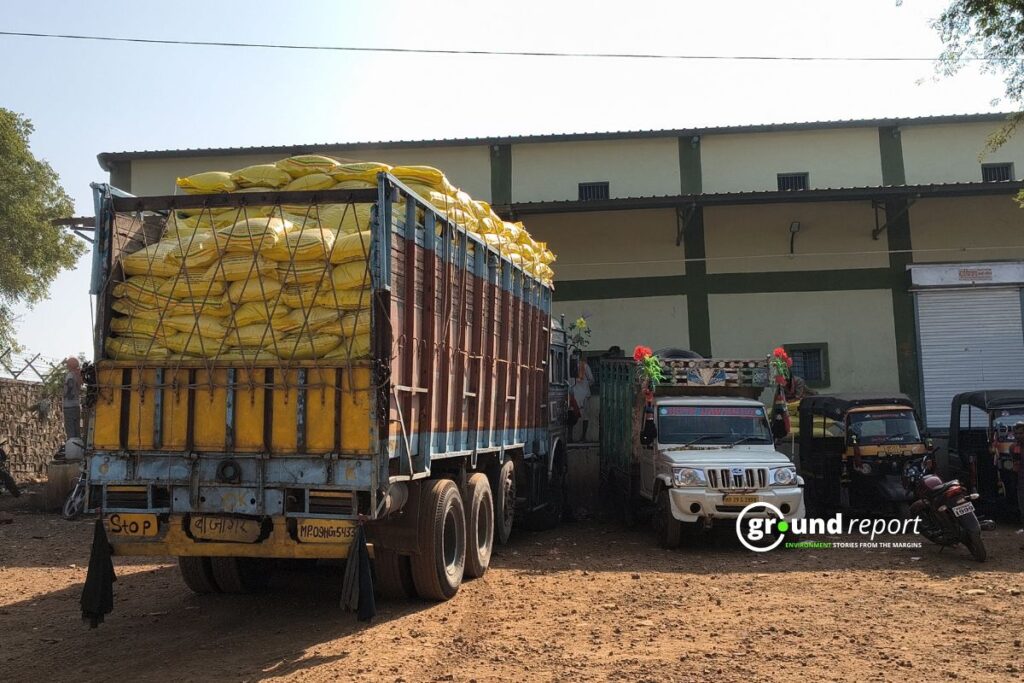
Tikamgarh’s Deputy Director of Agriculture (DDA) Ashok Sharma said that 19,000 tons of urea have been distributed and 2,800 tons more have been requested. Government officials have denied any shortage of fertilizer.
However, on Tuesday, December 9, farmers in Tikamgarh blocked the Tikamgarh-Jhansi Highway road in front of the Collector’s office. Meanwhile, farmers deflated the tires of DDA Sharma’s vehicle in protest when he arrived at the Khargapur fertilizer distribution center. According to ETV Bharat’s report, farmers in Jatara in the same district allegedly looted bags of fertilizer loaded on trucks.
This problem is not limited to just one or two districts. Indar Singh from Rajgarh, like Kushwaha, has been visiting the distribution center for three days for fertilizer. Many farmers here received fertilizer tokens 10 days ago but still haven’t received their fertilizer bags. Meanwhile, in Morena, the home district of the state’s Agriculture Minister Adal Singh Kanshana, a clash broke out between two groups over fertilizer, injuring three people.
Data and Responses
On August 8 this year, in a response to Parliament, Union Minister of State for Chemicals and Fertilizers Anupriya Patel stated that during the last Kharif season, Madhya Pradesh needed 17.42 lakh metric tons of urea. However, from April 1 to August 4, 2025, the proportional requirement was only 10.47 lakh metric tons. Against this, 14.26 lakh metric tons of urea were available in the state, of which only 12.54 lakh metric tons were sold.
According to a report published in Nai Dunia, between October 1 and December 7 this year, 13.25 lakh tons of urea have been sold, which is more than last year’s figure of 11.24 lakh tons. According to the report, 80,000 tons of urea per day will continue to arrive in the state until March 2026.
However, attacking the government on this issue during the winter session of the Legislative Assembly, Leader of Opposition and Congress MLA Umangsingh Singar said that the central government’s own data shows that in three years, 16.25 lakh metric tons of urea and 7.11 lakh metric tons of DAP have not been distributed. He said that timely distribution of fertilizer is not being ensured, which is why conflicts between farmers and administration are increasing in the state.
Sandeep Singh, a farmer from Khargone, has also been troubled by fertilizer shortages this season. He says the cause of the fertilizer crisis is hoarding and black marketing.
According to central government data, between April 1 and August 1, 2025, 276 raids/inspections were conducted in Madhya Pradesh on complaints of fertilizer black marketing, and 35 FIRs were registered. However, no cases of hoarding or selling fake fertilizer occurred in the state during this period.
Farmers ‘Not Government’s Priority’
What is the reason for this fertilizer crisis that occurs every year and every season? Answering this, agricultural expert Devinder Sharma says: “When the government works on ‘ease of doing business’, why doesn’t it work on ‘ease of doing farming’?” He says the government should be mindful of demand and supply in advance, and action should be taken against negligent District Collectors.
Dr. Sunilam, National President of the Kisan Sangharsh Samiti, says the reason for all these mismanagement issues is that farmers are not in the government’s priority list at all. He says: “Every society submits its requirements before the season, yet the government fails to make fertilizer available on time.”
Sharma blames both the government and the media for the continuation of these mismanagement issues. He says that since these issues don’t get good media coverage, the government doesn’t make efforts to solve the problem.
Bhuriya Bai’s relative, Madan Sahariya (50), told reporters that government officials delivered fertilizer to their home only after her death. Madan himself cultivates 10 bigha of land and needs at least 10 bags of DAP for the season. Yet, even after the tragedy, he continues to struggle to secure supplies.
The only notable change in the district has been the shift to online fertilizer tokens. Farmers like Madan must now visit the village cyber cafe to register. Once issued a token, they receive a phone call from the distribution center informing them of the date they can collect their allocation.
When will Madan get his fertilizer? He still has no idea.
Support us to keep independent environmental journalism alive in India.
Keep Reading
No Irrigation in 36 Years; Bargi Villages Now Protest Pumped Storage Project
Sheopur Leads in Stubble Burning as Official Measures Fall Short
Stay connected with Ground Report for underreported environmental stories.
Author
Support Ground Report to keep independent environmental journalism alive in India
We believe climate change should be the basis of current discourse, and our stories attempt to reflect the same.
Connect With Us
Send your feedback at greport2018@gmail.com
Newsletter
Subscribe our weekly free newsletter on Substack to get tailored content directly to your inbox.
When you pay, you ensure that we are able to produce on-ground underreported environmental stories and keep them free-to-read for those who can’t pay. In exchange, you get exclusive benefits.
Your support amplifies voices too often overlooked, thank you for being part of the movement.