Note: The article has a mention of suicide
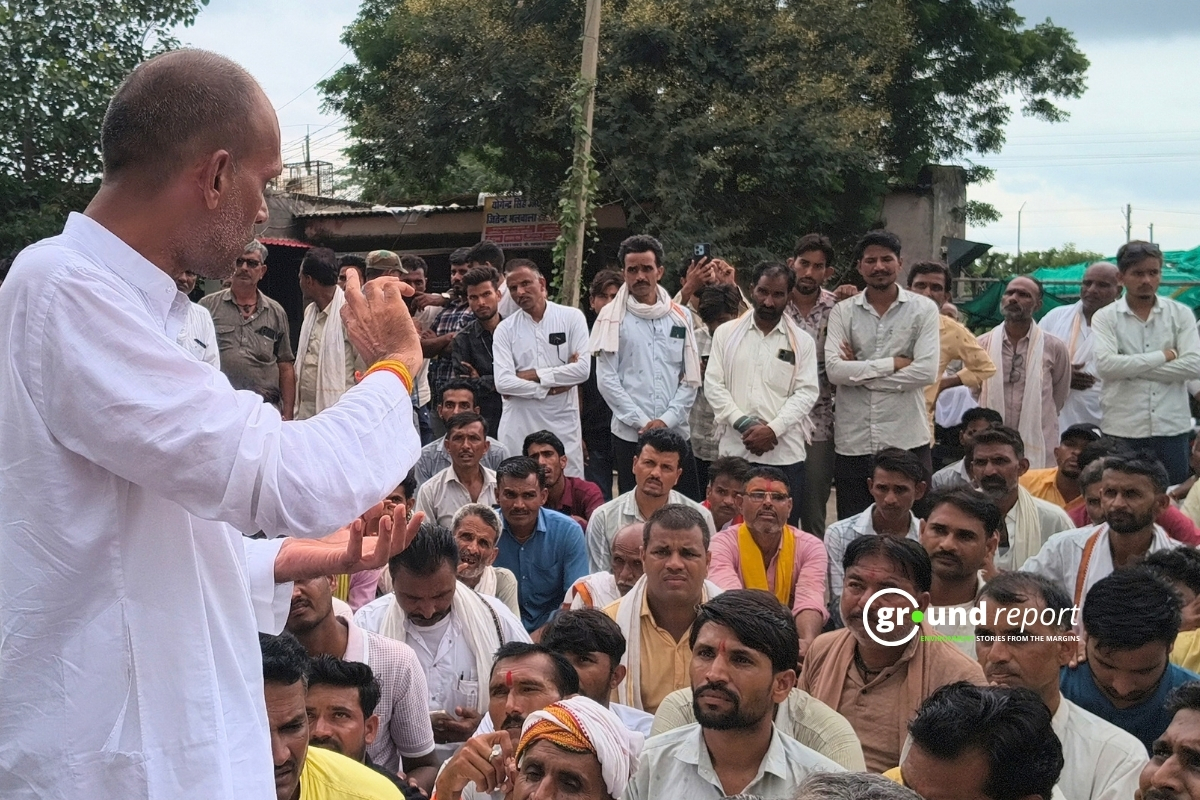
On a Sunday morning when his village should have been quiet, Booth Level Officer (BLO) Mangilal Verma was already out in the lanes of Dhanwas Kalan Village in Rajgarh, Madhya Pradesh.
It was officially a holiday, but Verma—responsible for the voter-list verification under the Election Commission’s Special Intensive Revision (SIR)—had no day off.
When Ground Report reached the government school where he works, he sat surrounded by stacks of forms, 10th-grade students quietly sorting them at his direction.
“I hardly sleep three hours,” he said, his eyes moist with exhaustion. “The rest of the 21 hours, I am working.”
The SIR started at the end of October, with more than 5 lakh officials working in the field. On average, a BLO verifies 1000 voters, and has to complete the process by 4th December. The exercise requires BLOs to distribute, collect, verify, and digitally upload voter information across all households.
Tight deadlines, repeated field visits, and slow online systems have multiplied the pressure. Reports from multiple states reveal deaths linked to overwork and stress among BLOs.
According to Aaj Tak, at least 25 BLOs died across seven states within the first 22 days of the SIR drive. Amar Ujala reported six deaths in Madhya Pradesh in just 10 days. The opposition parties and unions have publicly criticized the workload.
Meanwhile, Verma said that his senior officials push down unrealistic targets. He recalled a recent visit by the tehsildar, who ordered him to collect 300 forms in a single day. “But villagers don’t give forms easily. What can a BLO do?”
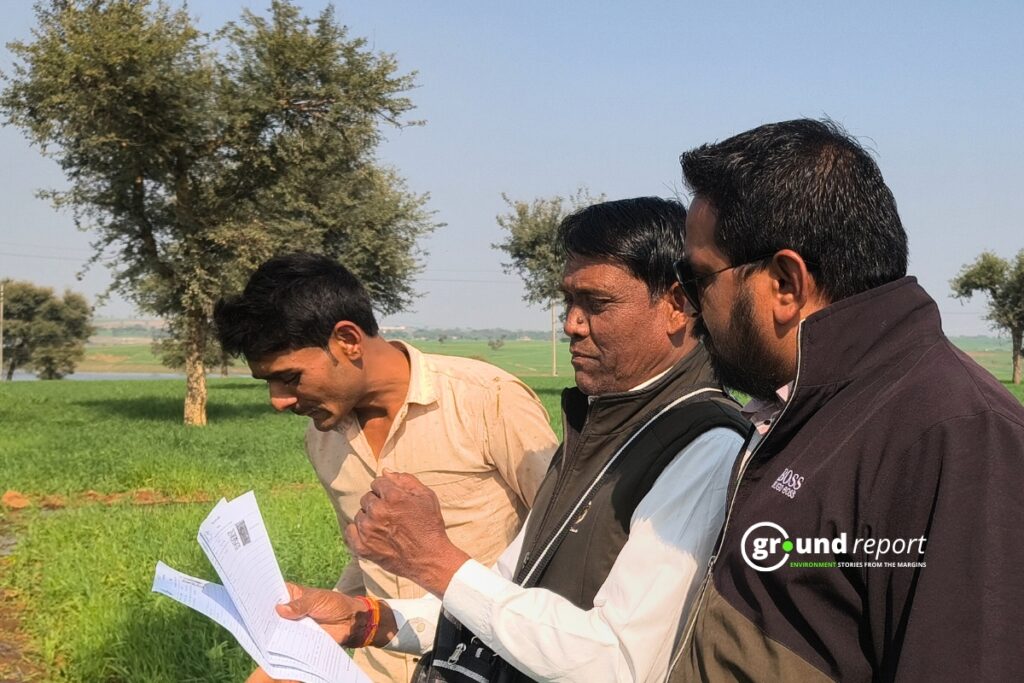
Verma says that there is a lack of cooperation from both the villagers and his colleagues. “They [villagers] say, ‘You get a salary. If our crops are damaged while talking to you, who will pay?” he said.
On this particular Sunday, Verma tried calling the anganwadi worker and the panchayat representative for assistance. “Everyone said it is a holiday,” he said. “But for a BLO, there is no holiday.”
Verma covers more than 1,400 electors in Dhanwas Village, Rajgarh, Madhya Pradesh. Under ECI guidelines, any area with over 1,200 voters should have two BLOs, he says. “I requested an additional BLO a year ago,” he said.
Radha Vishwakarma, an ASHA worker, is responsible for the Sherpur booth in Sehore district. After a month of rigorous work, she is left with the last 80 people to be identified, from the list of approximately 750.
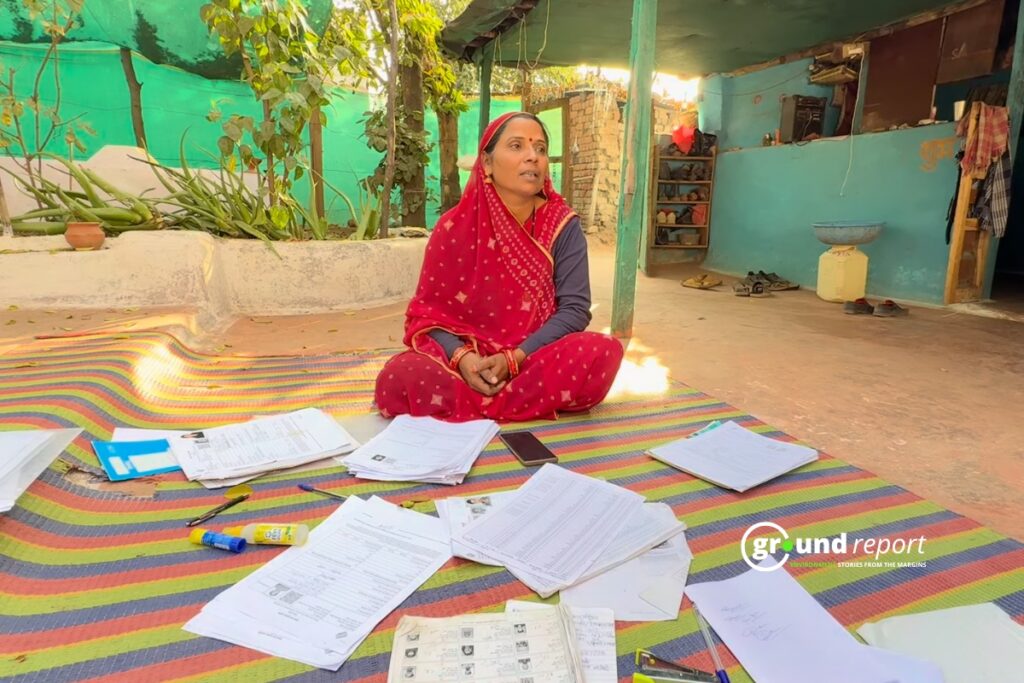
“I have tried to call them… visited their registered address… they are nowhere to be found,” She said with certain exhaustion. “I have mentioned this to my superiors… and I will add these names to the third category.”
Even the open space in their house was stacked with forms, and a voter list from the 2003 state assembly election.
On the other hand, Sangita Parmar, a primary school teacher from the Pipaliya Mira booth in Sehore district, had managed to collect nearly all the forms. Only ten left to be uploaded, a task she said could be completed only in the evenings when the portal finally functioned smoothly.
Digitisation adds another layer of pressure. Slow networks and repeated server outages mean a single entry can take an hour. BLOs across states have raised the same complaints on WhatsApp groups.
In this period, their [Radha and Sangita’s] regular duties, from household responsibilities to teaching and community health work, were pushed aside. All of them said they were working through the night, often sleeping no more than four to five hours.
“My Mr (husband) has supported me in the last month. Otherwise, this would have been very difficult”. She added that, however difficult… this work has to be done. This is important for the voters’ list at the booth.
On 30 November, the Election Commission of India extended the SIR deadline from 4 December to 11 December to ease the workload. It also announced an increase in remuneration — from ₹6,000 to ₹12,000 for BLOs, and ₹18,000 for supervising officers.
Verma shuffled another stack of forms, surrounded by children on what should have been a quiet Sunday.
Rajeev Tyagi and Pallav Jain Contributed Reporting
Support us to keep independent environmental journalism alive in India.
Keep Reading
Tiger. Man. Man-eater Tiger. What or Who Turns Them Man-eater?
After Tragedy, Families Face Delays in Tiger Attack Compensation
Stay connected with Ground Report for underreported environmental stories.
Author
Support Ground Report to keep independent environmental journalism alive in India
We believe climate change should be the basis of current discourse, and our stories attempt to reflect the same.
Connect With Us
Send your feedback at greport2018@gmail.com
Newsletter
Subscribe our weekly free newsletter on Substack to get tailored content directly to your inbox.
When you pay, you ensure that we are able to produce on-ground underreported environmental stories and keep them free-to-read for those who can’t pay. In exchange, you get exclusive benefits.
Your support amplifies voices too often overlooked, thank you for being part of the movement.