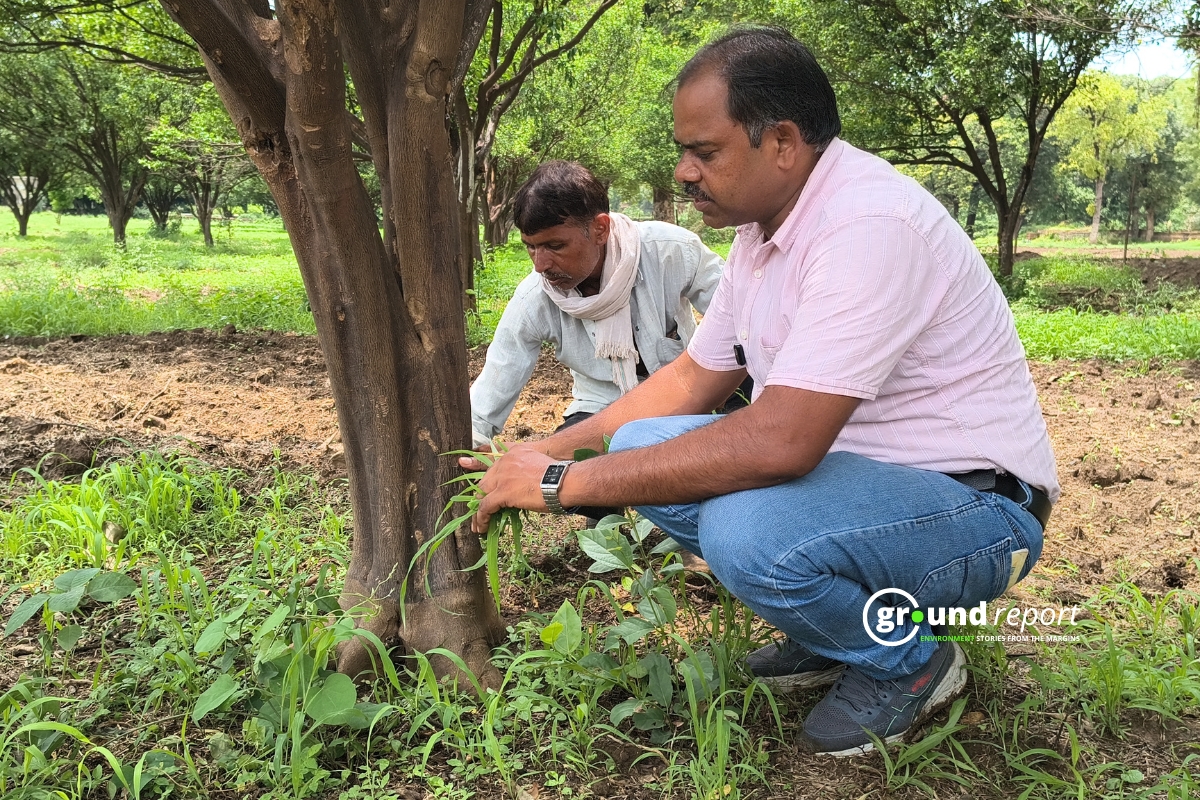
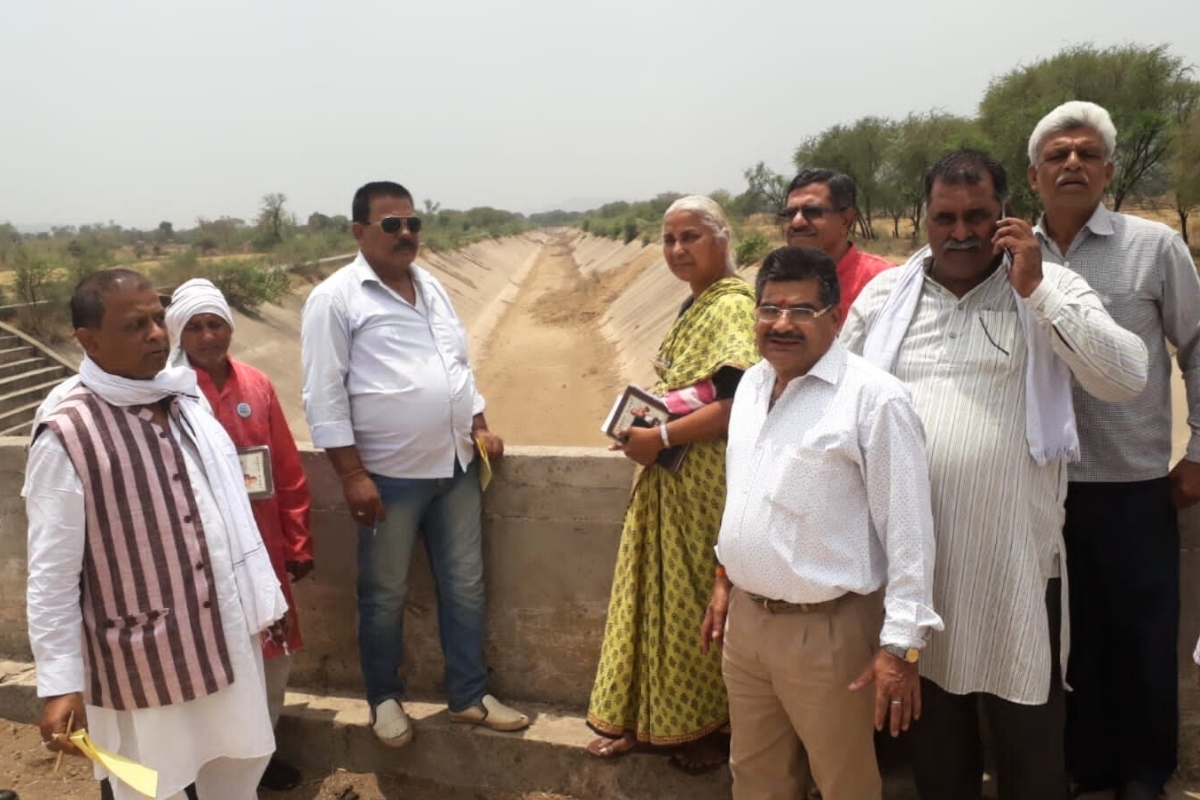
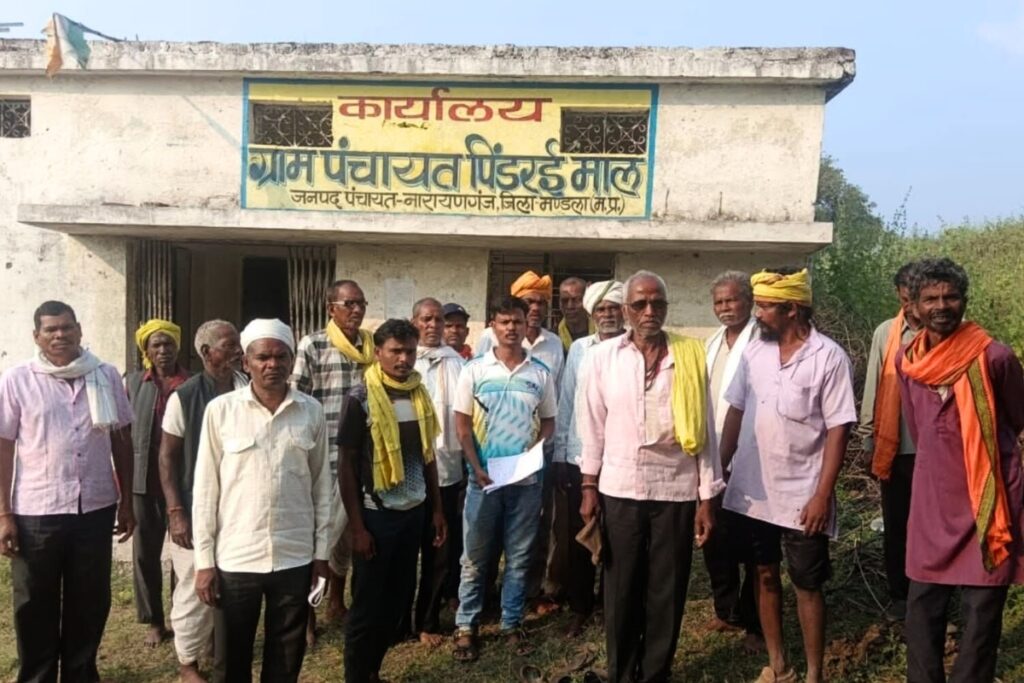
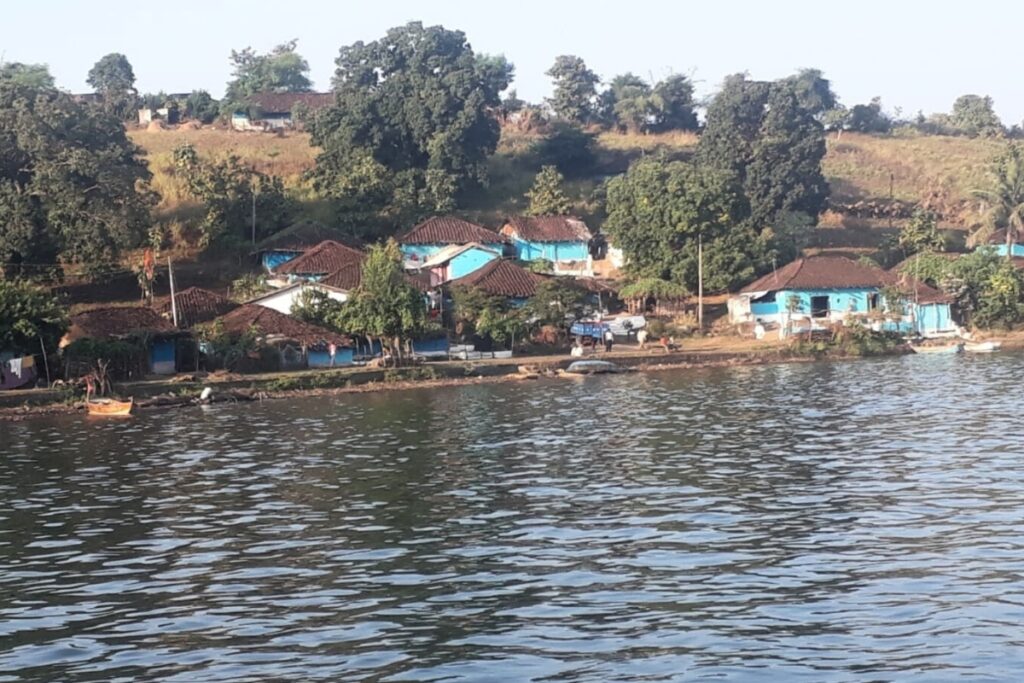
हिंदी में पढ़ें । In Pindarai Mal village in Madhya Pradesh’s Mandla district, 55-year-old Purushottam Malgam sits restlessly. Sleep, he says, has eluded him for years.
“My father was displaced because of the Bargi Dam. They told him irrigation water would turn our fields green. He waited his whole life. He died waiting. Thirty-six years later, neither he nor we received a drop of water.”
His voice is edged with anger.
“Now they’re surveying our land again—this time in the name of ‘pumped storage’. First, we were uprooted for the dam, now they want to displace us again to make electricity,” he says.
“Whose water is this—farmers’ or power plants’?”
His question echoes across 95 displaced villages of Mandla district, which still haven’t received irrigation water. The same is true for the 885 villages of Rewa and Satna, where not a single drop has reached through the Bargi Diversion Project.
And yet, water from the Bargi reservoir is now being allocated to a third power project— a 1,000 MW pumped hydro storage plant.
An Irrigation Project That Never Irrigated
Bargi Dam—approved in 1971 as the Rani Avanti Bai Sagar Irrigation Project—was completed in 1988. It promised irrigation to 437,000 hectares. About 162 villages were displaced in the name of “public interest.”
But 36 years later, irrigation has reached only 36,000 hectares—just 5.4% of the target.
In Rewa and Satna, the canal meant to bring Bargi water has remained dry for decades. Only 104 km of the 197.5 km main canal was built by 2010. Deadlines have been extended year after year; the latest target is March 2026.
In Rewa’s Nagod block, 62-year-old farmer Ramprasad Patel recalls:
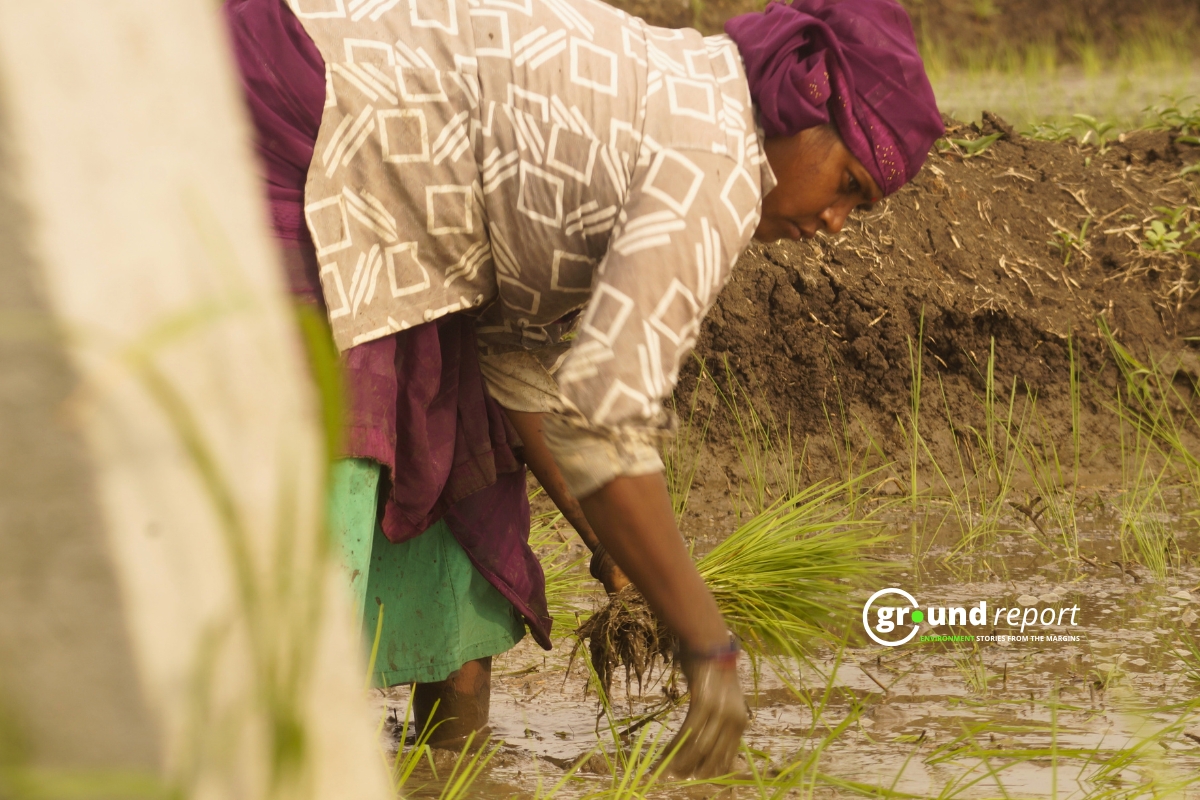
“In 1990, we were told the canal would reach our village. I waited, my sons waited, and now my grandsons are growing up waiting. We still rely on borewells and the monsoon.”
Deepak Mandloi, Assistant Engineer, Narmada Development Division, Katni, stated that the
“construction of the underground tunnel is targeted for completion by December 2025, while the water supply is targeted for March 2026. Following this, 1,450 villages will begin receiving irrigation facilities.”
Bargi Water Reached a Thermal Power Plant
While farmers waited, the 600 MW Jhabua Thermal Power Plant in Ghansor, Seoni, began receiving 2,362 cubic meters of water per hour from Bargi reservoir through a dedicated pipeline.
Dhan Singh Markam, a 48-year-old farmer from Bagdari, says:
“The pipeline passed through our land. We were paid very little. Water from our reservoir goes to the power plant, but our fields remain dry. We protested, we sat on a dharna (a peaceful demonstration)—nobody listened.”
Then Came the Proposal for the Chutka Nuclear Plant
In 2009, the Nuclear Power Corporation of India Limited proposed a 1,400 MW nuclear plant at Chutka, at 497.72 hectares along the Narmada River. It would draw 72.5 million cubic meters of water annually from Bargi. Local activists allege pressure was put on the Adivasi communities to give up their land.
Shyamlal Burman, 52, from the fishing community, says:
“I have been displaced twice—first by Bargi, then from the rehabilitation site. Now they want us to move again for the nuclear plant. Are we not human?”
Now, a ₹4,690-Crore Pumped Storage Project
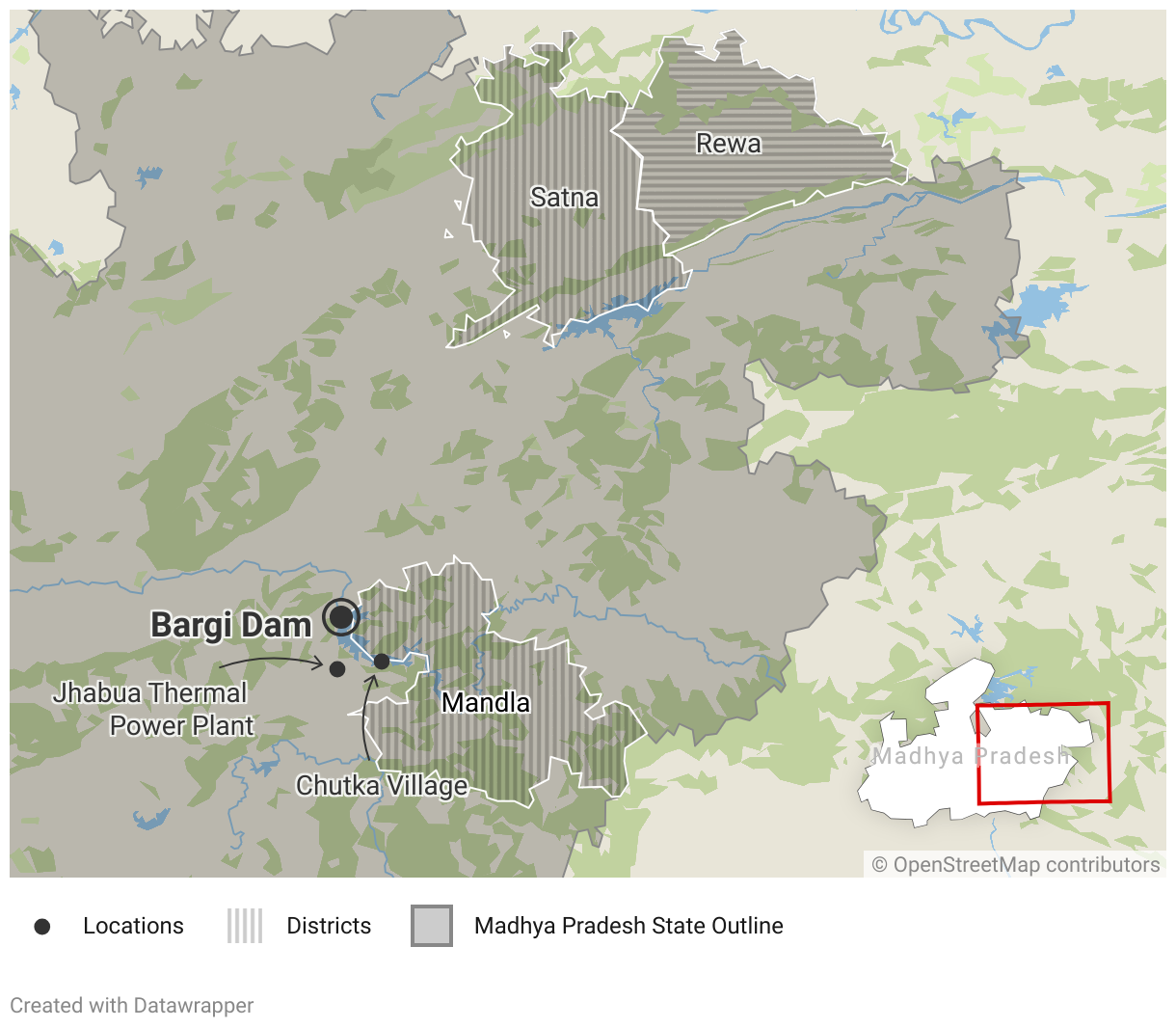
The newest proposal—costing ₹4,689.89 crore—would create a 1,000 MW open-loop pumped-storage system across villages in the Narayanganj and Bijadandi blocks. Water will be pumped from Bargi (the lower reservoir) to an upper reservoir to generate electricity during peak hours.
Serentica Renewables received the state allocation letter in August 2025 and central clearance (TOR) in November 2025.
The project requires:
- 381.50 hectares of land
- 271 hectares of dense forest (including teak and mixed forest)
- Potential displacement of five villages
The company has not yet applied for forest clearance.
Farmers Ask: Water for Whom?
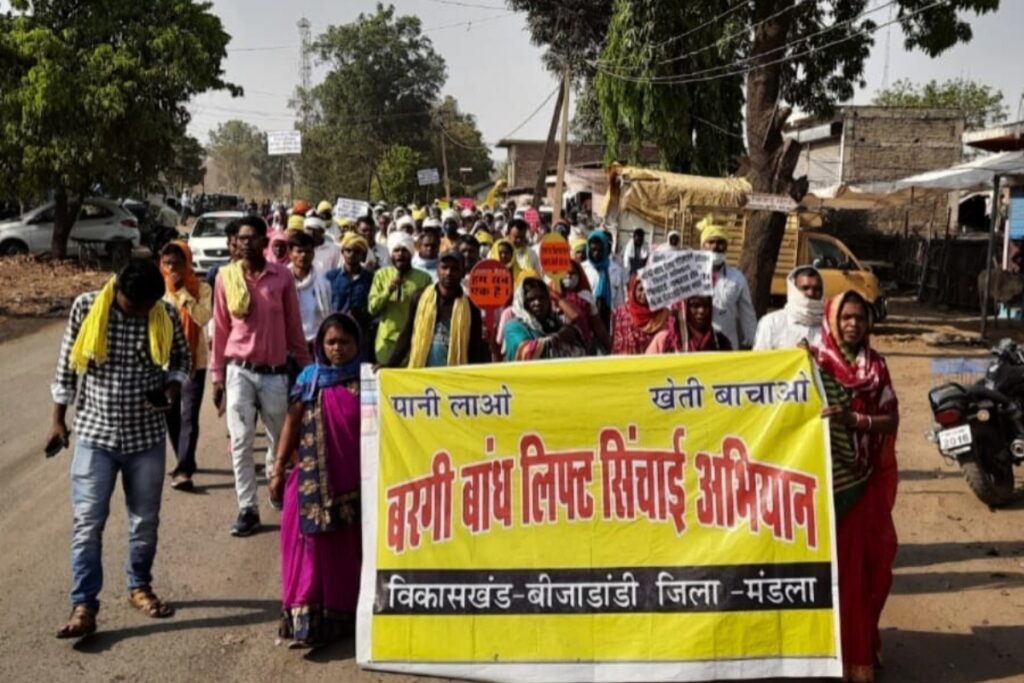
In Salaiya Mal, 42-year-old Sukhmati Bai says:
“Bargi Dam displaced my husband’s grandfather. We had four acres; two went underwater. We farm on the remaining two. Now, for this upper reservoir, we may be displaced again.”
Water expert Shripad Dharmadhikary asks:
“If water is already going to Jhabua Thermal Plant, if pumped storage will need over 25 MCM initially and 2.75 MCM annually, and if the dam also generates 90 MW hydropower, what remains for farmers? Will water ever reach our fields?”
Rajkumar Sinha, who has fought for the rights of Bargi oustees for decades, says:
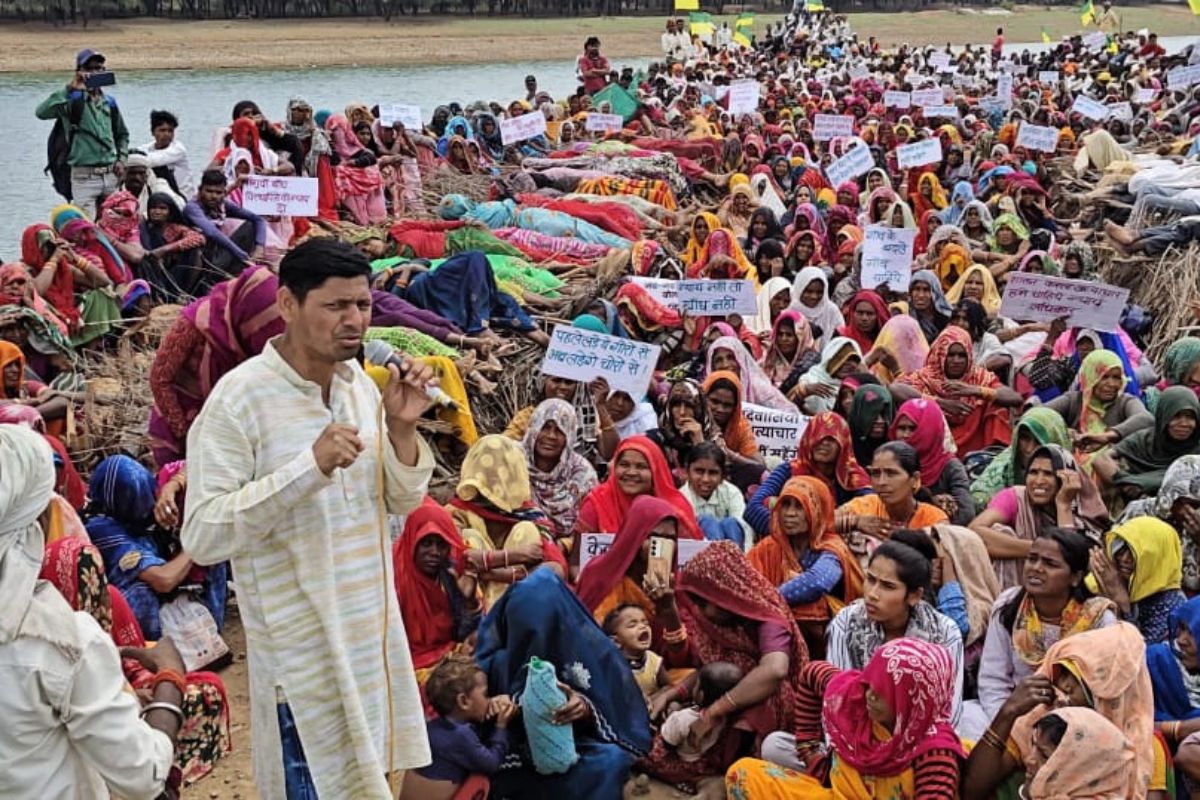
“Now four entities want Bargi’s water—irrigation, hydropower, thermal power, and nuclear power. Farmers are the weakest claimants. They have no lobby, no political clout.”
The Project’s Promises vs. Ground Reality
Serentica claims the project will bring employment, greenbelt development, and renewable power. But the reality is troubling:
- 271 hectares of dense forest will be cut
- More than 22 million cubic meters of debris will be generated
- 12.37 MCM debris will be dumped on 100 hectares of non-forest land, impacting local ecology
In the rehabilitation plan, 81 families from five villages will be directly affected. They will receive only cash compensation through ‘direct negotiations’ and mutual agreement. Affected farmers say this is inadequate for securing a stable livelihood.
“Displaced families will not receive land in exchange for land, but only cash compensation. This goes against the spirit of the 2013 Right to Fair Compensation and Transparency in Land Acquisition, Rehabilitation and Resettlement Act,” says Sinha.
Legal Concerns in a Fifth Schedule Area
Mandla is a Fifth Schedule district, which means that under PESA [Panchayats (Extension to Scheduled Areas) Act, 1996] and the Forest Rights Act (FRA), Gram Sabha consent is mandatory.
But the project documents declare the FRA process as “NO.” Despite this, the allocation letter was issued on August 11, 2025.
Advocate Rahul Singh of the Jabalpur High Court asks: “How can the process move forward without the consent of affected Gram Sabhas?”
A History of Displacement Without Justice
Bargi displaced 162 villages in Jabalpur, Mandla, and Seoni. Many Adivasi and fisherfolk communities lost land and livelihoods—yet never received irrigation water.
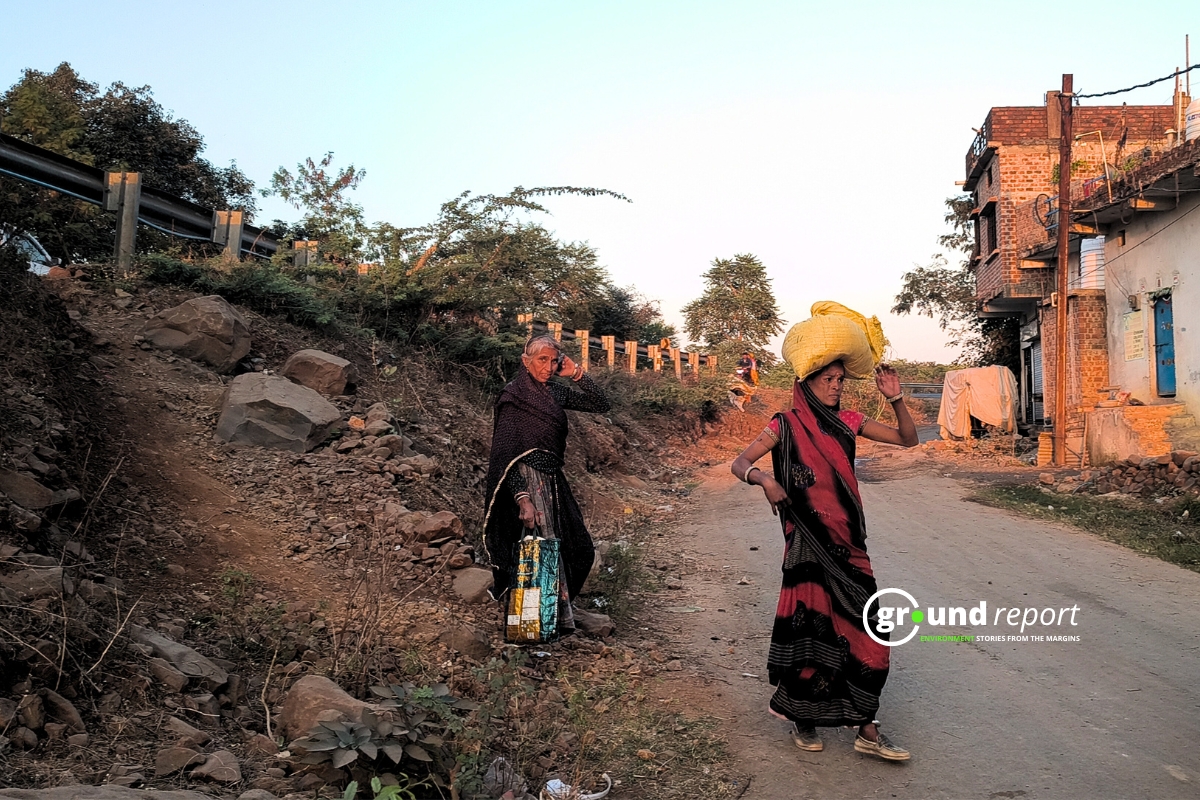
In Chutka, 60-year-old Dadulal Kungape recalls: “In 1980, they said the dam would bring water, and the region would prosper. We gave our land. Today, we survive on borewells. That same water is now going to power plants.”
In Rewa-Satna, farmers have lost hope. The diversion project, estimated at ₹5,127 crore, remains incomplete.
In Satna’s Maihar, farmer Jagdish Prasad says: “We get little rainfall; the soil stays dry. Bargi Diversion was our last hope. But the water meant for our crops is going to power plants. This is betrayal.”
Development for Whom?
Activist Sharda Yadav of the Narmada Bachao Andolan says, “Bargi was approved as an irrigation project. If the same water now goes to thermal, nuclear, and pumped storage plants, it violates the original purpose.”
Mahendra Singh from the Narmada Vistapit Sangharsh Samiti adds:
“Bargi’s story shows who development in India really serves. Adivasis and farmers give their land; cities and corporates take the benefits.”
The Final Question
Back in Pindarai Mal, Purushottam Malgam asks: “If Bargi Dam wasn’t meant for irrigation, they should have told us then. We gave land because they promised us water. That promise was broken. Now they want land again—for electricity. Whose homes will it light up? Our children still live in darkness.”
This is not just the story of Bargi Dam. It is the story of a development model where those who sacrifice the most—Adivasis and farmers—gain the least. Thirty-six years after an irrigation promise remains unfulfilled, how can displaced families trust new promises made for power projects?
This question now haunts every village on the verge of losing its land again.
Support us to keep independent environmental journalism alive in India.
Keep Reading
Tiger. Man. Man-eater Tiger. What or Who Turns Them Man-eater?
After Tragedy, Families Face Delays in Tiger Attack Compensation
Stay connected with Ground Report for underreported environmental stories.