Ken Betwa river Linking Project is the first-ever scheme under the National Perspective Plan passed by the government to benefit the drought-prone region by transferring water to this region. This scheme of linking rivers is four decades old and the government says that it will bring wide-ranging advantages in the areas, however, environmentalists state that it can also result in effects all over on the flora and fauna and animal habitats.
What is the Ken Betwa Linking project?
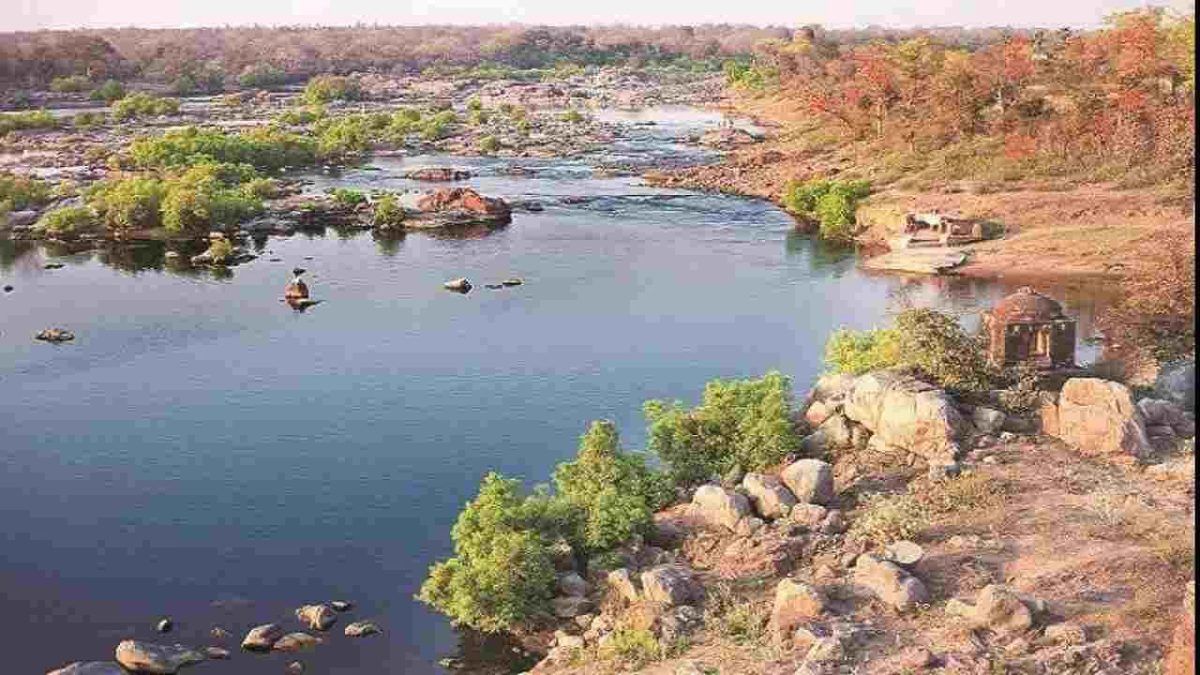
The Ken Betwa Linking- Project is the first programme under the National Perspective Plan for the interlinking of rivers and has the vision of bringing water from the Ken river to the Betwa river, both being a part of the Yamuna River. The Ken Betwa Link Canal will be 221 km long and will be implemented in two phases.
This project has two phases, with mostly four parts. Both phases are as follows:
Phase I will include one of the elements Daudhan Dam complex and its supplementary units which is the Low-Level Tunnel, High-Level Tunnel, Ken-Betwa Link Canal and powerhouses.
Phase II will involve three parts that is Lower Orr Dam, Bina Complex Project and Kotha Barrage. As per the Jal Shakti Ministry, the project is supposed to provide annual irrigation of 10.62 lakh hectares, provide drinking water to about 62 lakh people, and produce 103 MW (megawatt)of hydropower and 27 MW (megawatt)of solar power.
The project will also help in restoring the tanks in the region by feeding them through the link canal, wherever possible, and would help in ground recharge. The project’s objective is to use micro-irrigation on a large scale for better water use efficiency.
It also leads to integrated development and management of water supply in the region and thus provides water security to the region. This will also surround Bundelkhand—a scanty rainfall region, which spreads across 13 districts of Uttar Pradesh and Madhya Pradesh. Work for this project is assumed to be completed in around 8 years.
Ken Betwa Linking project will bring economic profitability to this underdeveloped area due to increased agricultural activities and stop the migration of people from the region so the area would be more developed.
The Project will advantage the people who are facing water shortage in the Banda, Mahoba, Jhansi and Lalitpur districts in Uttar Pradesh, and Tikamgarh, Panna, Chhattarpur, Sagar, Damoh and Datia in Madhya Pradesh.
Keep Reading
Indian agriculture household earns just Rs. 10,218 in a month: Govt
Post-harvest losses still high, reveals data shared in Lok Sabha
Kashmir’s rice fields wither amid rising temperatures & water scarcity
Support us to keep independent environmental journalism alive in India.
Follow Ground Report on X, Instagram and Facebook for environmental and underreported stories from the margins. Give us feedback on our email id greport2018@gmail.com.
Don’t forget to Subscribe to our weekly newsletter, Join our community on WhatsApp, and Follow our YouTube Channel for video stories.
Check out our climate glossary, it helps in learning difficult environmental terms in simple language.