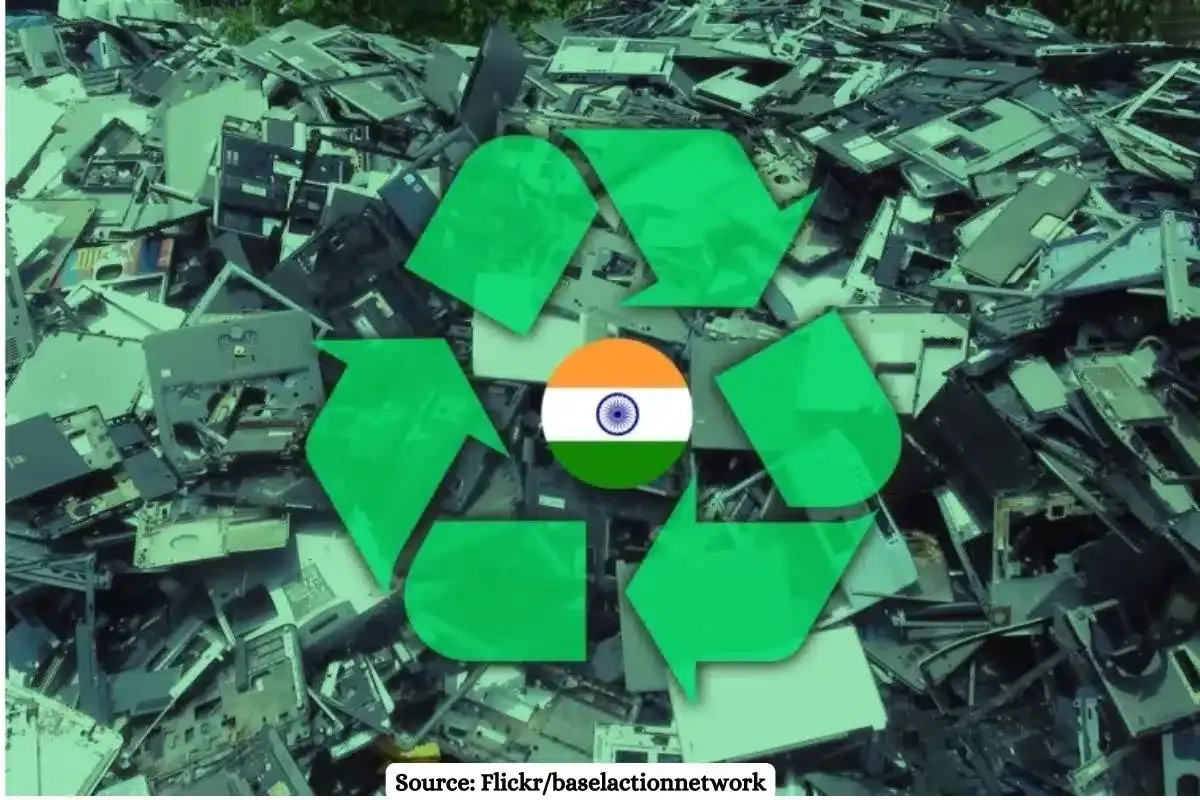
India has witnessed a remarkable growth in the recycling of electronic waste (e-waste) in the last five years, according to the data released by the Ministry of Environment, Forest and Climate Change (MoEFCC).
Union Minister of State for Environment, Forest and Climate Change Ashwini Kumar Choubey in a written reply in the Rajya Sabha said that the quantity of e-waste processed in the country increased from 23,330.3 tonnes in 2016-17 to 5,27,131.57 tonnes in 2021-22, registering a 22.59 times increase.
The MoEFCC attributed this achievement to the scientific and environmentally sound techniques adopted by the registered e-waste recycling units, which help to protect the environment, conserve natural resources, prevent soil and water contamination, and promote sustainable development and circular economy.
State-wise details of e-waste collected
| S. No. | State/UTs | FY 2020-21 in tonnes | FY 2021-22 in tonnes |
| Andhra Pradesh | 229.084 | 2021.19 | |
| Assam | 63.2 | 67.00 | |
| A&N Island | 2.034 | 0.78 | |
| Bihar | 86 | 41.07 | |
| Chhattisgarh | 258.1 | 4167.90 | |
| Chandigarh | 30.8732 | 67.92 | |
| Delhi | 610.132 | 2130.79 | |
| DNHⅅ | 586.104 | 12.34 | |
| Gujarat | 109463.8032 | 30569.32 | |
| Haryana | — | 245015.82 | |
| Himachal Pradesh | 72.944 | 373.20 | |
| Jammu & Kashmir | 150.559 | 561.61 | |
| Jharkhand | 95.316 | 366.71 | |
| Karnataka | 96,192.45 | 39150.63 | |
| Kerala | 1494 | 1249.61 | |
| Madhya Pradesh | 419.44 | 553.59 | |
| Maharashtra | 14546 | 18559.30 | |
| Mizoram | 19.308 | 14.85 | |
| Meghalaya | 6.175 | — | |
| Nagaland | 423 | — | |
| Odisha | 398.483 | 477.54 | |
| Punjab | 384.307 | 28375.27 | |
| Puducherry | — | 31.77 | |
| Rajasthan | 18742.118 | 27998.77 | |
| Sikkim | 35.6035 | 8.47 | |
| Tamil Nadu | 28305.89 | 31143.21 | |
| Telangana | 38346 | 42297.68 | |
| Tripura | 12.7812 | 13.67 | |
| Uttarakhand | 43150.08 | 51541.12 | |
| West Bengal | 416.891 | 320.44 | |
| Total | 3,54,540.70 | 5,27,131.57 |
The ministry also highlighted the role of the Extended Producer Responsibility (EPR) regime, which mandates the manufacturers, producers, refurbishers and recyclers of e-waste to register on a portal developed by the Central Pollution Control Board (CPCB) and ensure proper recycling and disposal of e-waste.
The E-Waste (Management) Rules, 2016 introduced the EPR regime and further strengthened it in the E-Waste (Management) Rules, 2022, which came into force on 1st April 2023. The new rules also include provisions for environmental compensation, verification and audit, and aim to facilitate the integration of the informal sector into the formal sector for doing business.
The MoEFCC stated that e-waste recycling in India is on a positive trajectory and will contribute to the vision of a clean and green India.
Keep Reading
How many Cheetahs are there in India?
10 Richest states of India in the year 2024 and their GSDP
10 Poorest states in India in 2024
10 Indian cities facing water scarcity in 2024
Support us to keep independent environmental journalism alive in India.
Follow Ground Report on X, Instagram and Facebook for environmental and underreported stories from the margins. Give us feedback on our email id greport2018@gmail.com.
Don’t forget to Subscribe to our weekly newsletter, Join our community on WhatsApp, and Follow our YouTube Channel for video stories.