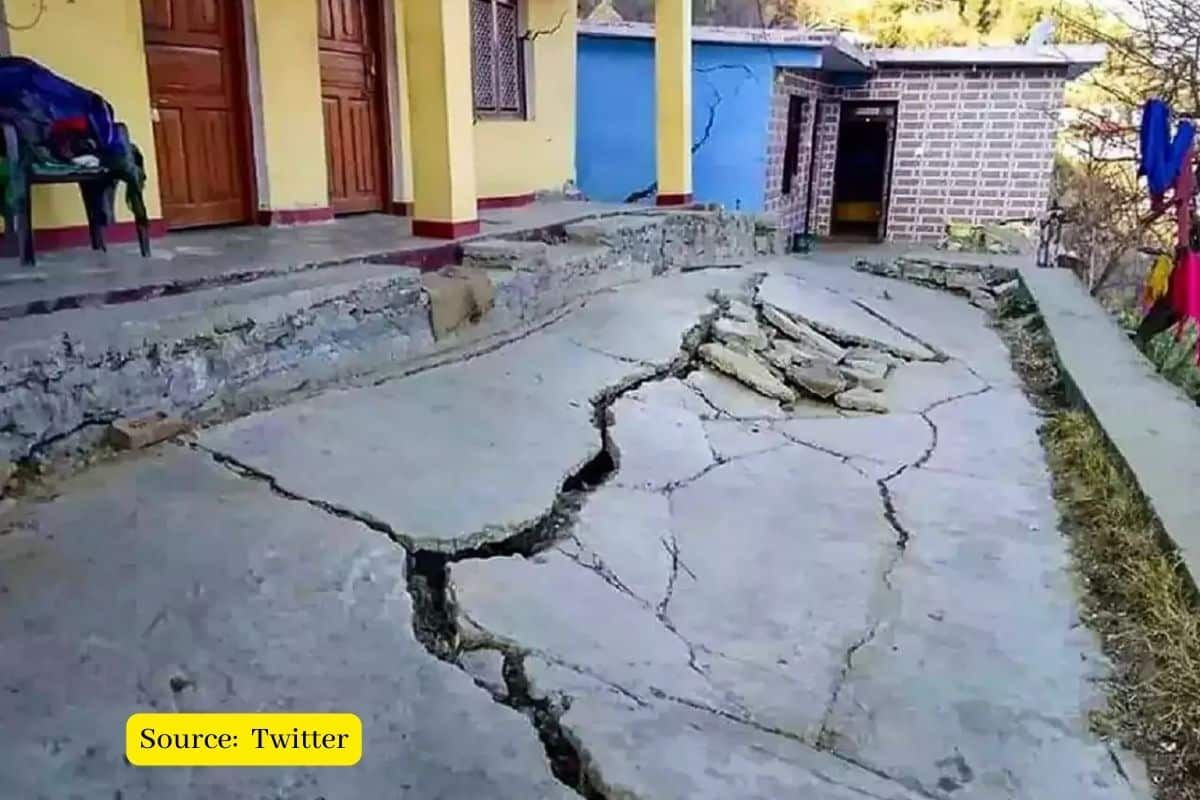
Joshimath may have sunk approximately 2.2 feet (70 cm), Times of India reported citing sources, citing a recent ground assessment of damaged areas in the picturesque town. The figure is well above the data survey by the Indian Space Research Organization (ISRO) which found subsidence of 5.4 cm in the last 12 days. The ISRO report has now been withdrawn
A senior officer involved in the ground survey team says that within the Joshimath JP Colony, a landslide of about 70 cm has been observed in and around the badminton court. Other than this, around 7 to 10 cm of subsidence can be seen in the Manohar Bagh.
According to the official, changes in the ground surface in Joshimath can be detected through remote sensing, but a detailed investigation is needed to find out what is happening underground. ISRO is doing remote sensing in Joshimath, but it mostly proves effective in post-earthquake situations.
“Changes on the ground surface can be measured via remote sensing,” the official was quoted as saying by TOI, “but what is happening below ground requires full field examination.”
Something triggered collapse: Geologist
Geologist SP Sati said that something had caused the subsidence and that it would continue if left unchecked. Something triggered subsidence of the ground that would only stop when an obstacle was reached or continue. Something started the collapse and it will continue if left unchecked.
Meanwhile, the National Disaster Management Authority (NDMA) and the Uttarakhand government have ordered several state institutions, including the ISRO, not to interact with the media or share information on social media about Joshimath’s situation without prior approval.
The ISRO-NRSC report that clearly showed the slow and fast subsidence of the land in Joshimath since April 2022 is not available in the public domain. When one clicks on http://www.nrsc.gov.in, it takes the user to the ‘Not Found’ page.
The organization later withdrew the report stating that it was being negatively misinterpreted. A report published by the National Remote Sensing Center (NRSC) of the Indian Space Research Organization (ISRO) on its website revealed that the revered city of Joshimath sank -5.4 cm in a period of just 12 days.