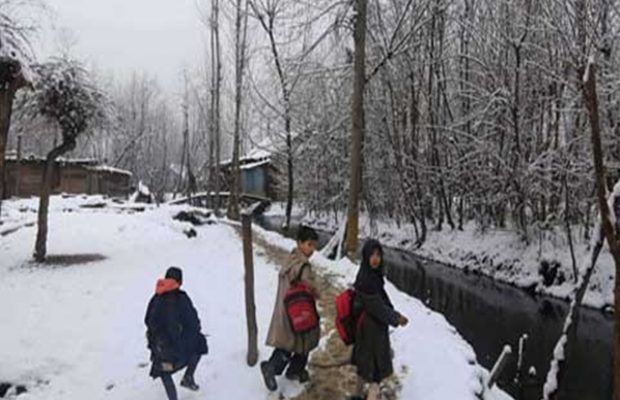
Ground Report | Srinagar: Kashmir weatherman forecast; As cold wave prevails in Kashmir and Ladakh parts, subzero temperatures were recorded in maximum places across the region while Meteorological Department has predicted more dip in temperatures in upcoming days.
As per the official at Indian Meteorological Department Center, Srinagar, several places in Kashmir and Ladakh are witnessing subzero temperatures for the past several days. “Ski resort Gulmarg, Pahalgam, and other areas are also recording sub-zero temperatures, following the cold weather conditions prevailing in the valley,” the official said.
On Friday, Pahalgam, a famous health resort in south Kashmir, recorded a low of minus 11.8°C against minus 10.9°C on the last night. It was the coldest place in the Valley. Ski resort Gulmarg also settled at 10.4°C.
Srinagar, the summer capital of the J&K recorded a low of minus 3.6°C, Qazigund, the gateway town of Kashmir, recorded a low of minus 4.0°C against minus 0.2°C, Kokernag, settled at minus 4.9°C and Kupwara town in north Kashmir recorded a low of minus 4.6°C respectively.
Kashmir at present is under the grip of the 40-day harshest winter phase known as Chillai Kalan. It starts on December 21 and ends on January 31, there are maximum chances of snowfall. It is followed by a 20-day-long period called ‘Chillai-Khurd’ (small cold) that occurs between January 30 and February 19 and a 10-day-long period ‘Chillai-Bachha’ (baby cold) which is from February 20 to March 1.
During Chillai Kalan, people used to prepare and purchase Kangris, blankets, and heavy woolen clothes. Chillai-Kalan was not merely a name but something which is much talked about in every part of the Valley. It represents the winter family. Even at homes, special arrangements were made for the Chilai Kalan, grains, pulses and hoves were prepared for the dinners to remain warm and healthy.
Pheran (Kashmiri dress) and Kanger, a traditional firing pot are used to protect from cold. Kehwa is the special drink used during the Chillai Kalan period. Celebrating Chillai Kalan with sumptuous Harissa is an essential part of the Kashmiri tradition.
As per MeT, officials in 1991, the night temperature in Srinagar had dropped to minus 11.8 degrees Celsius. Similarly, in 1995, the city’s night temperature had dropped to minus 8.3 degrees Celsius. The lowest temperature ever recorded in Srinagar is minus 14.4 degrees Celsius, in 1893.
Water bodies including Dal, Nigeen Lakes, and supply lines have been freezing due to the cold wave. Visitors and locals have been spotted stepping on the frozen parts of Dal Lake and other water bodies.
You can connect with Ground Report on Facebook, Twitter, Instagram, and Whatsapp and Subscribe to our YouTube channel. For suggestions and writeups mail us at GReport2018@gmail.com Kashmir weatherman forecast
ALSO READ: What is Wordle? How to play and win the internet’s latest game obsession
ALSO READ: Coke Studios Kana Yaari song with Lyrics